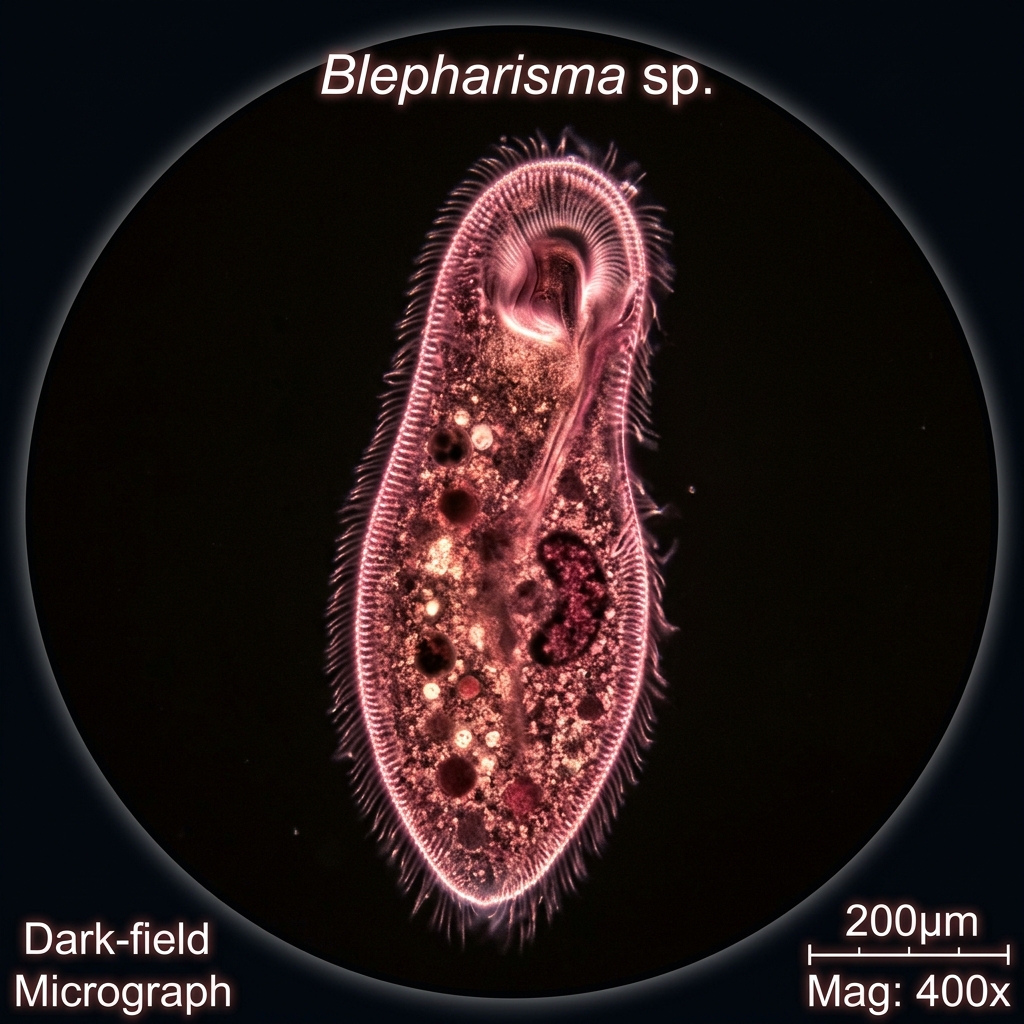
 Fig 1: Blepharisma shining in beautiful pink/magenta due to its unique pigment blepharismin (*Image is for illustrative purposes only)
[!NOTE] *All microorganism images used in this article are 3D CG concept illustrations.
🎯 Quick Summary & FAQ (Conclusion First)
Before diving into the detailed explanation, here are quick answers to the most common questions about Blepharisma.
Q. Why is its entire body a beautiful pink/red? A. Because it contains a unique pigment called “blepharismin” located just beneath the cell membrane. While this pigment acts as a shield to protect them from light, it is a double-edged sword: exposure to strong visible light or ultraviolet rays causes it to generate reactive oxygen species, which attack and destroy the organism itself.
Q. How does culturing them differ from Paramecium? A. A completely light-shielded environment is essential. While the containers used and the process of growing food bacteria are nearly identical to Paramecium, leaving them in a bright room causes their pigment to fade to white, and in the worst case, kills the entire culture. You must wrap the bottle in aluminum foil or store it in a dark box.
🔬 1. The Amazing Ecology of Blepharisma: Light Stress and Giantism
Blepharisma is a single-celled organism (ciliate) with several highly unique characteristics, making it a widely popular model organism from high school biology clubs to university research laboratories.
Phototaxis and Light-Induced Death
When exposed to light, Blepharisma exhibits strong negative phototaxis (photophobia) by backing up and changing direction. Preferring dark spaces is not just a matter of preference; when exposed to strong light, the pink pigment “blepharismin” inside the cell undergoes a chemical change, transforming into a toxic substance. Exposure to strong sunlight causes the entire body to rupture and dissolve (lyse) in just a few minutes.
Transformation into the Giant Cannibalistic Form
One of the most fascinating aspects of Blepharisma is the giantism (cannibalism) phenomenon triggered by environmental changes.
While normal Blepharisma feed on bacteria, a dramatic shift occurs when the following conditions align:
- Overcrowding: The density of Blepharisma in the culture medium reaches its limit.
- Food depletion: They consume all the bacteria (their primary food source).
- Contact with conspecifics: Starving individuals frequently bump into their peers.
Under this stressful environment, certain individuals suddenly expand their cell mouth (cytostome) to several times its normal size and begin swallowing their peers whole. By consuming their own kind, these individuals rapidly absorb nutrients and transform into “giant cannibalistic forms (giant homosigents)” that are 3 to 5 times their normal length and over 10 times larger in volume.
| State | Normal Individual | Giant Individual (Cannibal) |
|---|---|---|
| Length | Approx. 0.2 mm – 0.4 mm | Approx. 0.6 mm – 1.0 mm (clearly visible to the naked eye) |
| Body Color | Pale pink / magenta | Deep reddish-purple (concentrated pigment) |
| Primary Diet | Bacteria (such as B. subtilis), organic detritus | Other Blepharisma, Paramecium |
| Swimming Speed | Relatively slow, smooth forward movement | Heavy, dynamic spiral swimming |
🧪 2. Foolproof Culturing Medium Recipe for Blepharisma
Concrete steps for long-term home cultivation and maintenance of Blepharisma are described below.
📦 Materials Needed
- Blepharisma starter culture (available online, educational suppliers, or specialty aquarium shops)
- Dechlorinated water (let tap water sit or use a dechlorinator)
- Dried lettuce leaves (or Ebios tablets)
- Empty 500ml plastic bottle or glass flat-bottom flask
- Aluminum foil or black cardboard box for light shielding
🌾 Method A: Lettuce Infusion Medium (Recommended, Highest Yield)
Blepharisma thrives best in a “lettuce medium” made by boiling lettuce. Since it lacks excess oils and keeps water quality stable, they will multiply explosively.
Step 1: Preparing the Lettuce Infusion
Prepare 1 or 2 fully dried lettuce leaves (or fresh outer leaves of lettuce). Place them in 500ml of boiling dechlorinated water and simmer on low heat for about 10 minutes. Once the nutrients have fully dissolved, turn off the heat and let it cool.
Step 2: Filtration and Dilution
Filter the boiled liquid through kitchen paper or a coffee filter to remove lettuce fibers. Dilute the resulting amber filtrate about 5 to 10 times with dechlorinated water (a faint yellow tint is best).
Step 3: Inoculation and Complete Light Shielding
Fill about 80% of a plastic bottle with the diluted lettuce liquid, and add about 10% to 20% of the Blepharisma starter culture. [CRITICAL] Wrap the entire bottle tightly in aluminum foil to block all light, or store it in a completely dark closet or box. Keep the bottle cap slightly loose (about half a turn) to allow oxygen in for the bacteria to breathe.
💊 Method B: Ebios Tablet Medium (Easiest)
If preparing lettuce is too much trouble, Ebios tablets (commonly used for Paramecium culturing) can serve as an alternative.
Step 1: Setting up the Solution
Pour dechlorinated water into a 500ml plastic bottle and add 1/4 to 1/2 of an Ebios tablet. Shake well until the tablet is completely dissolved and the water becomes slightly cloudy.
Step 2: Inoculation and Light Shielding
Inoculate with about 50ml to 100ml of Blepharisma starter culture. Wrap the bottle completely in aluminum foil and store it in a dark place, just like in Method A.
[!WARNING] Do Not Overdose Ebios Tablets! Ebios tablets are highly nutritious. Adding too much will cause an explosive bacterial bloom, depleting oxygen and wiping out the entire Blepharisma culture. Strictly adhere to a maximum of half a tablet per 500ml bottle.
3. Microscope Observation and Photo-Response Experiment Hacks
Take out the Blepharisma you carefully raised in the dark, and observe their graceful movements and unique reactions under the microscope.
1. Controlling Light Intensity During Observation
Place a drop of Blepharisma culture on a slide, cover it with a cover glass, and set it on the microscope stage. At this point, always start with the microscope’s LED light source set to its minimum brightness. Exposing them to sudden strong light causes shock, making them swim away frantically, and in the worst-case scenario, they will rupture within a few minutes. Alternatively, placing a green or yellow color filter under the condenser blocks the blue to ultraviolet wavelengths (which the red blepharismin absorbs most readily), allowing you to observe their details for a longer time without stressing them.
2. Simple Experiment on Photophobia (Negative Phototaxis)
- Place a slightly generous drop of Blepharisma culture on a slide glass and apply a cover glass.
- Turn up the light source slightly, and shade half of the slide glass with a piece of black paper or similar material to create a shadow.
- Leave it for a few minutes and peer through the microscope. You will clearly observe negative phototaxis: Blepharisma will have vanished from the bright area, crowded densely right at the shadow boundary and inside the shaded region.
3. Selecting Giant Cannibalistic Individuals
The best time to look for them is about 2 weeks or more after starting the culture, when the bacterial food supply runs low and the Blepharisma population begins to decline. Carefully draw up liquid from near the detritus (sediment) at the bottom of the bottle using a dropper, and transfer it to a glass Petri dish. When scanning the dish under a stereomicroscope or a low-magnification loupe (20x to 40x), you should find “giant individuals” swimming sluggishly. They are deep reddish-purple and overwhelmingly larger than the surrounding normal individuals.