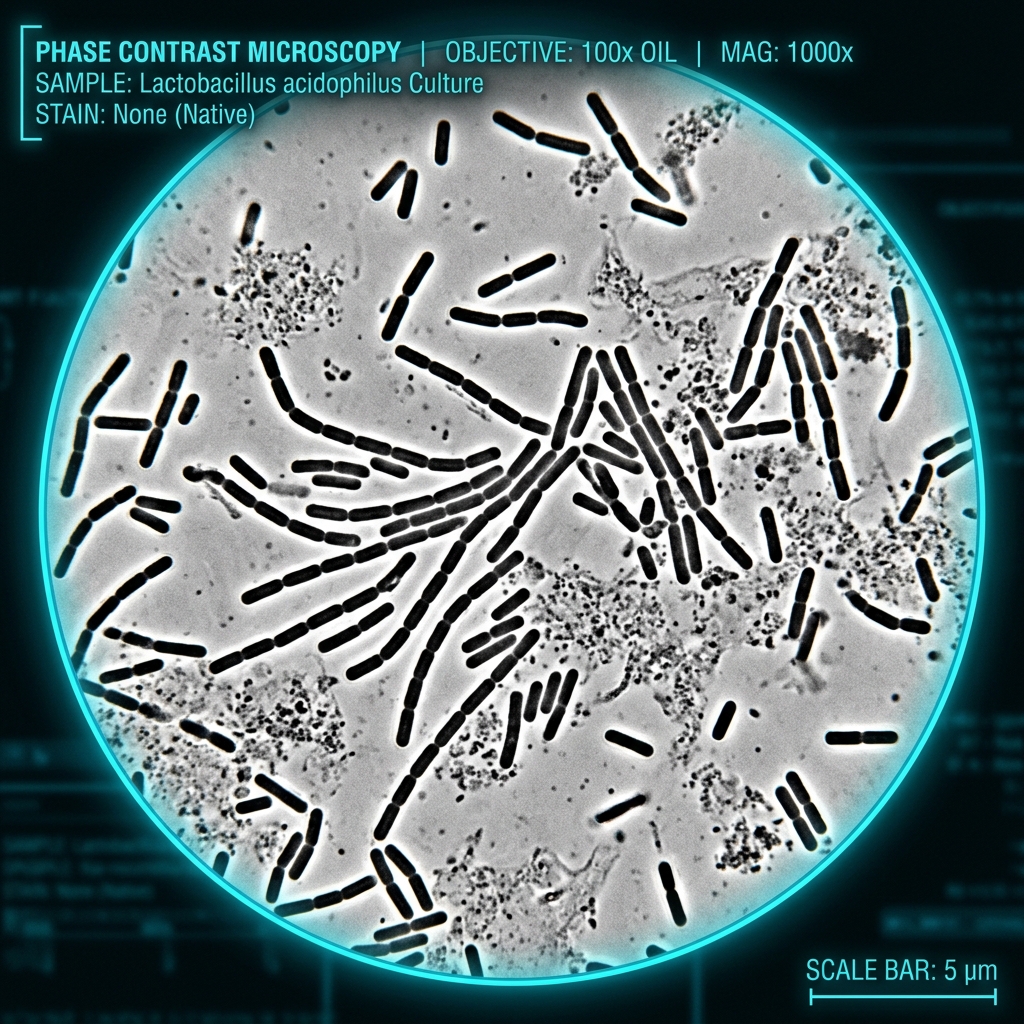
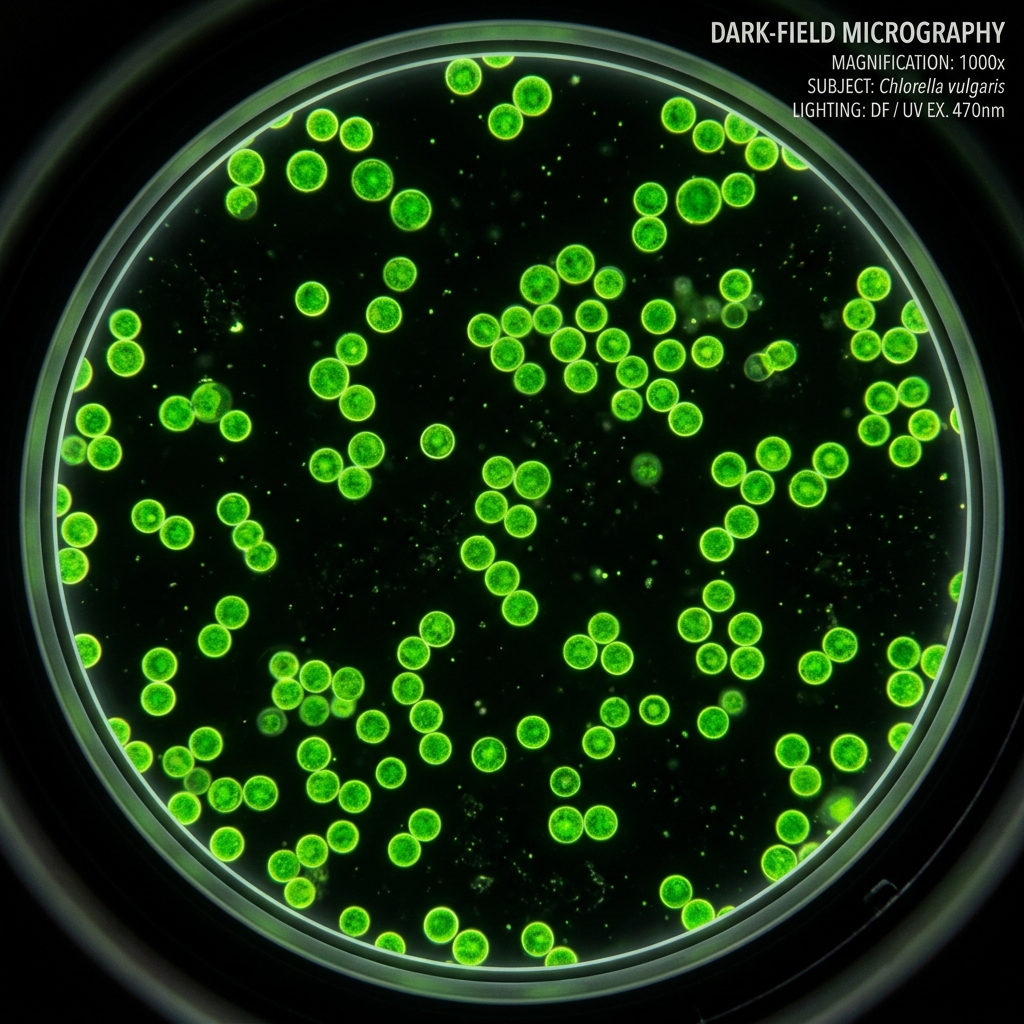
 Fig 1: A cluster of Chlorella, a spherical, single-celled green alga, observed under a microscope (*Conceptual image).
[!NOTE] *All microorganism images used in this article are conceptual 3D CG renders.
🎯 Quick Summary & FAQ (Key Takeaways)
Before diving into the detailed guide, here are quick answers to the most common questions.
Q. What is the most important factor in culturing Chlorella?
A. Proper light intensity, constant aeration, and the correct nutrient (fertilizer) concentration.
Chlorella grows exponentially through photosynthesis. Without enough light, they won’t multiply. Conversely, without aeration (which supplies CO2), growth will plateau. Furthermore, if the fertilizer is too concentrated, harmful bacteria will thrive and spoil the water. Keeping the correct dilution ratio is critical for success.
Q. What type of microscope is best for observing Chlorella?
A. A transmission compound microscope with at least 400x magnification is required.
Because Chlorella cells are extremely small (3–8 μm in diameter), they appear as mere green dots at 100x magnification. Magnification of 400x to 1000x (oil immersion) is necessary to resolve the cup-shaped chloroplasts inside the cells and the double-layered structure of the cell wall.
🔬 1. DIY Chlorella Culture Medium and Bottle Bioreactor
“Green water” (rich in green algae) is highly valued in aquarium keeping for breeding Daphnia and rotifers, as well as serving as feed for micro-observations. Here is how to grow Chlorella exponentially at home using a plastic bottle.
How to Build a Foolproof DIY Bottle Bioreactor
To culture Chlorella efficiently, a simple bioreactor that constantly supplies light and carbon dioxide (CO2) is highly effective.
- Container Prep:
Thoroughly rinse a sturdy, round plastic bottle (1.5L–2.0L, such as a carbonated drink bottle) and sanitize it with warm water (not boiling, to avoid melting/deforming the plastic). - Preparing the Culture Water:
Use aged, dechlorinated tap water or soft bottled mineral water. Add 1 mL of liquid fertilizer (e.g., Hyponex) per 1 liter of water (approx. a 1000x dilution). This serves as the primary nutrient source. - Inoculation:
Add a few drops to 1 mL of commercial live Chlorella starter, or pour green water collected from a local pond to fill about 1/10 of the bottle. - Setting up Aeration:
Run tubing from your air pump and lower an airstone to the bottom of the bottle. Constant bubbling keeps the cells suspended (preventing them from settling) and dissolves carbon dioxide into the water for photosynthesis. - Light Exposure:
Place an LED grow light close to the bottle and keep it on for 14–16 hours a day, or place the bottle on a bright windowsill out of direct, scorching sunlight.
2. Troubleshooting Matrix
Here are common issues you might face during Chlorella cultivation and how to handle them.
| Issue | Potential Cause | Troubleshooting Steps & Hacks |
|---|---|---|
| Water turns cloudy brown and smells foul | Bacterial contamination caused the Chlorella culture to crash and rot | Sanitize the container and equipment thoroughly, prepare fresh dechlorinated water, and restart the culture. |
| Water remains pale green after several days | Insufficient light or carbon dioxide (lack of bubbling) | Increase light intensity or move the light closer. Verify that the air pump is working correctly. |
| Green powder settles on the bottom, water turns clear | Airflow is too weak, or the culture has matured and cells are aging | Increase the air pump flow rate to ensure complete mixing. If the green color is very dense, harvest a portion and dilute with fresh nutrient water. |
| Filamentous green algae (e.g., Spirogyra) grow on the walls | Contamination by spores of other algae which outcompeted the Chlorella | Reset the culture completely. To prevent airborne spores, cover the bottle mouth with a cotton plug or non-woven filter. |
3. Microscope Highlights: Tiny Photosynthetic Factories
Although Chlorella cells are tiny, high-magnification microscopy reveals their beautiful plant cell structure.
Key Microscope Details
- Cup-Shaped Chloroplast:
You can observe a bright green, bowl-like (cup-shaped) chloroplast occupying most of the cell. This is where photosynthesis takes place. - Pyrenoid Visualization:
Under precise focus, the starch-producing organelle called the “pyrenoid” near the center of the chloroplast can sometimes be resolved as a tiny, bright point due to refractive index differences. - Four-Fold Cell Division (Asexual Reproduction):
When a Chlorella cell matures, it undergoes two internal divisions to form four small “daughter cells” inside the parent wall. Eventually, the parent cell wall ruptures, releasing them. Adjust your fine focus to look for cells in the process of dividing into two or four.
By culturing Chlorella efficiently, breeding daphnia (Breeding Daphnia and Observing Heartbeats) or Volvox (Culturing Volvox & Observing Asexual Reproduction) becomes significantly easier. Set up your own bio-loop and witness the micro-world’s cycle of life on your desk!
🔗 Related Articles (Topic Cluster)
- 👉 How to Choose a Home Microscope: A Foolproof Selection Guide with Smartphone Photography Comparison
- 👉 Culturing Volvox & Observing Asexual Reproduction: DIY Medium and Key Points
- 👉 Breeding Daphnia: The Complete Guide to Feeds and Water Quality Maintenance
- 👉 Micro-Hunters: Plankton Sampling Nets and Easy Glass Petri Dish Culture Kits