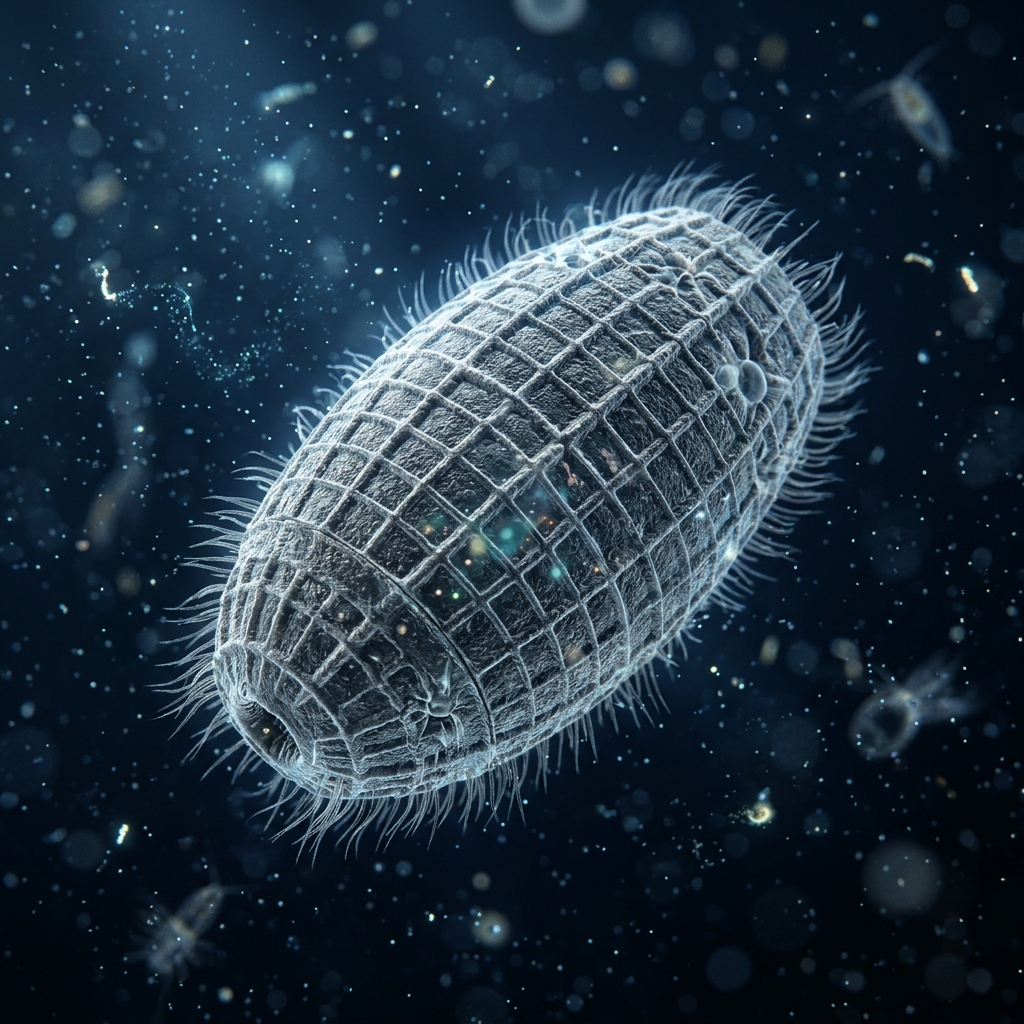
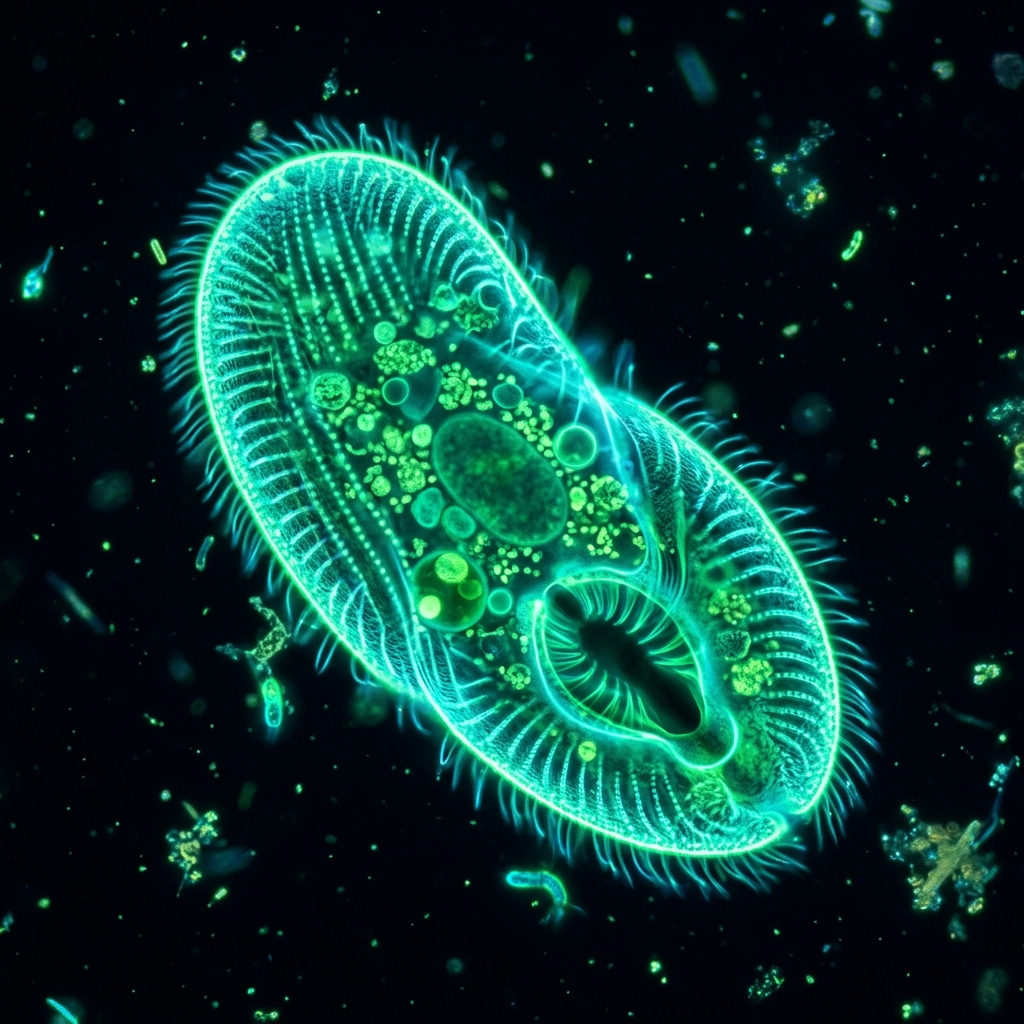
 Fig 1: Covered in dense cilia, Colpidium swims rapidly in search of bacteria (image for illustrative purposes)
[!NOTE] ※All microbe images in this article are 3D CG representations.
🎯 Quick Summary & FAQ
Before diving into details, here are answers to the most common questions:
Q. Where can I find Colpidium? A. They are abundant in stagnant water rich in organic matter, such as pond edges, puddles with decaying leaves, and ditch drains. Summer water bodies where plant matter is decomposing are perfect breeding grounds for the bacteria they feed on.
Q. How do they differ from Paramecia? A. Colpidia are smaller, more oval/bean-shaped, and swim more erratically than Paramecia. While Paramecia range from 150 to 300 µm, Colpidia are about 50 to 120 µm. Under the microscope, they look like fast-moving, oval beads. They are also relatively resilient to low oxygen levels.
Q. What should I feed them for culturing? A. Boiled rice or wheat grains work perfectly. Starch dissolves from the grains, feeding bacteria which multiply rapidly. Colpidium then gorges on this bacteria, turning the water into a visible white cloud of ciliates.
🔬 1. Ecology of Colpidium: The Microscopic Cleaner
Peering through a microscope at pond water, you will often spot egg-shaped microorganisms darting at high speeds around algae and debris. This is Colpidium (scientific name: Colpidium colpoda), a common freshwater ciliate.
Voracious Bacterial Predator
Colpidium belongs to the ciliate class and is entirely covered by hundreds of tiny, beating hairs called cilia.
- Filter Feeding: A groove on the side of its body (the oral groove) contains specialized rows of cilia. Their coordinated beating draws water and suspended bacteria into its mouth like a vacuum.
- Water Purification: By feeding on bacteria, Colpidia play a critical role in preventing excessive decay in stagnant waters. They act as natural purifiers in aquatic ecosystems.
2. Comparison of Common Ciliates
Here is how Colpidium compares to other common ciliates you might encounter.
| Feature | Colpidium | Paramecium | Coleps |
|---|---|---|---|
| Average Size | 50µm - 120µm (Medium) | 150µm - 300µm (Large, visible to naked eye) | 40µm - 60µm (Small) |
| Shape | Oval, kidney-shaped, slightly curved front | Slipper-shaped, elongated oval | Barrel-shaped, armored with grid-like plates |
| Swimming Style | Quick darting, frequent sharp turns | Smooth spiraling forward rotation | Bullet-like straight paths, orbits debris |
| Main Diet | Suspended bacteria | Bacteria, microalgae | Organic tissue from dead plankton |
| Culture Difficulty | ★☆☆☆☆ (Very Easy) | ★★☆☆☆ (Easy) | ★★★☆☆ (Moderate) |
3. How to Collect Colpidium: Target Stagnant Waters
Colpidium is rarely found in clean, fast-flowing streams. Instead, target stagnant, organic-rich water bodies.
Step-by-Step Collection
- Locate a Source: Collect water from a pond edge or drain ditch containing decaying leaves and organic debris. Use a clean plastic bottle.
- Add Organic Matter (Activation): Open the bottle cap, drop in a single boiled rice grain, and leave it on a warm windowsill (20–25°C) for 2 to 3 days. The bacterial bloom will awaken dormant Colpidium cysts, causing them to multiply rapidly.
- Confirm Under Microscope: Take a drop of the cloudy water near the surface, place it on a slide, and observe at 100x. If you see numerous active, oval-shaped cells smaller than Paramecia, you have successfully collected Colpidium.
4. Culturing Colpidium at Home: The Rice Grain Method
You don’t need laboratory equipment to culture Colpidium. You can grow millions of them in a simple plastic bottle.
[!IMPORTANT] Step-by-Step Bottle Culturing
- Prepare the Container: Wash a 500ml plastic bottle with water only (never use soap, as detergent residues are lethal to ciliates).
- Prepare the Water: Fill the bottle with about 400ml of dechlorinated tap water or soft bottled spring water.
- Introduce the Starter: Add 10–20ml of your collected water containing Colpidium.
- Add the Feed: Drop in just 2 grains of soft, boiled white rice.
- Provide Ventilation: Do not tighten the bottle cap. Rest it loosely on top or cover with aluminum foil to allow air exchange. Store in a dark room at 20–26°C.
Growth Cycle & Maintenance
- Days 3–5: A white fuzzy cloud (bacterial biofilm) forms around the rice grains. Colpidium clusters around it to feed, and the water turns slightly milky.
- Day 7: The population peaks. If you shine a flashlight through the bottle, you will see dense clouds of tiny white dots swimming around.
- Subculturing (Resetting): As food depletes and waste builds up, the population will crash. Every 10 days, transfer 20ml of the culture to a fresh bottle prepared with clean water and 2 boiled rice grains. This keeps the colony alive indefinitely.
5. Micro-Photography & Observation Hacks
Colpidium’s rapid speed makes it a challenging subject to keep in focus.
The Cotton Fiber Hack
To slow them down, place a few loose cotton fibers (from a cotton swab) on your slide before adding the water drop and cover slip. The ciliates will get trapped in the mesh of fibers, allowing you to observe their beating cilia, vacuole contractions, and feeding movements at 400x magnification.
Culturing Colpidium is a fun, hands-on way to explore microscopic biology. With a simple smartphone microscope adapter, you can record stunning videos of their fast-paced world!
🔗 Related Articles
- 👉 Amoeba Culturing Guide: Step-by-Step Guide to Breeding Amoeba proteus on Boiled Rice
- 👉 Paramecium Breeding Checklist: The Easiest Yeast Method for Home Culturing
- 👉 Armored Swarmers: Collecting, Observing, and Culturing Coleps at Home
- 👉 Smartphone Microscopy: 3 Hacks to Eliminate Vignetting and Capture High-Quality Photos