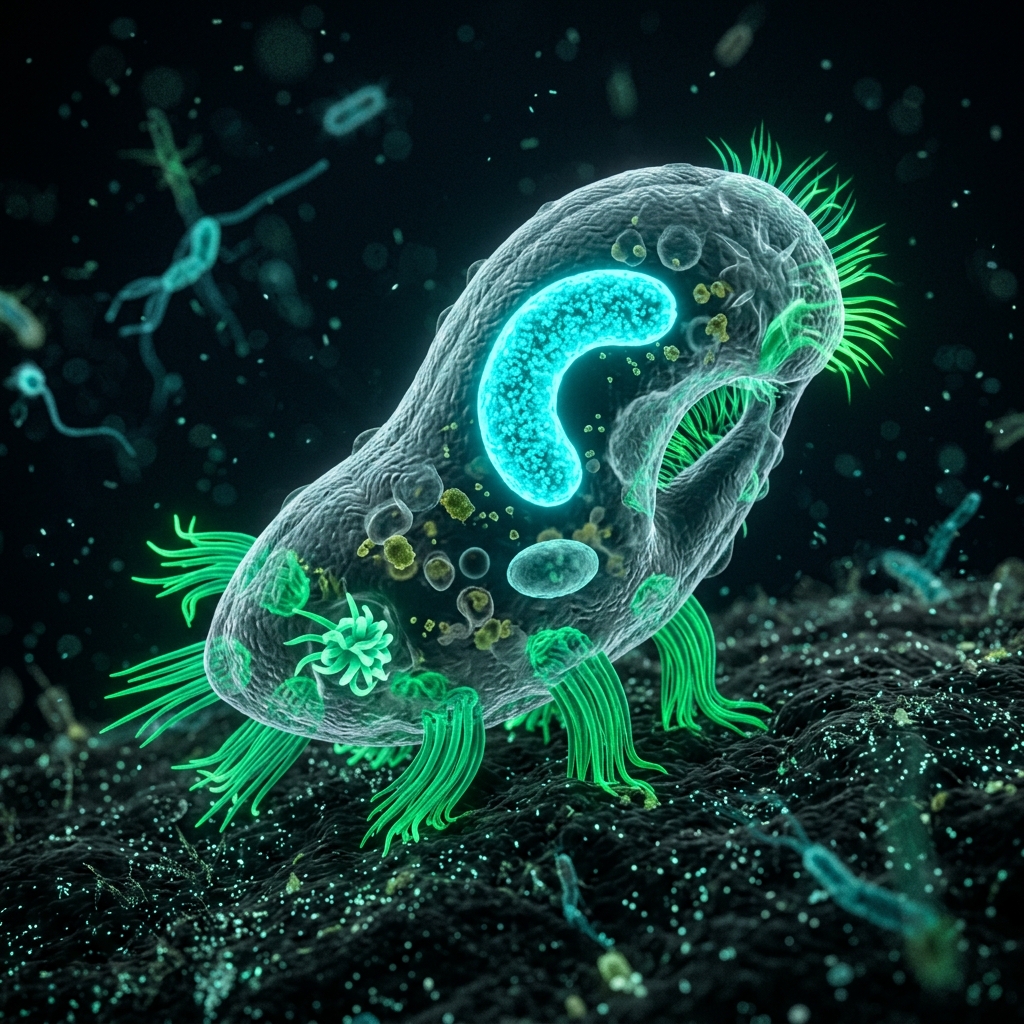
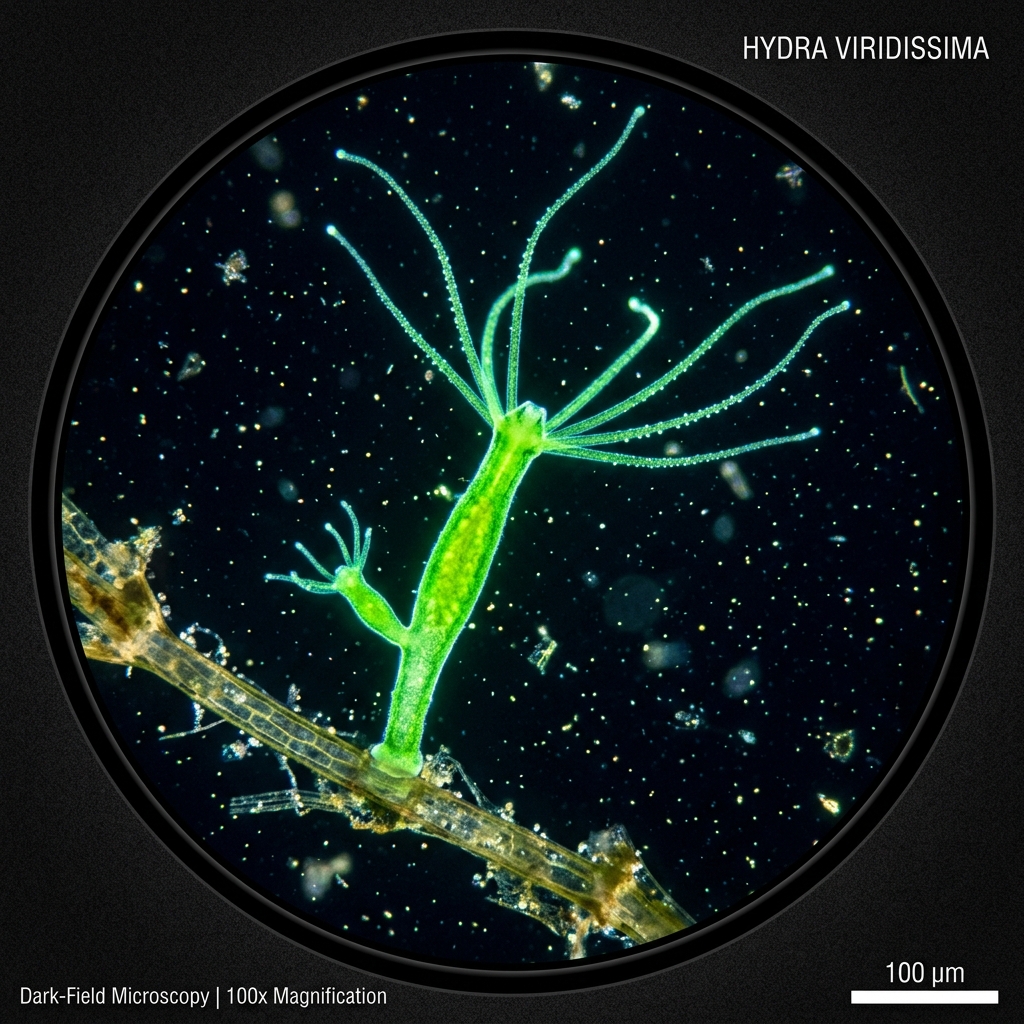
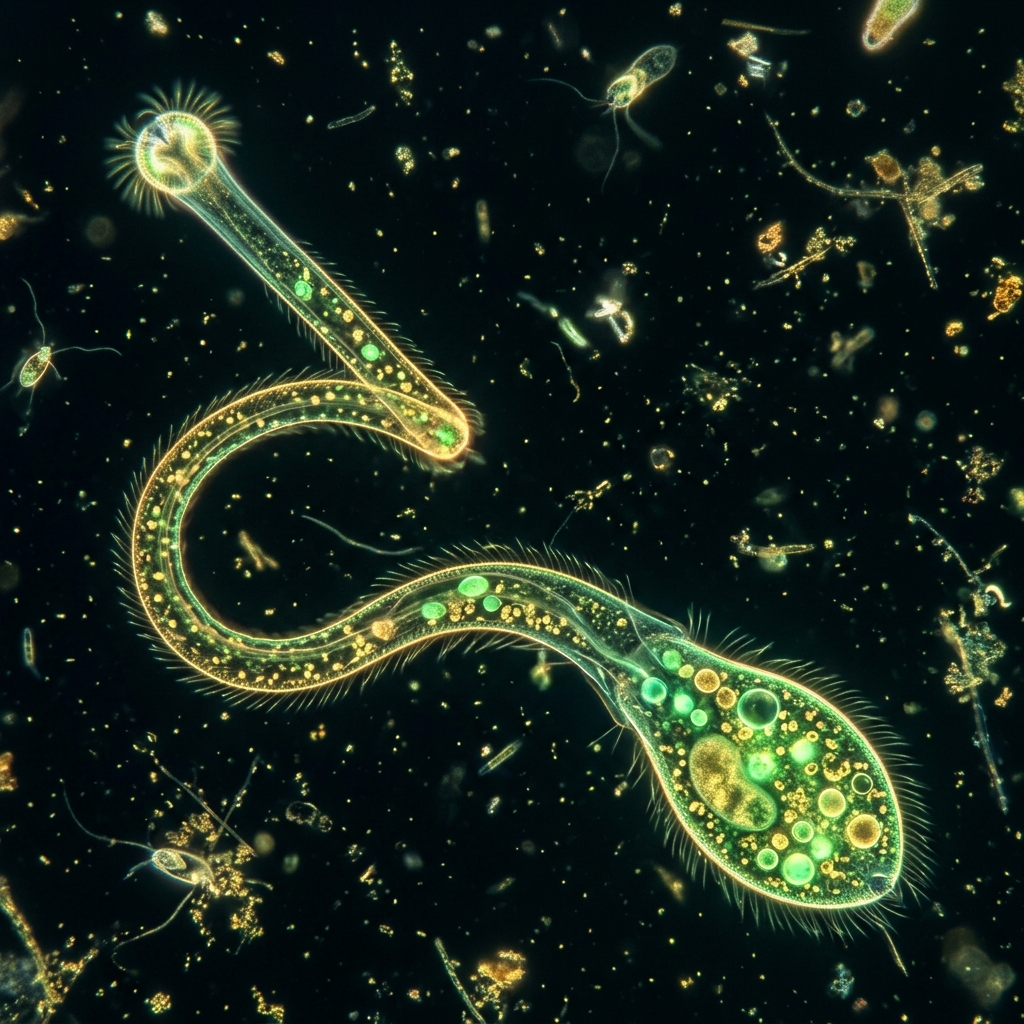
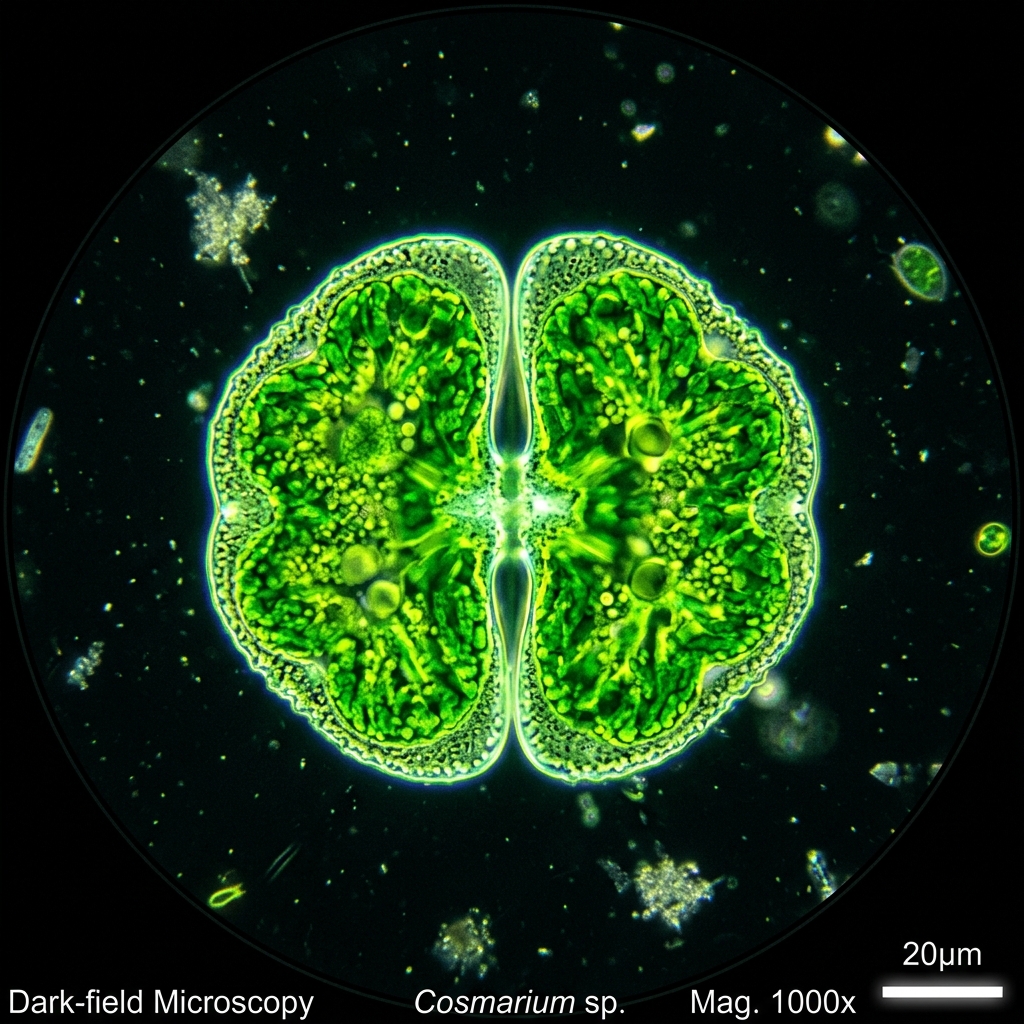
 Figure 1: Single-celled green alga Cosmarium showing perfect bilateral symmetry divided by a central isthmus (*Image is a conceptual CG render)
[!NOTE] *All microorganism images used in this article are conceptual 3D CG renders.
🎯 Quick Summary & FAQ (Conclusion First)
Before diving into the detailed guide, here are quick answers to the most common questions regarding Cosmarium culturing and observation.
Q. What is the single most important factor in culturing Cosmarium? A. Providing adequate light (LED), keeping nutrient levels extremely low (10,000x diluted fertilizer), and avoiding contamination. Cosmarium is a purely photosynthetic green alga (conjugating green algae). It does not need organic matter (such as sugars or starches). In fact, organic matter will only cause bacterial overgrowth and spoil the water. Keeping it in a clean, inorganic mineral medium is the key to success.
Q. Can I use the culture water from Paramecium or Amoeba cultures? A. No, you cannot. Those cultures contain abundant organic substances designed for heterotrophic micro-crustaceans or protozoans that feed on bacteria. Putting Cosmarium into such water will trigger bacterial blooms, spoiling the water, blocking light, and ultimately killing the algae.
🔬 1. The Wonder of Cosmarium: Microscopic Geometric Art
Cosmarium is a genus of single-celled green algae commonly found in freshwater lakes, ponds, and peat bogs. Belonging to the family of desmids (conjugating algae), its most striking feature is its beautifully sculpted, bilaterally symmetrical cell design.
Structure of the Semicells and Isthmus
A Cosmarium cell is split into two halves, called “semicells,” connected by a narrow central bridge known as the “isthmus.” Each semicell houses a large chloroplast, which glows emerald green under a microscope. Because of this hourglass-like shape, which resembles a traditional Japanese drum called a tsudzumi, it is commonly known as Tsudzumi-mo in Japan.
Mystical Gliding Movement
Cosmarium lacks flagella and cannot swim. However, it can glide slowly over glass surfaces or sediment by secreting microscopic mucilage (mucopolysaccharides) from pores in its cell wall. Under time-lapse microscopy, they glide smoothly and quietly, like miniature spaceships scanning a new planet.
🧪 2. Fail-Safe Culturing Recipe for Cosmarium
Follow these instructions to culture and maintain your Cosmarium population long-term.
📦 Tools and Materials Required
- Cosmarium starter culture (Available from biological supply houses or educational kits)
- Dechlorinated water (tap water left out for 24 hours) or soft mineral water
- Liquid plant fertilizer (standard NPK garden fertilizer like Hyponex)
- Glass petri dish or a transparent flask (materials that allow high light transmission)
- LED grow light
🌾 Mixing the Custom 10,000x Diluted Fertilizer Medium
Like Volvox, Cosmarium grows best in a very dilute inorganic mineral medium.
Step 1: Precise Dilution
- Prepare 1 liter (1,000ml) of dechlorinated water.
- Using a dropper, add exactly 2 drops (approx. 0.1ml) of the liquid fertilizer concentrate.
- Close the container and shake well until fully mixed. This forms your 10,000x dilute growth medium.
[!WARNING] Do not over-fertilize! If the nutrient concentration is too high, unwanted bacteria and fast-growing unicellular green algae (like Chlorella or cyanobacteria) will quickly outgrow and suffocate the Cosmarium. Strictly adhere to the “2 drops per 1 liter” ratio.
Step 2: Inoculation and Lighting
Pour the prepared medium into a sterilized glass petri dish to a depth of about 1cm. Add a few drops to 1ml of Cosmarium starter culture. Place the dish under an LED grow light set to a 12-hour light / 12-hour dark cycle. Avoid direct sunlight, as it can cause temperature spikes. The ideal temperature range is 20°C to 24°C.
3. Observation Hacks: Capturing Cell Division
Watching Cosmarium multiply is a captivating showcase of microscopic symmetry and cellular growth.
Regenerating the Missing Half
Cosmarium reproduces through binary fission in a highly unique process:
- Elongation of the Isthmus: The central isthmus stretches, gradually separating the two semicells.
- Nuclear Division and Wall Formation: The nucleus divides, and a new cell wall forms across the isthmus, creating two individual cells. At this stage, each cell consists of one fully formed “parental semicell” and a tiny, underdeveloped bulb—making them look highly asymmetrical.
- Expansion and Decoration: Over several hours, the new semicell absorbs water, swelling like a balloon and perfectly recreating the shape, size, and intricate cell wall ornamentation (warts or patterns) of the parent semicell.
| Stage of Division | Description | What to Look For |
|---|---|---|
| Early Stage | The central isthmus stretches and appears translucent. | Look for Cosmarium cells that seem slightly elongated. |
| Middle Stage | One half is the mature parent semicell; the other is a small, smooth sphere. | Search for asymmetrical, bulbous cells that look unbalanced. |
| Late Stage | Both semicells are nearly equal in size, and surface patterns begin to solidify. | Emerald-green chloroplasts migrate into the new semicell, establishing uniform color. |
📸 Micro-Photography Tips
Because Cosmarium has a relatively flat, disc-like shape, it is one of the easiest micro-subjects to keep in focus. To highlight its three-dimensional surface textures and delicate cell wall ornaments, try using polarizing filters (PL Hack) or oblique illumination (angling the light source). These techniques enhance contrast, making the cells stand out like glowing crystals against a dark background.
For details on camera adapters, light setups, and alignment, refer to the related articles below.
🔗 Related Reports
- 👉 Culturing Volvox: Creating the Ultimate Dilute Media and Observing Asexual Reproduction
- 👉 Microscope Lighting Hacks: Turn Ordinary Micrographs into Art with DIY Polarizing Filters
- 👉 Smartphone Microscopy 101: 3 Alignment Hacks to Prevent Vignetting and Get Sharp Photos
- 👉 The Plankton Hunter Guide: How to Sample Micro-Ecosystems from Ponds and Streams