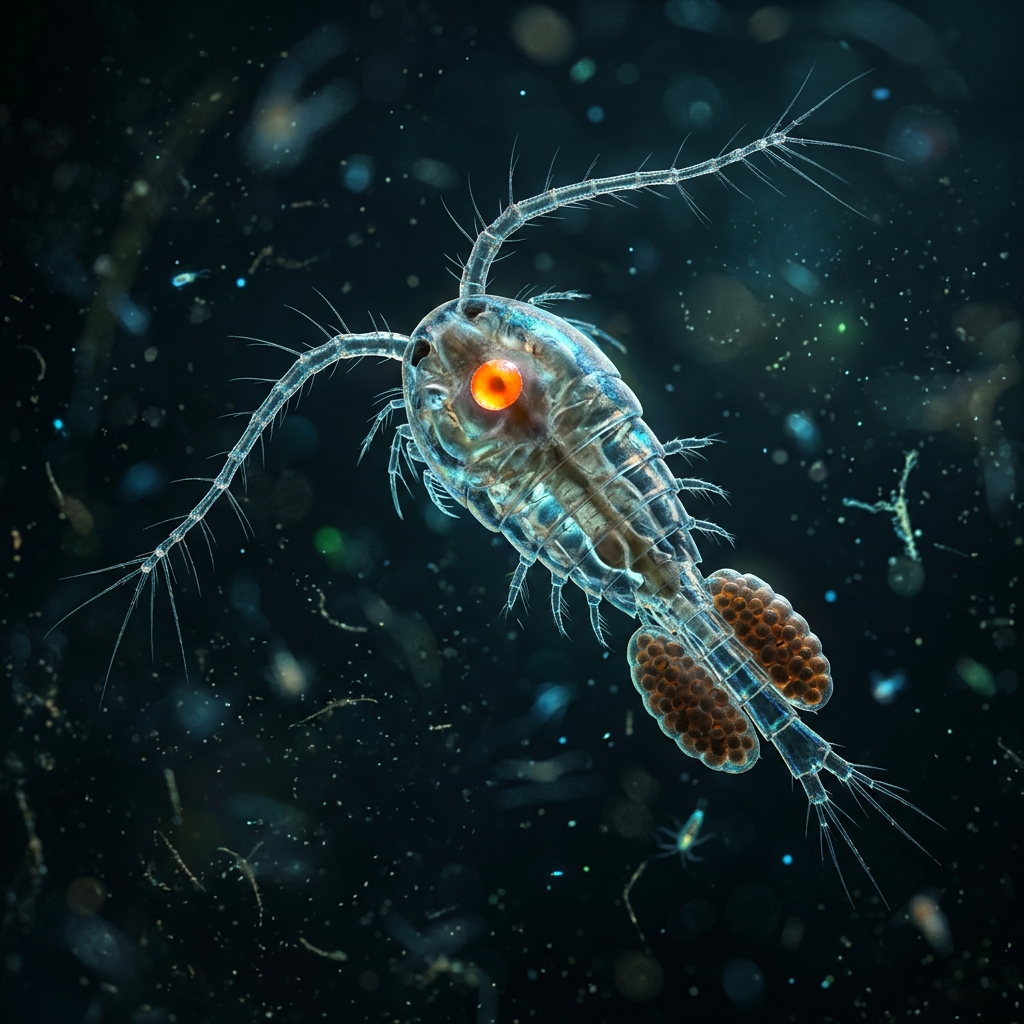
 Fig 1: A female Cyclops featuring a single red ocellus (eye) and a pair of large, lateral egg sacs (*Conceptual image).
[!NOTE] *All microorganism images used in this article are conceptual 3D CG renders.
🎯 Quick Summary & FAQ (Key Takeaways)
Before diving into the detailed guide, here are quick answers to the most common questions.
Q. What is the main difference between Cyclops (copepods) and standard water fleas (daphnia)?
A. They differ in body shape, swimming motion, and eye structure.
While Daphnia (water fleas) have rounded bodies and swim with a “flapping” motion, Cyclops are streamlined and swim with rapid, jerky, darting hops. Also, Cyclops has only a single compound-free eye (ocellus) in the center of its head, which is why it is named after the one-eyed giant Cyclops from Greek mythology.
Q. How do I focus on Cyclops when they keep darting around?
A. You can use cotton fibers to trap them physically, or construct a slide with a shallow water layer.
Because they are strong swimmers, they will vanish from your field of view instantly on a standard slide. Try the “cotton fiber hack” explained below.
🔬 1. Biology and Appeal of Cyclops
Cyclops (copepods) enjoy popularity among microscopy hobbyists and aquarists due to their unique anatomy and behavior.
The One Eye (Ocellus) of Mythology
At the center of a Cyclops head lies a single red or black dot. This is the ocellus, a simple eye used to detect light intensity. Because they lack the compound eyes of typical crustaceans, zooming in on their head gives them a mysterious appearance, as if they are gazing right back at you.
Antennules and Swimming Legs for Propulsion
The long antennules extending laterally act both as stabilizers for buoyancy and as sensory structures to detect predators or prey. Furthermore, by whipping their thoracic swimming legs in unison, they execute high-speed jumps that make them look like they are teleporting across the slide.
The Elegant Twin Egg Sacs of Females
During the breeding season, females carry twin spherical egg sacs attached to the base of their tail. Filled with dozens of bead-like eggs, these sacs form beautiful geometric arrangements under the microscope. As hatching approaches, the eggs darken, and you can see the tiny offspring (nauplius larvae) moving inside.
2. Practical Steps for Breeding Cyclops
Cyclops are highly resilient. By following a few guidelines, you can easily maintain and propagate a thriving colony at home.
Step 1: Collection & Screening
- Scoop up water around the roots of aquatic plants or near the bottom mud using a dropper or net, and place it in a clear jar.
- Hold the container up to a light source. Scan for tiny white specks (~1 mm) darting in a jerky, jumping pattern. These are Cyclops.
- Trim the tip of a plastic pipette with scissors to widen the opening (to avoid injuring their bodies). Suction them up individually and transfer them to fresh, dechlorinated water.
Step 2: Culture Setup & Feeding
- Vessels: A 1- to 2-liter plastic bottle or glass jar is perfect. Shallow containers with a wide surface area are ideal to maximize gas exchange.
- Feed (Crucial): Cyclops consume microalgae, water-borne bacteria, and organic detritus (organic fragments).
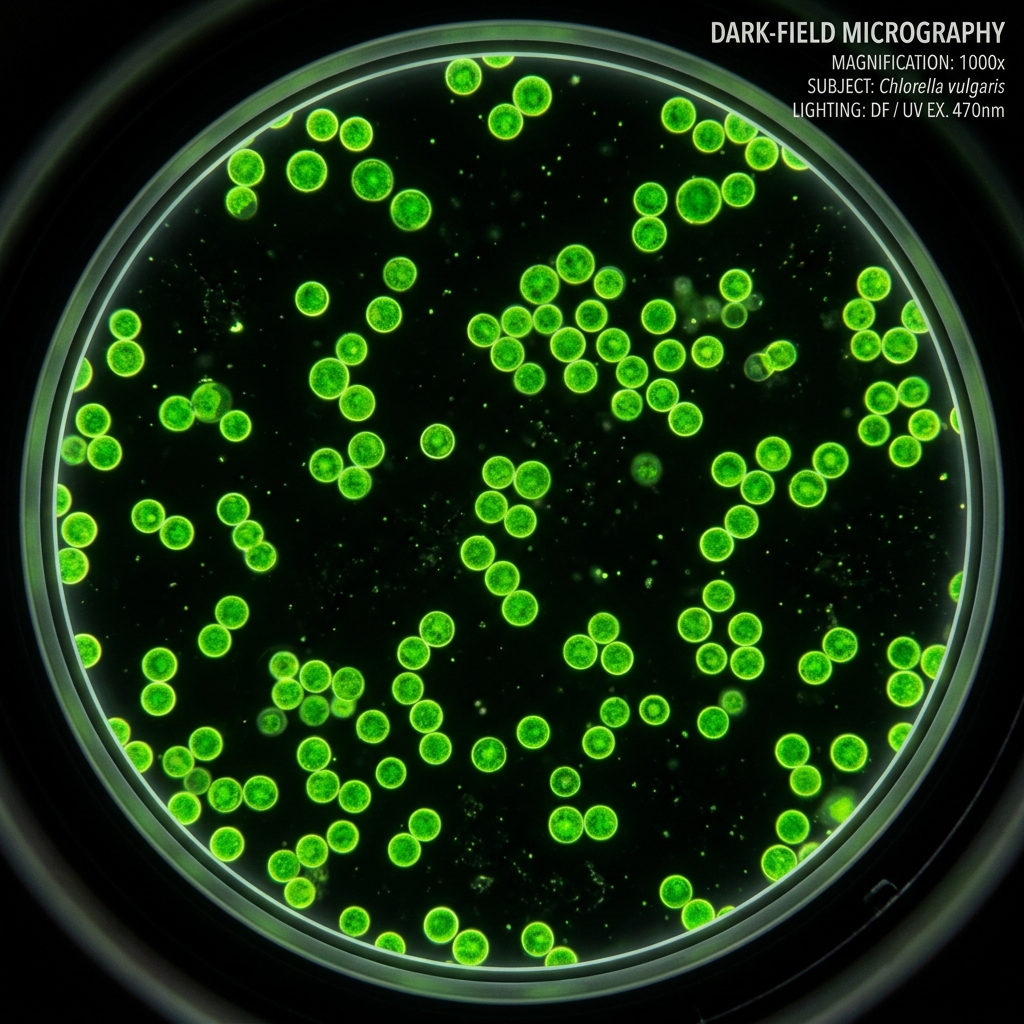
- Green Water (Chlorella): The safest food option as it does not foul the water. Add enough to tint the water a light green.
- Rice Bran Hack: Drop a few grains of rice bran (just a tiny speck on the tip of tweezers) onto the bottom. As the bran decomposes, bacteria multiply, providing a rich food source. Do not overfeed, or the water will spoil.
- Temperature: The optimal range is 15°C–25°C. As long as you avoid extreme heat (above 30°C), they will survive seasonal shifts at room temperature.
Step 3: Observing Nauplius Larvae Growth
When Cyclops eggs hatch, they release flat, spider-like larvae called “nauplii,” which look completely different from the adults. Through a series of molts (6 naupliar stages and 6 copepodid stages), they gradually assume the elongated adult form. Documenting this metamorphosis is one of the most rewarding aspects of keeping Cyclops.
3. Troubleshooting Matrix
| Issue | Potential Cause | Action Plan & Hacks |
|---|---|---|
| Egg-bearing females are present, but population doesn’t grow | A lack of microscopic food (bacteria/single-celled algae) suitable for the tiny nauplii | Introduce green water (microalgae) to establish a micro-feeding environment, ensuring the nauplii have access to food small enough to ingest. |
| Water turns cloudy white and the colony crashes | Oxygen depletion and eutrophication due to overfeeding rice bran or yeast | Perform a 50% water change using dechlorinated water. Adhere strictly to a “feed only when water clears” routine in minimal amounts. |
| Cyclops disappear when co-cultured with Daphnia | Competitive exclusion; Daphnia outcompete copepods due to superior filter-feeding | Cyclops colonies are much easier to maintain on their own or with minimal micro-fauna. Keep the cultures in separate containers. |
4. Microscope Hacks: Capturing Jump Action and Egg Sacs
Under the microscope, Cyclops are spectacular, but their jump speed is like a bullet train at micro-scale. Use these hacks to capture them successfully.
Spacer Slides: Preventing Crushing
Because copepods are relatively thick, a standard cover slip laid flat will crush them to death.
- The Tape Spacer Hack: Stick 1 or 2 layers of adhesive tape on both ends of your slide to act as spacers. Place your water droplet with the Cyclops in the middle and gently lay the cover slip across the tape. This maintains a gap, allowing them to swim safely without being crushed.
The Cotton Fiber Hack: Controlling Speed
Place a few stray strands of teased cotton fiber on the center of the slide. Add the water droplet containing the Cyclops and apply the cover slip. The fibers act as a physical grid that restricts their movement, making it much easier to lock your camera’s focus.
Side Illumination (Pseudo-Darkfield) for Dramatic Shots
Block the light from below the microscope stage and shine a bright light (like a smartphone flashlight) from a steep angle or from the side (reflected/oblique illumination). This makes the translucent carapace glow like crystal or emerald, while the red ocellus on the head and individual eggs in the sac stand out like tiny jewels against a dark backdrop.
For high-quality smartphone microscopic photography and lighting techniques, refer to the following articles.
- Smartphone Photo Basics: The Smartphone Microscopy Guide: Three Optical Alignment Hacks to Prevent Vignetting
- Using Smartphone Adapters: Essential Tools: Choosing and Aligning Smartphone Adapters for Microscopy
- Lighting Hacks: High-Brightness LED Ring Lights and DIY Lighting Secrets
🔗 Related Articles (Topic Cluster)
- 👉 Culturing Chlorella & DIY Bottle Bioreactor: The Ultimate Live Feed for Daphnia and Rotifers
- 👉 The Smartphone Microscopy Guide: Three Optical Alignment Hacks to Prevent Vignetting
- 👉 Essential Tools: Choosing and Aligning Smartphone Adapters for Microscopy
- 👉 High-Brightness LED Ring Lights and DIY Lighting Secrets