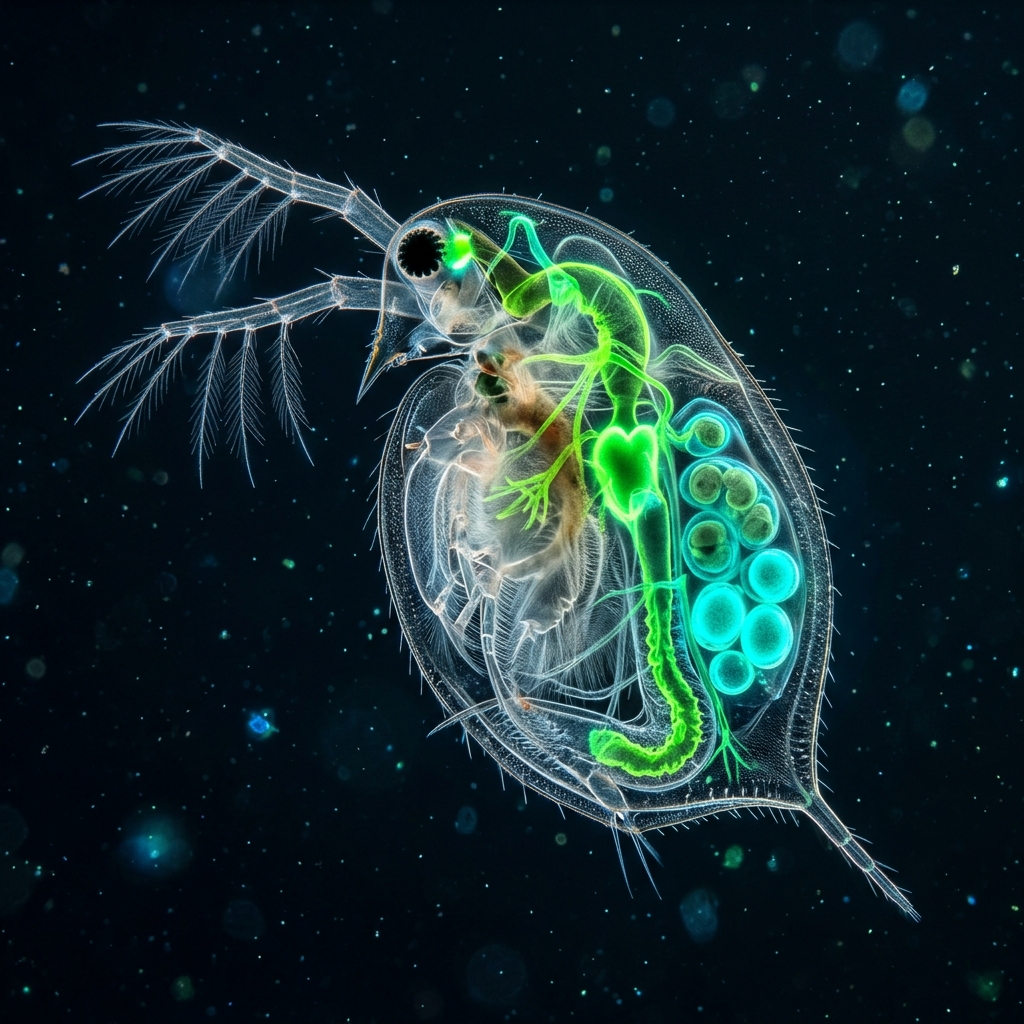
 Fig 1: Lateral view of a female Daphnia magna carrying eggs in her brood chamber, swimming by beating her large antennae (*Conceptual image).
[!NOTE] *All microorganism images used in this article are conceptual 3D CG renders.
For aquarium hobbyists, especially breeders of medaka (Japanese rice fish) and goldfish, Daphnia sits at the pinnacle of live feeds. Among them, Daphnia magna (growing up to nearly 5 mm) is an outstanding choice for beginners due to its ease of handling and high reproductive rate.
Feeding live Daphnia not only triggers aggressive feeding behaviors in fish but also improves coloration and fry survival rates. This guide details two culturing approaches to breed Daphnia magna rapidly in small spaces, along with water quality and management hacks to prevent sudden crashes.
1. Biology and Population Explosion Dynamics
The secret behind their explosive growth lies in their unique reproductive strategy. Under optimal conditions, Daphnia reproduce via parthenogenesis—females produce clones (daughters) of themselves without mating. During periods of abundant food and stable temperatures, they release dozens of offspring every few days.
However, under stress (such as deteriorating water quality, food shortages, or low temperatures), males are born. They mate with females, which then produce tough-shelled ephippia (resting/dormant eggs) that can withstand freezing or drying. To keep a population expanding, your goal is to maintain ideal conditions so that they continue to reproduce parthenogeneticetically.
2. Two Primary Feeding Methods: Chlorella vs. Dry Yeast
The most reliable feeds for culturing Daphnia are green water (live Chlorella) and dry yeast. Here is how to apply both approaches.
Method A: Green Water (Live Chlorella) Method (Highly Recommended)
Green water rich in phytoplankton serves as both habitat and food for Daphnia. By keeping the water slightly green, you allow the Daphnia to filter-feed constantly while the algae purifies the water. Simply add a few drops of commercial live Chlorella to dechlorinated water until it resembles weak green tea, then add your Daphnia. Once they filter the water clean, add more Chlorella.
Method B: Dry Yeast Method (Low Cost)
For indoor setups where maintaining green water is difficult, grocery-store dry yeast works exceptionally well.
- Dissolve a tiny pinch (about 2–3 spoonfuls on an ear-pick/toothpick) of dry yeast in lukewarm water (approx. 30°C) and shake well.
- Add the mixture to the culture container until the water is very lightly clouded.
- Once the Daphnia consume the yeast and the water clears, add more yeast solution.
[!WARNING] Beware of Overfeeding Yeast: The Primary Cause of Culture Crashes! Yeast consumes large amounts of oxygen as it decomposes. If you overfeed to the point that the water looks milky white, you will deplete dissolved oxygen and trigger a water quality crash, melting and killing your entire Daphnia colony in hours. Always feed in minimal amounts.
3. Management Checklist to Prevent sudden Crashes
- Water Changes: Once a week, siphon out waste, debris, and dead bodies from the bottom of the container. Replace 1/3 to 1/2 of the water with fresh, dechlorinated water.
- Aeration: Generally unnecessary. Strong water currents will exhaust and kill Daphnia. However, in dense cultures, introducing ultra-gentle bubbling (using a bare airline tubing with no airstone, producing slow bubbles) prevents oxygen depletion without creating a current.
- Temperature Control: Keep the water between 20°C and 25°C. During summer heatwaves above 30°C, move the container to a shaded, cool area or use a fan to prevent overheating.
Watching water fleas bounce through the water, filling the container over time, is like observing a tiny aquatic planetarium. Try set up a culture container on your desk and witness it yourself!
![[Microscopic Photography] Master DIY Simple Plankton Nets: The Ultimate Hack to Beautifully Record Microscopic Details](/images/microscope_clamp.png)