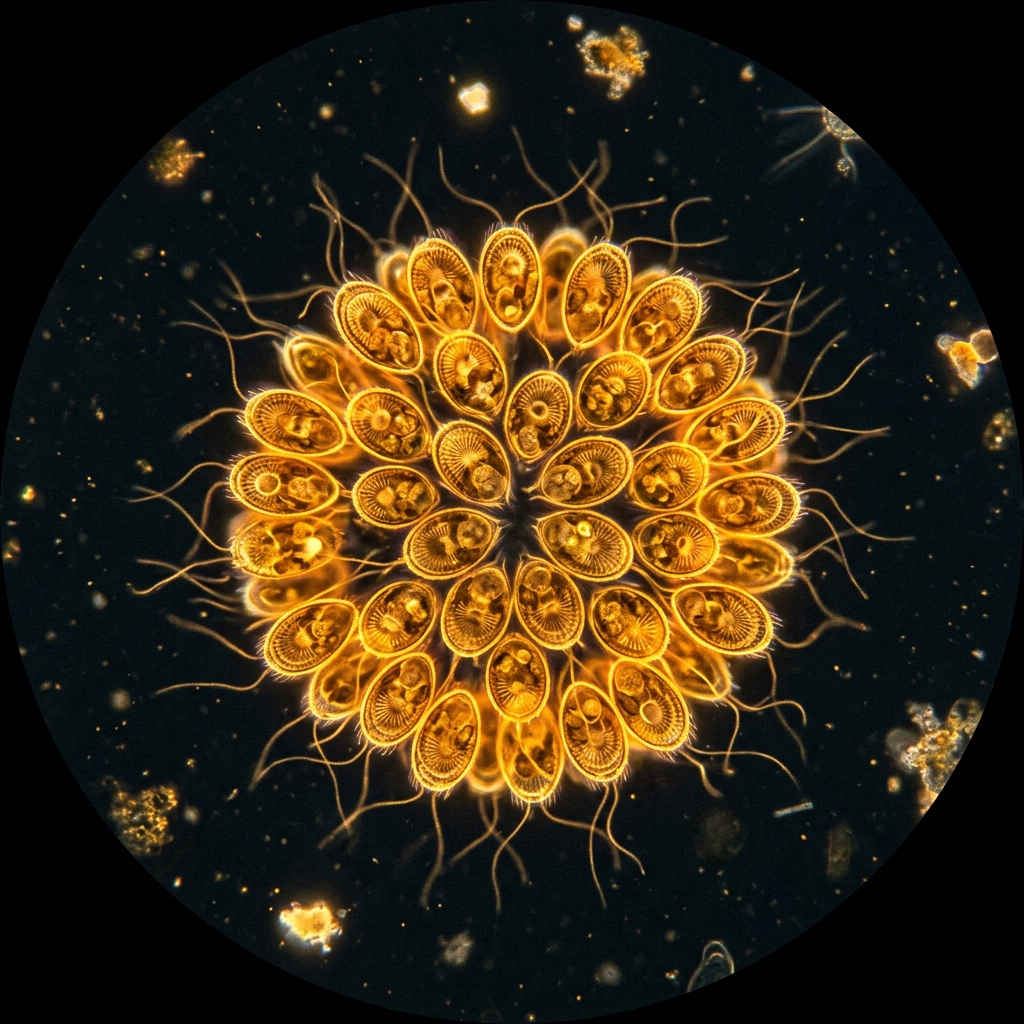
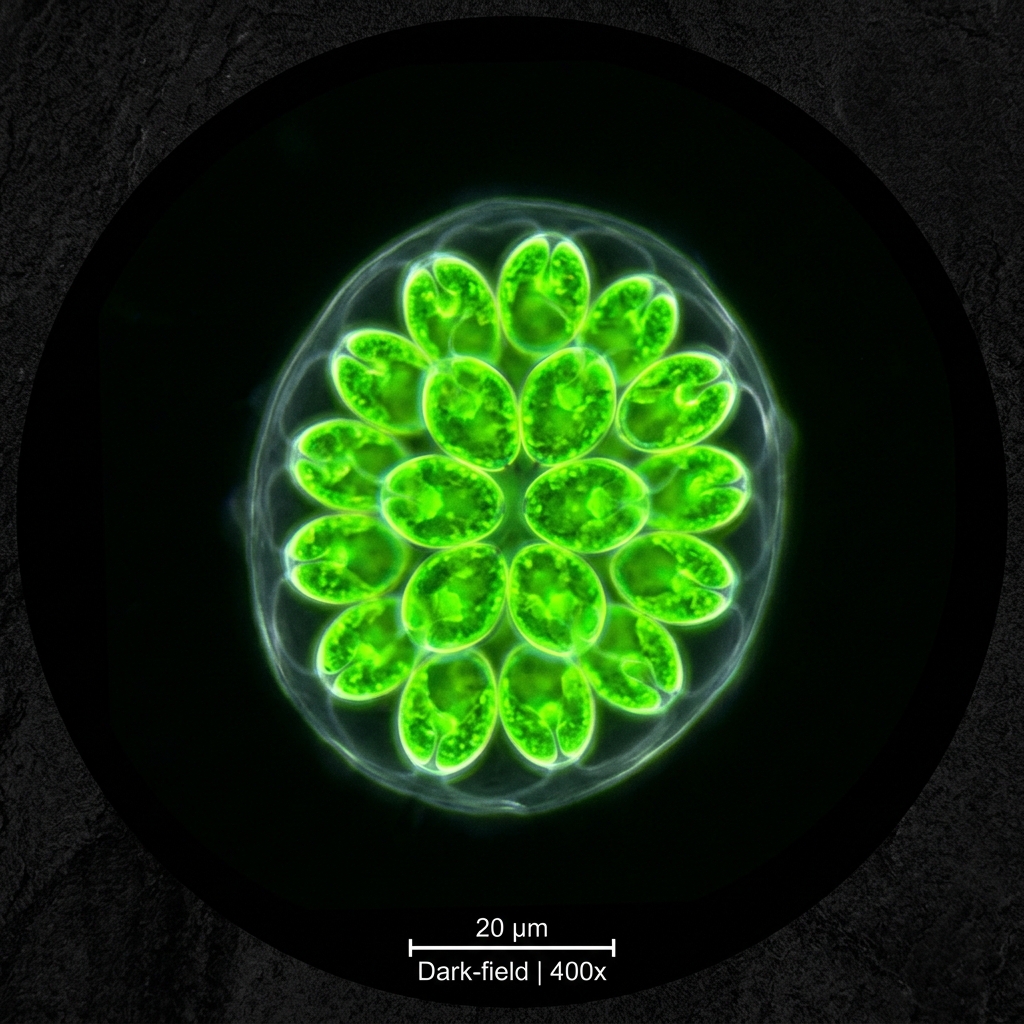
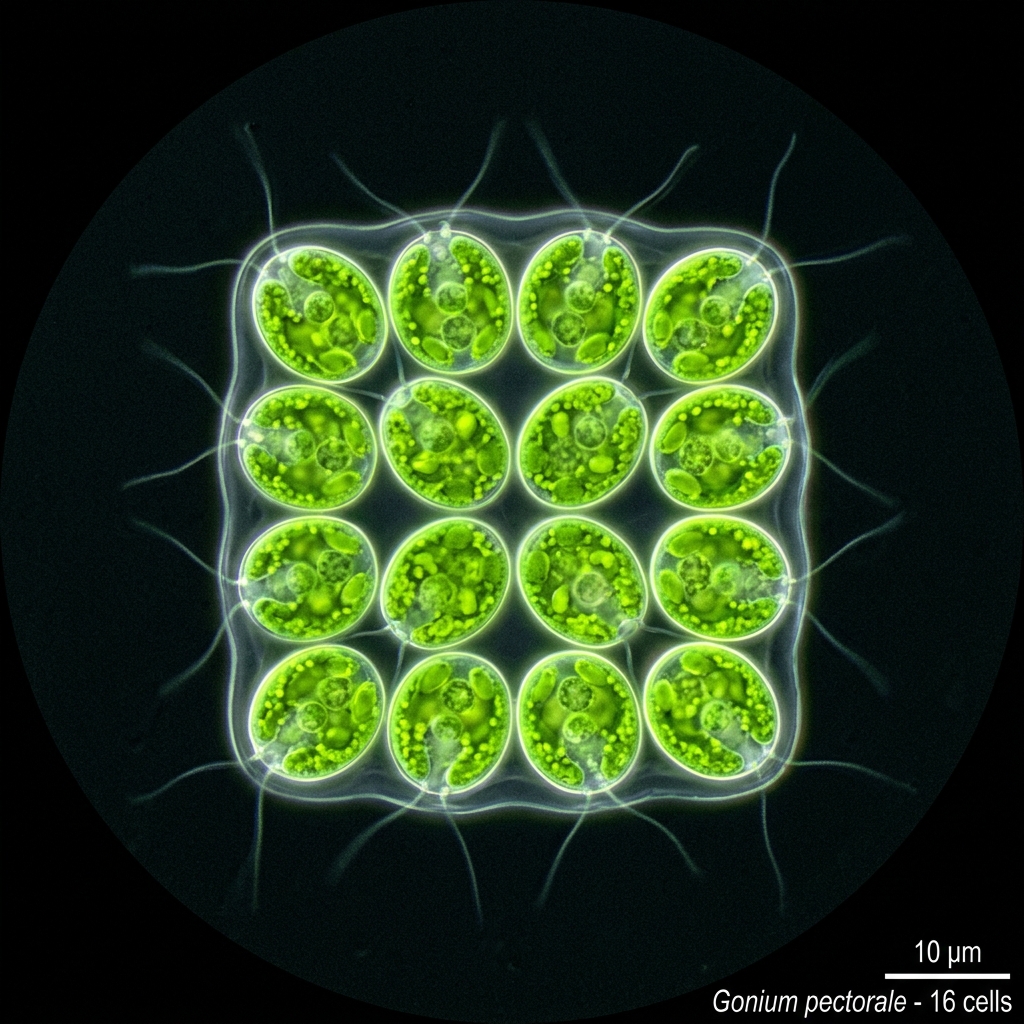
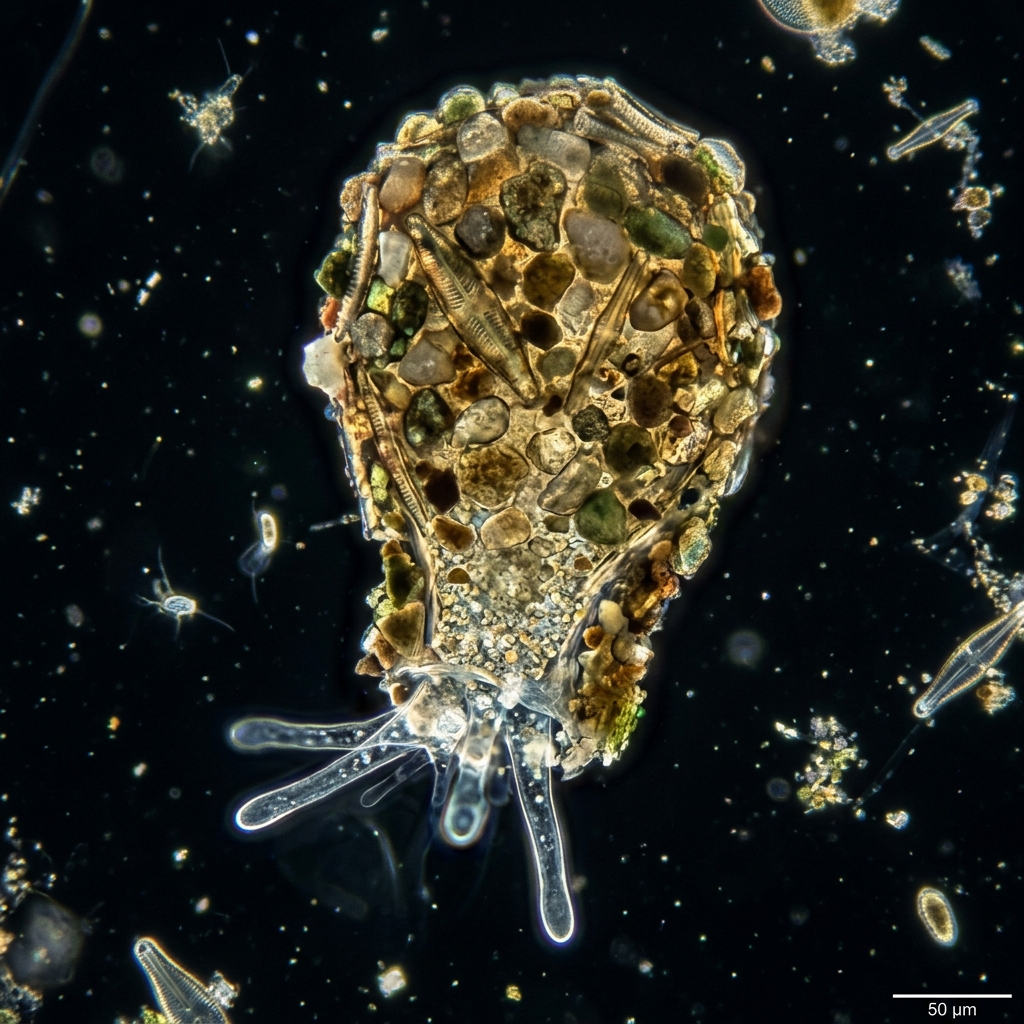
 Fig 1: A Difflugia crawling by extending transparent, finger-like pseudopodia from its flask-shaped shell (test) made of glued sand grains and diatom casings (*Conceptual image).
[!NOTE] *All microorganism images used in this article are conceptual 3D CG renders.
🎯 Quick Summary & FAQ (Key Takeaways)
Before diving into the detailed guide, here are quick answers to the most common questions.
Q. Where can Difflugia be found?
A. They dwell in large numbers within the soft, dark sediment (mud) at the bottom of ponds, marshes, and puddles.
Scooping up mud and water from shallow, calm pond edges or around the roots of aquatic plants yields a high probability of finding them.
Q. What is the difference between Difflugia and other amoebas like Amoeba proteus?
A. Difflugia constructs a protective shell (test) around its body.
While typical amoebas are naked and shape-shifting, Difflugia aggregates surrounding sand grains or empty diatom shells, gluing them together with cell secretions to build a rigid armor.
Q. How do they move and feed while enclosed inside a shell?
A. They extend thick, finger-like, transparent pseudopodia through the shell’s opening to crawl.
By anchoring their pseudopodia to a surface and contracting them, they pull their entire shell forward slowly.
🔬 1. Biology and the Shell-Building Mechanism of Difflugia
When scanning pond mud under a dark microscope field, you might notice a rough, flask-shaped structure. Just as you write it off as a sand grain, a transparent, rope-like projection slowly emerges from its neck.
This is a testate (shelled) amoeba known as Difflugia.
A Micro-Mason’s Craft: Gluing Sand and Shells
The defining characteristic of Difflugia is its artistic shell, referred to as a test.
- Material Selection: They do not synthesize the shell materials inside their bodies. Instead, they ingest micro-sand grains, mineral particles, or empty diatom shells, selecting the ideal sizes.
- Glued Construction: The amoeba secretes a chitin-like organic cement to glue these foreign particles together, forming a seamless, protective armor.
- Dividing and Shell Inheritance: When the amoeba divides (asexual reproduction) to form a new daughter cell, it pre-collects sand grains inside its body, expels them, and constructs the new shell outside before division is complete. This “prefab home building” is a true wonder of the micro-world.
2. Shell Structure Comparison among Amoebas
Here is a comparison of different types of amoebas and how they structure their bodies.
| Feature | Difflugia (Testate Sand-shell) | Arcella (Testate Chitin-shell) | Standard Amoeba (Naked) |
|---|---|---|---|
| Shell Material | Sand, mineral particles, diatom shells (agglutinated) | Chitinous (self-secreted organic matrix) | None (naked plasma membrane only) |
| Shell Shape | Flask-, dome-, pear-shaped, etc. | Bowl- or hat-shaped (aperture in center) | Indefinite (constantly changing) |
| Pseudopodia | Thick, finger-like (lobopodia) | Thick, finger-like (lobopodia) | Lobopodia or thin thread-like filopodia |
| Habitat | Pond/marsh sediment, wetlands | Moist moss, pond plankton, aquatic vegetation | Organic mud, leaf litter, water columns |
3. Collection Methods: Harvesting Pond Sediment
Because Difflugia are benthic, pulling a plankton net through the water column will yield poor results. You must target the bottom sediment.
Steps from Collection to Slide Prep
- Sediment Sampling: Scoop up black organic muck and detritus from the shores of ponds or marshes, particularly around the roots of aquatic plants (reeds or lotuses), using a plastic bottle or jar.
- Settling: Let the sample sit for a few hours to overnight. Once the sediment settles and the water clears, Difflugia will migrate to the aerobic top layer of the mud.
- Isolation: Use a pipette to gently siphon the fluffy interface right above the mud layer and drop it into a petri dish.
- Slide Preparation: Because Difflugia shells are thick and rigid, laying a cover slip flat can crush them. Apply tape spacers to both ends of your slide, or use grease on the corners of the cover slip to raise it. This allows the amoeba to extend its pseudopodia freely.
4. Microscope Highlights: Pseudopodia and Amoeboid Movement
Scanning at 100x to 200x magnification will reveal several dark, flask-shaped particles.
[!IMPORTANT] Spotting Active Amoeboid Life While the shell may look like inert sand, patience will reveal transparent, smooth pseudopodia sliding slowly out of the shell’s narrow aperture. Inside the pseudopodia, you can observe cytoplasm (granules) streaming forward actively—a phenomenon known as cytoplasmic streaming. Once a pseudopodium anchors to the glass, the amoeba pulls its heavy shell forward. Track this dynamic traction movement under 400x magnification.
5. Tips for Simple Home Maintenance and Culturing
Here are simple hacks to maintain and multiply Difflugia at home:
- Vessels & Water:
Fill a petri dish with a shallow layer of filtered pond water or dechlorinated tap water. - Add Fine Sediment:
They must have sand grains to build new shells. Spread a very thin layer of natural pond sediment evenly on the bottom of the dish. - Feeding:
They feed on diatoms, single-celled algae, and bacteria. Add a few drops of Chlorella culture or green water once a week. - Location:
Keep in a cool, dark room (15°C–22°C) away from direct sun. Top off with dechlorinated water as it evaporates.
With their sand-gluing skills, Difflugia construct their own fortresses. Set up a slide on your desk and inspect this microscopic construction site under your microscope!
🔗 Related Articles (Topic Cluster)
- 👉 Culturing & Observing Coleps: The Armored Ciliate and Micro-Sweeper of the Pond
- 👉 Culturing & Observing Diatoms: Water Quality and Light Hacks for Glass-Shelled Micro-Gems
- 👉 Pediastrum (Jeweled Crown Alga) Guide: Collecting and Observing Geometric Star Colonies
- 👉 How to Choose a Home Microscope: A Foolproof Selection Guide with Smartphone Photography Comparison
- 👉 The Smartphone Microscopy Guide: Three Optical Alignment Hacks to Prevent Vignetting