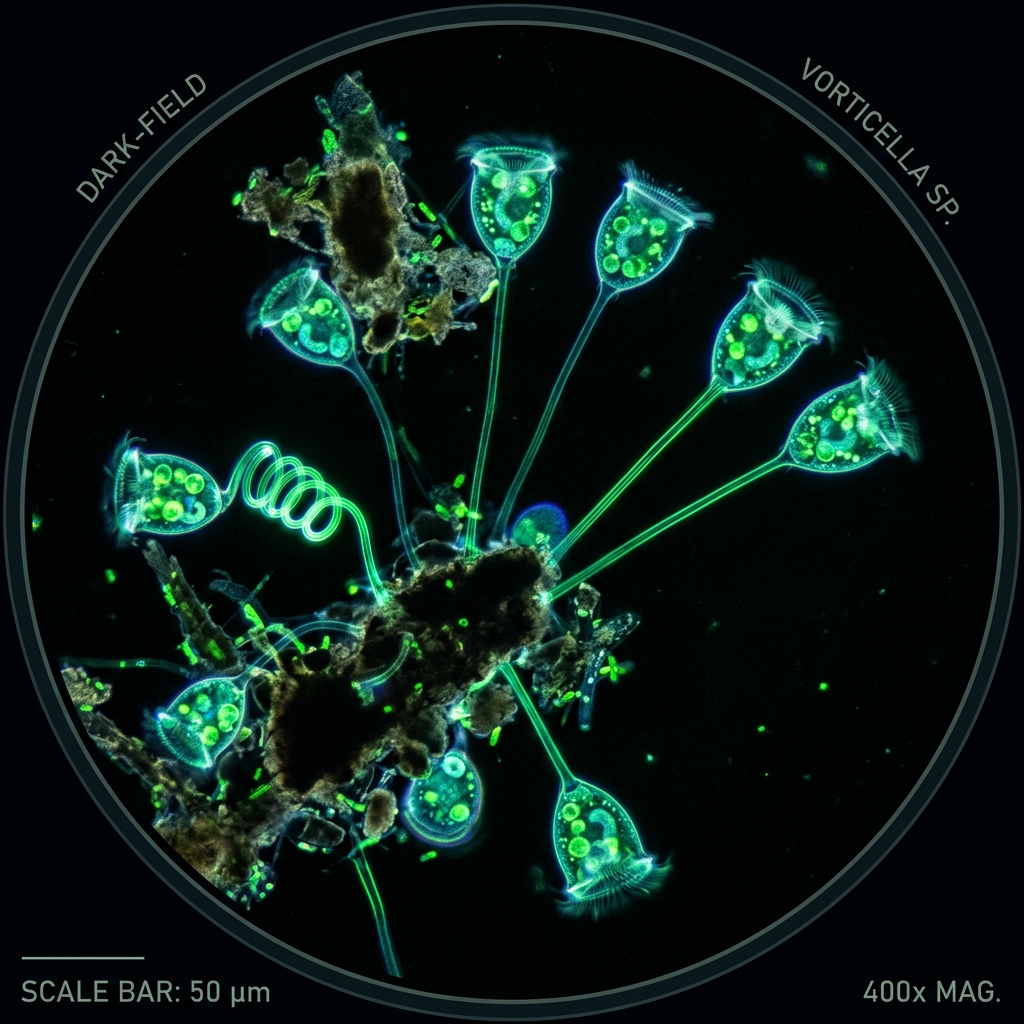
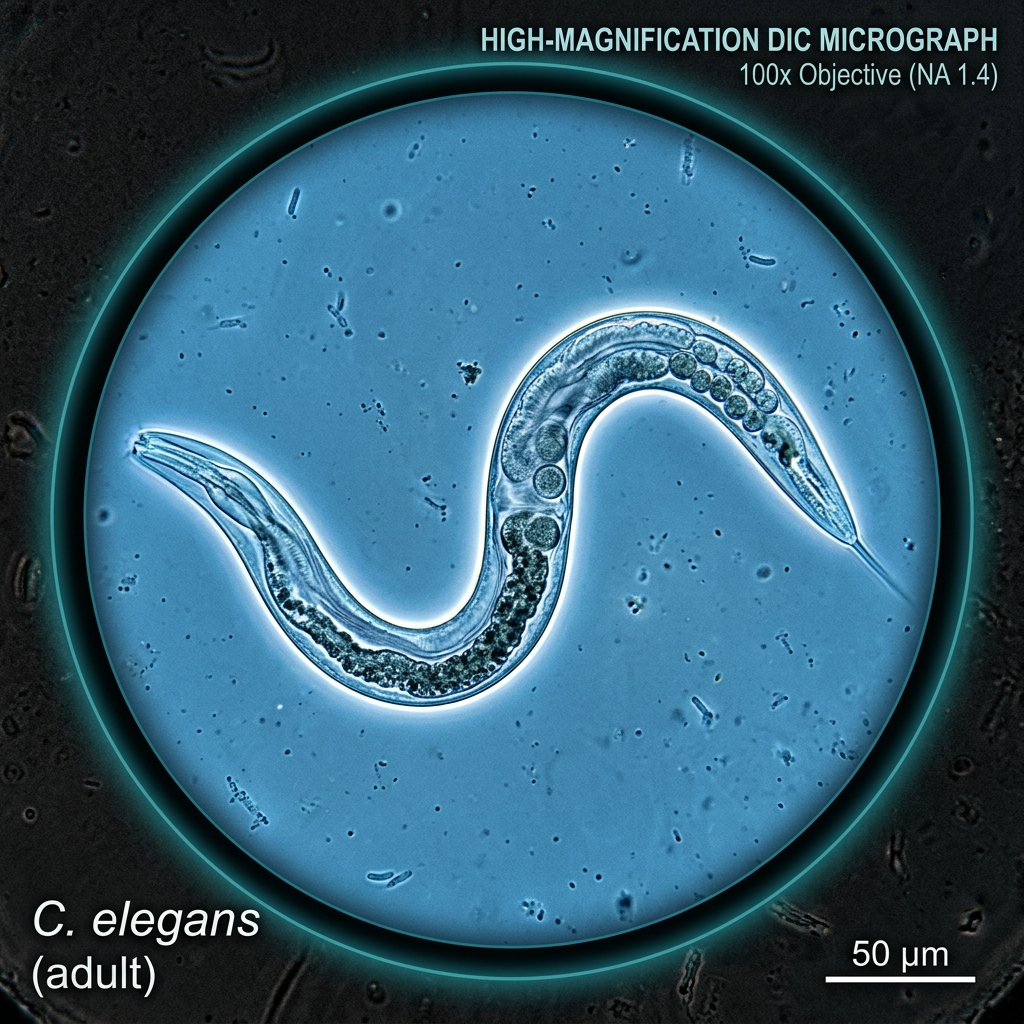
 Figure 1: The nematode C. elegans is characterized by a transparent body, with its entire cell count (959 cells) and neural connections fully mapped (*Image is for illustrative purposes only).
[!NOTE] *All microorganism images used in this article are 3D CG conceptual images.
In the history of biology, alongside fruit flies and mice, there is a great unsung hero that has silently supported numerous Nobel Prize-winning studies, ranging from human genetics and aging to early cancer detection technologies. That is C. elegans (scientific name: Caenorhabditis elegans).
Measuring just 1 mm in length and completely transparent, this tiny worm is extremely easy to rear. Because the number of cells in its body (exactly 959!) and its neural circuits have been completely mapped, it continues to be studied at the forefront of science as the “ultimate multicellular model that can be fully simulated on a computer.” We will introduce a groundbreaking technique to easily culture this Nobel-prize-winning nematode in large quantities at home using only “banana peels” and “dry yeast” (baker’s yeast)!
1. What is the Science Idol “C. elegans”?
C. elegans is a safe, non-parasitic nematode that lives in the soil and feeds on bacteria growing on decaying organic matter. They are loved by scientists for the following reasons:
- Ultra-Fast Life Cycle: It takes only 3 days to grow from an egg to an adult.
- Self-Fertilization: Since they are primarily hermaphrodites (possessing both male and female reproductive systems), a single individual can produce hundreds of clonal offspring in just a few days.
- Cryopreservable: They can be completely frozen in liquid nitrogen for years; when thawed, they revive and resume activity.
2. How to Make a “Banana-Yeast Culture Plate” at Home
While academic laboratories use specialized agar media (NGM plates) seeded with E. coli (OP50 strain) as the primary food for nematodes, a home setup can fully substitute this with banana peels and dry yeast.
Setup Steps
- Prepare the Container: Place a lightly moistened paper towel at the bottom of a clean plastic Petri dish or small Tupperware container.
- Set the Medium: Cut a 2 cm square of ripe banana peel (with dark sugar spots) using tweezers and place it on the paper towel.
- Scatter the Food (Yeast): Sprinkle a few grains of dry yeast on the banana peel. The yeast will absorb moisture from the banana and dissolve, forming a natural yeast film (food for the nematodes).
- Introduce the Nematodes: Place the starter nematodes (which can be isolated from moist soil under fallen leaves, or purchased from research supply stores) onto the surface of the banana peel.
- Storage: Cover the container and store it in a cool, dark place (15°C to 20°C) out of direct sunlight.
[!WARNING] Beware of Mites and Mold! Since the banana medium is highly nutritious, if mold spores or mold mites from the air contaminate the culture, they can hinder nematode growth. Tape the container’s air vents with a piece of non-woven mask fabric or medical surgical tape to thoroughly block pests from entering.
3. Microscope Observation: S-shaped Wave Motion and Internal Eggs
After 3 to 5 days of starting the banana culture, observe the surface of the banana peel under a stereomicroscope (40x to 100x).
- Sinusoidal Movement: Nematodes slither smoothly through liquids or on damp surfaces, drawing a beautifully symmetrical “S-shaped sine wave.” This motion is an excellent observation sample showing how their simple nervous system coordinates with muscles.
- See-Through Internal Structure: Increase the magnification to 200x or more to look through their transparent skin. You can witness eggs forming and being laid one after another, and the pharynx in the head pumping rapidly to swallow food in real time.
“Cutting-edge biology” replicated right on your desk, moving past the boundaries of the laboratory. Why not try growing and observing this mysterious transparent worm that supported Nobel Prizes in your own home lab?
![[The Microscopic Straw Hat] Arcella (Testate Amoeba) Sampling, Culturing & Shell Observation Guide](/images/arcella.png)