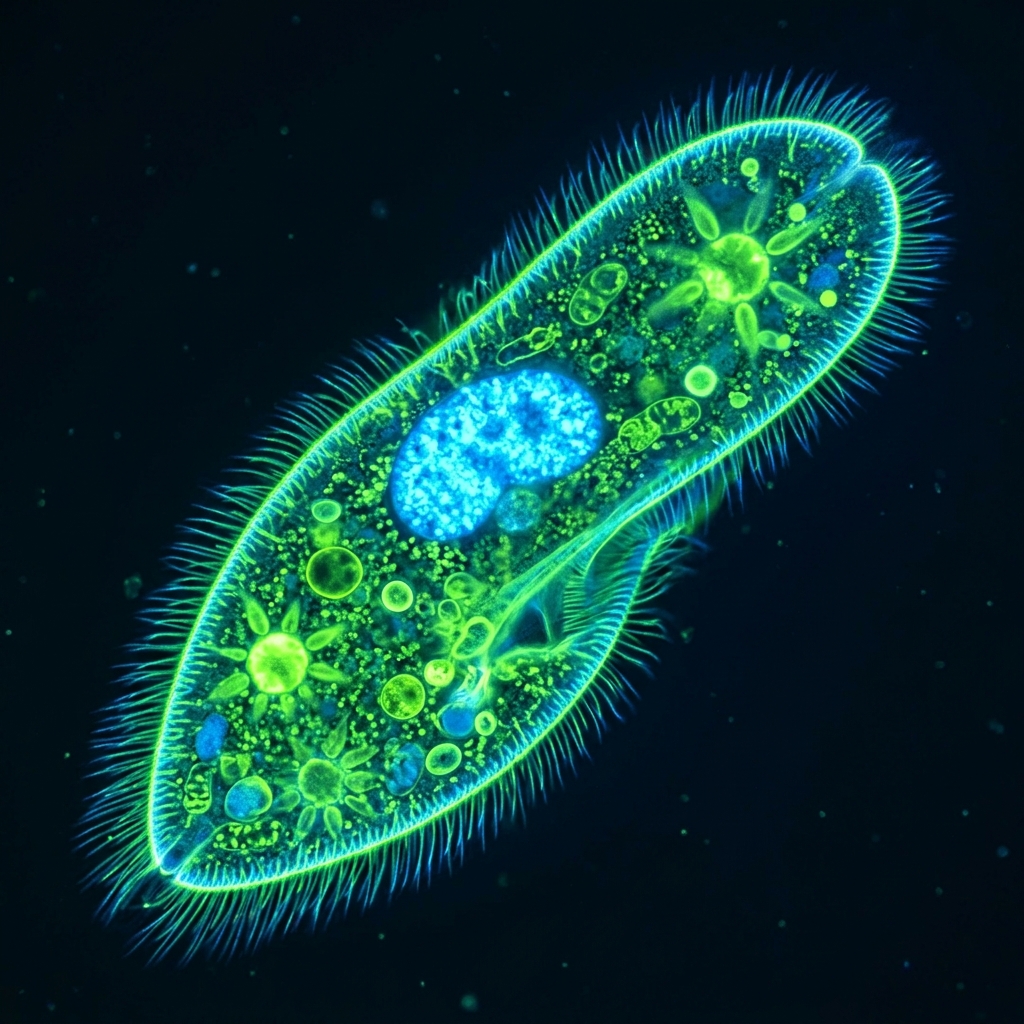
 Figure 1: Microscope image of Paramecium swimming rapidly by waving countless fine \"cilia\" covering its entire body (*Image is for illustrative purposes only).
[!NOTE] *All microorganism images used in this article are 3D CG conceptual images.
For microscopy hobbyists, and as the “ultimate live food” that dramatically increases the survival rate of fish fry (especially Medaka/Japanese rice fish and tropical fish), Paramecium is attracting a great deal of attention.
Although Paramecium is a single-celled organism, it swims gracefully by waving the cilia covering its body. Under the microscope, it showcases micro-dramas full of life, such as dynamic reproduction through cell division and the rhythmic pulsation of its contractile vacuoles.
However, many people who start culturing after buying commercial starter cultures face failures like “the water turned foul and smelled like a ditch after a few days” or “they aren’t multiplying at all.”
In this article, we will thoroughly explain how to build a culture water recipe using common household materials like a plastic bottle and either rice bran or Ebios tablets to guarantee a 0% failure rate and explode the population to thousands, along with professional photography hacks to keep fast-moving Paramecium still for detailed observation.
1. Basic Theory of Paramecium Culturing: What Do They Eat to Multiply?
Before starting the culturing steps, let’s understand the most important mechanism: how Paramecium multiplies. Misunderstanding this is the main reason for culture crashes.
[!IMPORTANT] The Biggest Misconception: Paramecium does not directly eat rice bran or Ebios tablets The primary food source for Paramecium is not the rice bran or tablet powder itself. They ingest bacteria (microorganisms) that multiply by breaking down organic matter in the water, drawing them into their cytostome (mouth). In other words, the essence of culturing Paramecium lies in “indirect rearing: culturing bacteria in moderation to feed the Paramecium.”
If there is too much organic food in the water, bacteria will multiply explosively, consuming all dissolved oxygen and causing “anaerobic decomposition (rotting water),” which suffocates the Paramecium. Conversely, if it is too little, bacteria will not grow, and the Paramecium will starve. The following recipes reproduce the “exquisite balance of organic matter.”
2. Homemade Recipe for Explosive Paramecium Culture Water
Here are two popular culturing methods using easily accessible materials. Choose the method that suits you best based on the comparison table below.
📊 Comparison of Culturing Methods
| Method | Food Source (Organic Matter) | Advantages | Disadvantages | Culture Period (Peak) |
|---|---|---|---|---|
| Rice Bran Method | Raw rice bran (a few grains) | Almost zero cost, closest to natural explosive growth | Water quality degrades easily if overfed | 4–6 days |
| Ebios Method | Ebios tablet (1/2 tablet) | Extremely low odor, uniform measurement, very low failure rate | Slight purchase cost for tablets | 5–7 days |
🧪 Common “Water of Life” Preparation
Using tap water directly will instantly wipe out both bacteria and Paramecium due to the sanitizing effect of residual chlorine. Always prepare dechlorinated water by letting tap water sit in a bucket under sunlight for at least 24 hours, or use commercial soft mineral water.
🌾 Method A: Natural Culturing Using “Raw Rice Bran”
Step 1: Prepare the Bottle
Prepare a well-rinsed empty 500ml plastic bottle (wash thoroughly with running water, as any residual detergent will wipe out the culture). Pour dechlorinated water up to 80% of the bottle (approx. 400ml).
Step 2: Add Rice Bran
Add just two pinches of fresh raw rice bran (about 10 to 15 grains) directly into the water. Note: An amount that feels “too small” is actually optimal. Adding more will turn the water black and rotten in two days.
Step 3: Inoculate with Starter Culture
Pour in about 50ml to 100ml of Paramecium starter culture (enough to fill the remaining space in the plastic bottle). A higher starting concentration of Paramecium makes it easier to prevent oxygen depletion from excessive bacterial growth, lowering the failure rate.
Step 4: Shake and Store
Close the bottle cap loosely (sealing it completely deprives the bottle of oxygen, causing the culture to crash). Gently swirl the bottle once or twice a day to dissolve oxygen into the water. Store on a shelf in a warm room (20°C to 25°C) out of direct sunlight.
💊 Method B: Clean Culturing Using “Ebios Tablets”
If rice bran is unavailable or you want to keep the room odor-free, use Ebios tablets or Wakamoto Strong.
Step 1: Add Water and Starter Culture
As with the rice bran method, fill a plastic bottle with 400ml of dechlorinated water and 100ml of Paramecium starter culture.
Step 2: Crush and Add the Tablet
Cut an Ebios tablet in half (1/2 tablet). Dropping it directly into the bottle works, but crushing it into a powder using the back of a spoon beforehand speeds up bacterial colonization and accelerates the culturing process.
Step 3: Airy Management
Close the cap very loosely, just enough for the screw threads to catch. The brewer’s yeast in the Ebios tablet serves as excellent food for bacteria. About four days after setup, the water in the bottle will turn slightly cloudy. If you look closely, you will see thousands of tiny white specks of Paramecium moving actively.
3. Microscope Observation Points: Ecology of the Microscopic “Slipper”
Let’s observe the cultured Paramecium under a microscope (for basic focusing and microscope structures, refer to “Beginner’s Guide to Choosing a Home Microscope: Comparison of Recommended Models Supporting Smartphone Photography”).
Paramecium moves very fast and will quickly vanish from the field of view under normal slide setups. To keep them still for beautiful observation, the following photography hack is essential:
📸 The “Cotton Fiber Hack” to Stop Movement
- Place a few strands of cotton fibers, torn and crossed in a grid pattern, in the center of a slide glass.
- Drop one drop of Paramecium culture water siphoned with a dropper onto the fibers.
- Gently place a cover slip on top.
- The fine cotton fibers act as a three-dimensional jungle gym, physically trapping the Paramecium. This keeps them perfectly inside the camera’s field of view even at high magnifications (100x to 400x).
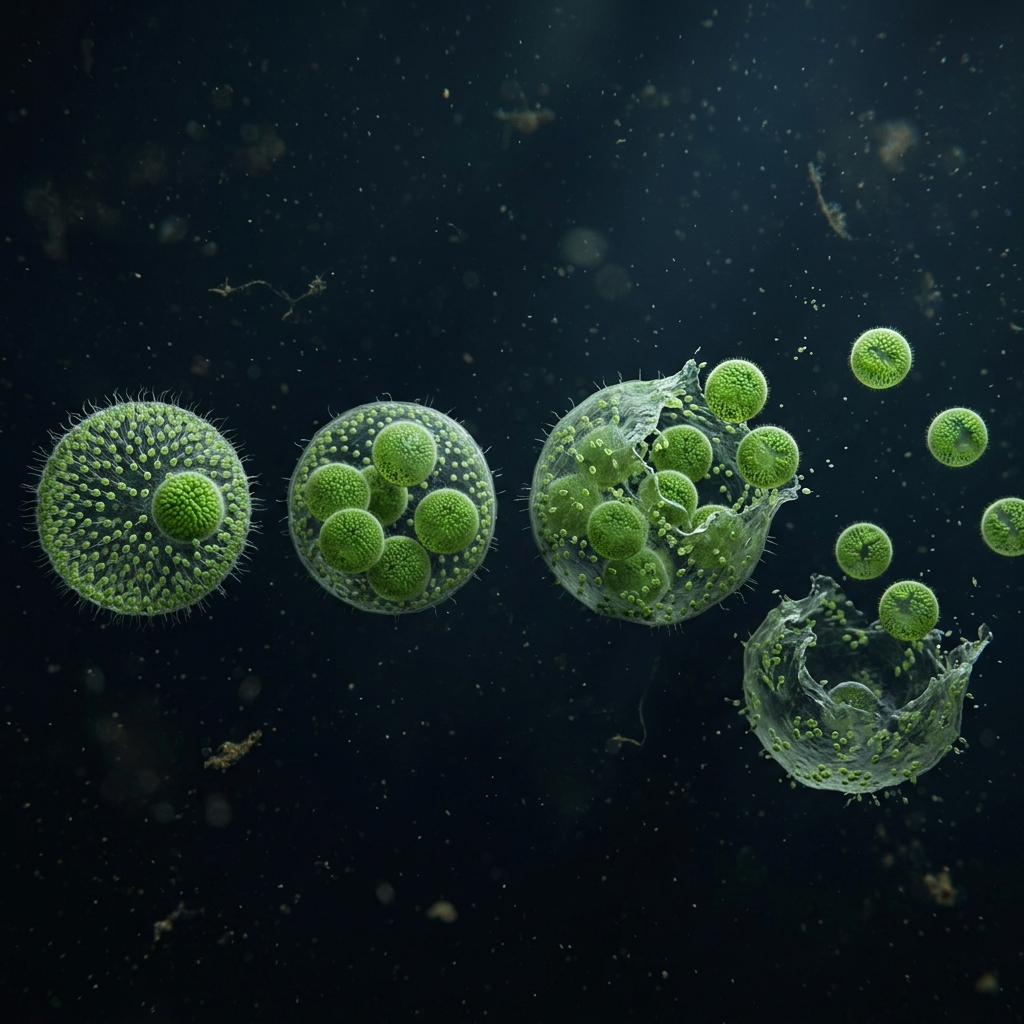 Figure 2: Slide setup diagram utilizing cotton fibers to hold Paramecium still, allowing clear visualization of the cell nucleus and contractile vacuole activity (*Image is for illustrative purposes only).
🔍 3 Key Organs to Observe
- 1. Ciliary Movement (Cilia): Observe how the approximately 10,000 fine hairs covering the body wave in an orderly fashion like falling dominoes. Using a smartphone’s slow-motion feature, you can record this fluid dynamic beauty in high clarity. For photography tips, check “Smartphone Microscope Photography Guide: 3 Optical Axis Adjustment Hacks to Prevent Vignetting and Get High-Quality Images”.
- 2. Contractile Vacuoles: At the anterior and posterior ends of the Paramecium, there are star-shaped contractile vacuoles. They act as pumps to collect and expel excess water that enters the body due to osmotic pressure. You can clearly see them opening and closing like valves every few dozen seconds.
- 3. Binary Fission: If you are lucky, you might witness asexual reproduction, where a Paramecium constricts in the middle and splits into two new individuals.
🛑 4. Troubleshooting to Prevent Culturing Failure
Here are the most common culturing issues, their causes, and how to avoid them.
- The bottle smells like a strong ditch or rotten eggs:
- Cause: Anaerobic rotting caused by adding too much rice bran or Ebios. Oxygen is completely depleted, and all plankton have suffocated.
- Solution: Recovery from this bottle is impossible. Discard it, and make sure to cut the food amount in half next time.
- They are not multiplying at all after a week:
- Cause: The water temperature is too low (below 15°C) or the bottle is completely sealed, causing oxygen deprivation.
- Solution: Keep the cap very loose to allow air exchange, and move the bottle to a warm location with a room temperature around 22°C.
❓ 5. Frequently Asked Questions (FAQ)
Q1. Can I use containers other than plastic bottles?
A1. Yes, you can culture them in glass jars or Tupperware containers. However, if the water is too deep, oxygen depletion easily occurs at the bottom. A shallow container like Tupperware, which has a larger surface area in contact with air, allows oxygen to dissolve more easily, improving the survival rate.
Q2. How do I maintain the culture after it reaches its peak?
A2. The density peaks around 5 to 7 days after starting the culture. If left as is, the food will run out, and the culture will crash (starvation). Once the peak is reached, perform a “split” by transferring half of the water to a new bottle, adding dechlorinated water, and mixing in 1/2 of a new Ebios tablet. This allows you to maintain the Paramecium culture indefinitely.
Q3. Should I place it in the shade or in a sunny spot?
A3. A bright shady spot out of direct sunlight (or under indoor lights) is optimal. Direct sunlight will rapidly increase the water temperature in the bottle; if it exceeds 30°C, the Paramecium will boil and die. While they can grow in the dark as long as bacteria multiply, a bright indoor location is recommended for stability.
Q4. Is it okay to pour the culture water directly when feeding fish fry?
A4. If the amount is small, pouring the culture water directly into the fry tank is perfectly fine. However, since the culture water contains ammonia and decomposed organic waste, dumping in a large quantity at once can degrade the water quality. If you are concerned, filter them out using a coffee filter, or use a dropper to siphon out the dense clusters of Paramecium (they tend to gather toward light) to feed them.
Q5. Where is the safest place to obtain starter culture?
A5. While you can collect them from natural environments (rice fields or muddy ponds), there is a risk of introducing unwanted pathogens or harmful predators (like dragonfly nymph eggs) that prey on fish fry. Initially, purchasing a “purely cultured starter” from an aquarium shop or a reliable online dealer is the safest option and avoids failure.
🔗 Related Articles
- 👉 Beginner’s Guide to Choosing a Home Microscope: Comparison of Recommended Models Supporting Smartphone Photography
- 👉 Smartphone Microscope Photography Guide: 3 Optical Axis Adjustment Hacks to Prevent Vignetting and Get High-Quality Images
- 👉 The Beautiful Green Sphere: How to Culture Volvox and Key Points for Observing Asexual Reproduction
![[The Green Spaceship] Volvox Breeding & Asexual Reproduction Guide | How to Make DIY Culture Water](/images/volvox_structure.png)
![[The Mystery of the Spring] Step-by-Step Guide to Collecting and Culturing Vorticella (Bell Animalcule) with Ultra-fast Contraction at Home](/images/vorticella.png)