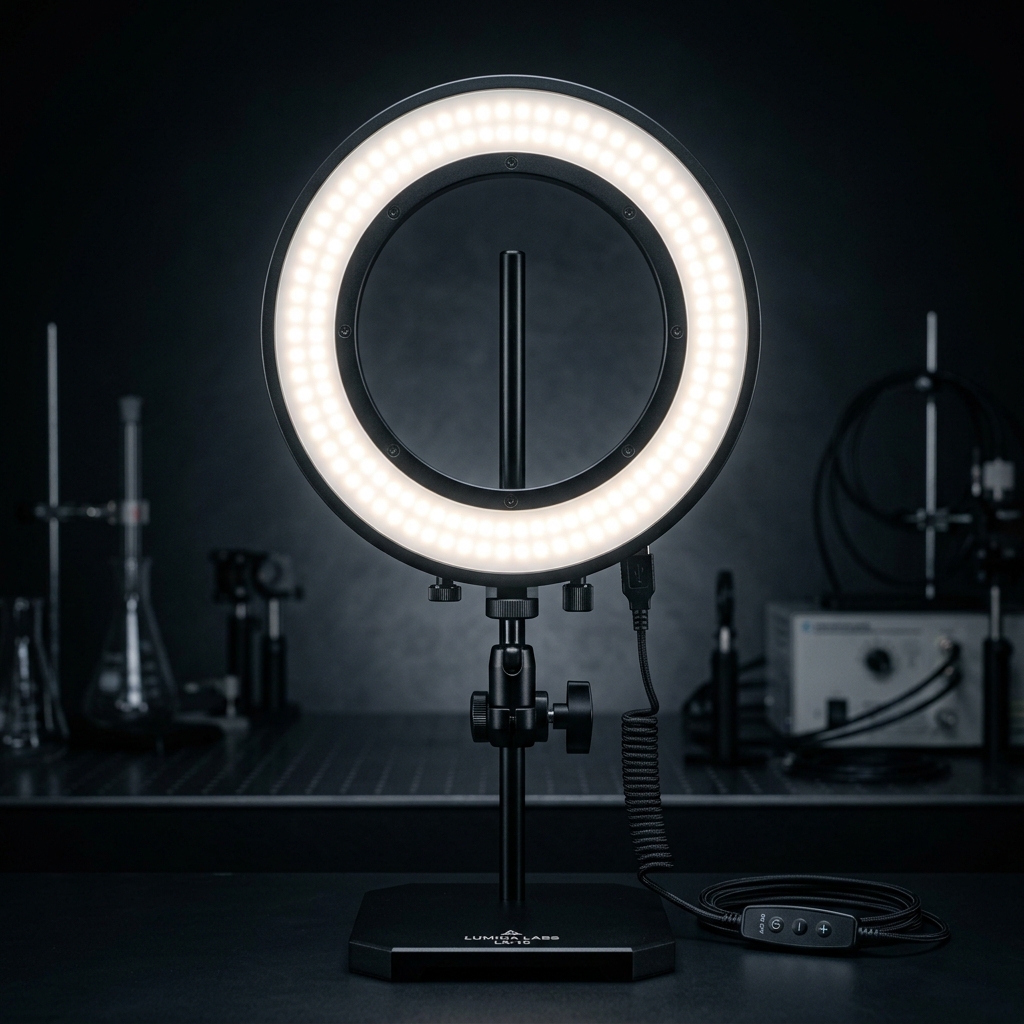
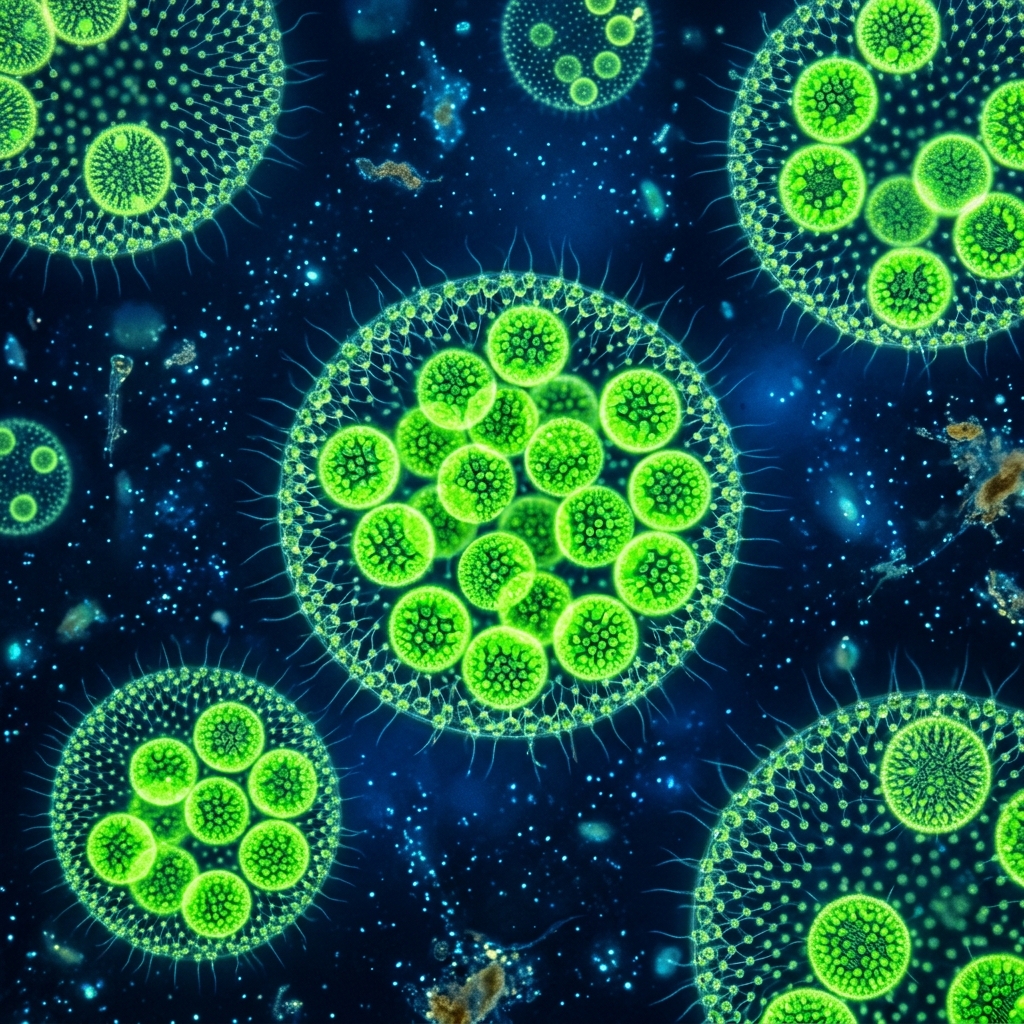
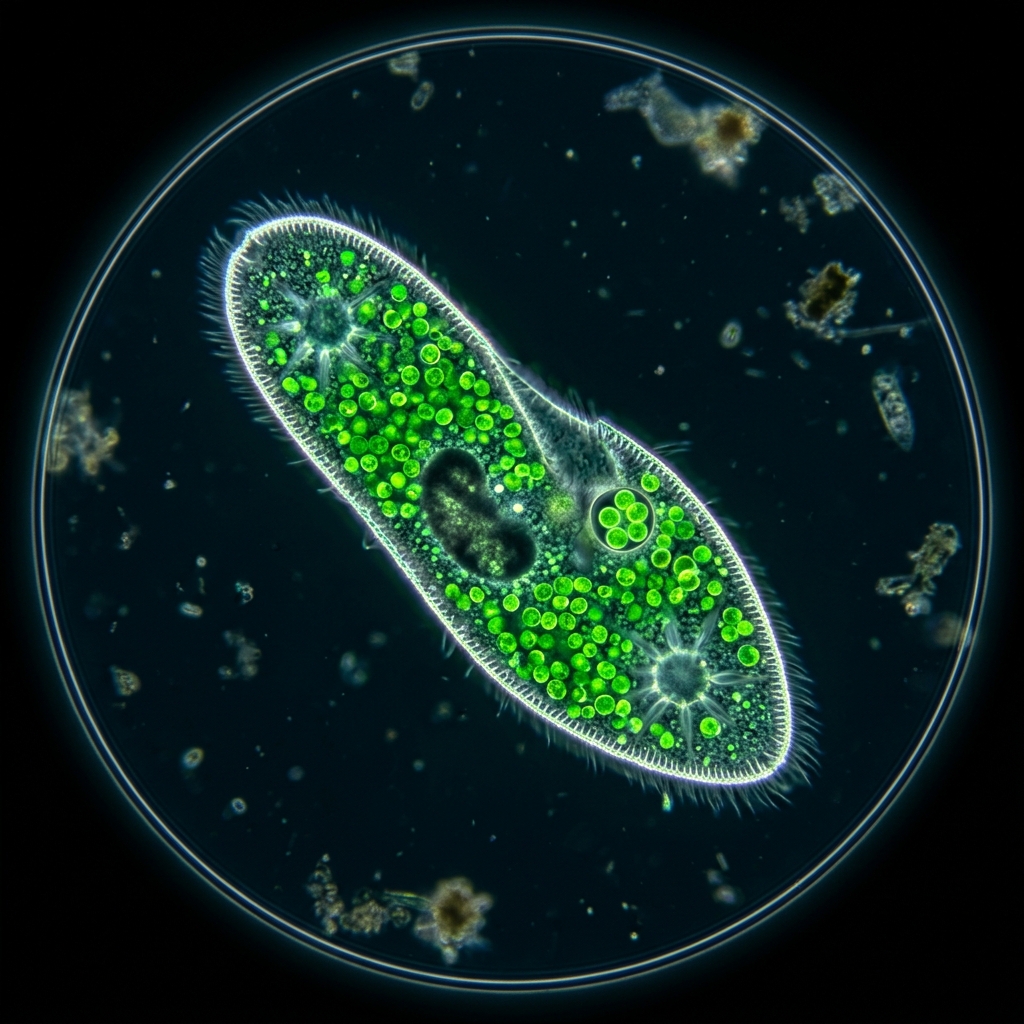
 Figure 1: Green Paramecium swimming while harboring bright emerald-green \"Chlorella\" inside its transparent cytoplasm (*Image is for illustrative purposes only).
[!NOTE] *All microorganism images used in this article are 3D CG conceptual images.
🎯 Quick Summary & FAQ (Conclusion First)
Before going into the detailed explanation, here are the most important points for rearing and observing Green Paramecium.
Q. How is it different from regular Paramecium (Caudatum)? A. It harbors countless Chlorella (algae) symbiotically inside its body, enabling it to photosynthesize. Therefore, it can survive just by being exposed to light, allowing for long-term maintenance in clean water without producing the “foul odor” typical of regular Paramecium cultures.
Q. What is the minimum required environment for culturing? A. “Sufficient light” and “a small amount of bacteria (food).” You need to place it on a sunny windowsill or illuminate it with an LED desk light for at least 12 hours a day. With light, they can survive for more than 2 to 3 weeks even if you forget to feed them.
🔬 1. Micro-Society of Symbiosis: Why is the Paramecium “Green”?
Anyone who sees Green Paramecium (scientific name: Paramecium bursaria) swimming under a microscope for the first time is amazed by its beauty. While it swims actively using cilia just like a regular Paramecium, its body is filled with a fresh emerald green.
The source of this green color is Chlorella (single-celled algae of the genus Chlorella, often referred to as zoochlorella) living symbiotically inside the cell. Believe it or not, hundreds of Chlorella reside inside a single Green Paramecium.
🤝 Give-and-Take Symbiotic System
They engage in an extremely rational exchange of substances:
[Green Paramecium (Host)]
   │
   ├─► Carbon dioxide (respiratory waste) ───► [Symbiotic Chlorella (Algae)]
   ├─► Nitrogen, phosphorus, etc. ──────────►           │
   │                                                    ├─► Photosynthesis! (Sunlight/LED)
   │                                                    │
   └─◄ Oxygen ◄─────────────────────────────────────────┤
   └─◄ Maltose (organic nutrients like sugars) ◄────────┘
- Benefits for Chlorella: They reuse the carbon dioxide ($CO_2$) and metabolic wastes (nitrogen, phosphorus) excreted by the Paramecium as raw materials for photosynthesis. Also, being inside the Paramecium’s body protects them from the risk of being eaten by other larger plankton.
- Benefits for Paramecium: It directly receives oxygen and nutrients like maltose (malt sugar) produced by Chlorella through photosynthesis. This allows the Paramecium to survive without starving even in harsh environments where no external food is available, as long as there is light.
2. 📊 Culturing Comparison with Regular Paramecium (Caudatum)
Compared to regular Paramecium (Paramecium caudatum), Green Paramecium has a much lower barrier to culturing, making it ideal as an indoor aquatic hobby.
| Feature | Green Paramecium (P. bursaria) | Regular Paramecium (P. caudatum) |
|---|---|---|
| Primary Energy Source | Photosynthesis (light) + trace bacteria | Bacteria, organic matter only |
| Placement | Bright windowsill, LED illumination | Dark or shaded environment (avoid direct light) |
| Water Odor | Almost odorless (or healthy algal scent) | Foul, ditch-like rot odor easily develops |
| Water Degradation Resistance | Very high (minimal organic input) | Low (easily crashes from overfeeding) |
| Recommended Container | Transparent glass jar, plastic bottle | Plastic bottle, opaque container |
3. 🧪 Foolproof Windowsill Bottle Culturing Recipe for Green Paramecium
Here are the steps to multiply Green Paramecium at home and maintain them for months.
📋 Tools to Prepare
- Green Paramecium Starter Culture: Obtain from aquarium shops, online sellers, or collect from wild pond mud and around fallen leaves.
- Transparent Glass Jar or Plastic Bottle: Use a completely transparent container to let light pass through.
- Dechlorinated Water: Tap water left out for 24 hours or commercial soft mineral water.
- Trace Culture Nutrients: Crushed yeast preparation (Ebios tablets) powder.
- Light Source: Sunny windowsill (beware of high temperatures in summer) or a plant growth LED light of 10W or more.
🛠️ Culturing Setup Steps
[Green Paramecium Bottle Culture Layout]

       [ Loose cap allowing air passage ]
             └───┐ ┌───┘
         ┌───────────────┐
         │   Air Space   │ <── Leave about 20% air space at the top
         ├───────────────┤
         │               │
         │ Green         │ <── Dechlorinated water 400ml
         │ Paramecium    │     + Starter culture 100ml
         │  (green dust) │
         │               │
         │   ·.・.・.・  │ <── Supplementary Ebios powder (1/8 tablet)
         └───────────────┘     *Do not overfeed!
Step 1: Prepare the Water
Pour about 400ml of dechlorinated water into a clean, transparent 500ml plastic bottle (or glass jar).
Step 2: Add Supplementary Nutrients (Trace Amount)
Crush an Ebios tablet with a spoon, and add just a tiny speck (less than 1/8 of a tablet) to the water.
[!IMPORTANT] Warning: Overfeeding is strictly prohibited! Since Green Paramecium obtains most of its nutrients through Chlorella’s photosynthesis, there is no need to add large amounts of food like with regular Paramecium. Overfeeding will turn the water cloudy, cause oxygen depletion, and force the Paramecium to expel its symbiotic Chlorella and die (bleach).
Step 3: Inoculate with Starter Culture
Pour in 50ml to 100ml of Green Paramecium starter culture.
Step 4: Place in a Lighted Area
Close the bottle cap loosely to allow air circulation, and place it on a “sunny windowsill” or “directly under an LED light (12 to 16 hours of illumination)”. Note: Direct summer sunlight can raise the water temperature above 35°C, boiling the Paramecium. In summer, filtered sunlight through a lace curtain or LED illumination in an air-conditioned room is safer.
Step 5: Daily Management
Once a day, gently swirl the bottle in a circular motion to disperse nutrients settled at the bottom and introduce air (oxygen). In 1 to 2 weeks, the water will turn a faint yellowish-green, and Green Paramecium will gather toward the light like fine green dust.
4. 🔬 Microscope Observation and Photography Hacks
The true charm of Green Paramecium is revealed when magnified under a microscope.
🔍 Observation Steps
- Collection with a Dropper: Since they gather toward light (positive phototaxis), target the lit walls or surface of the bottle when siphoning them with a dropper.
- Slide Preparation: Drop a drop on a slide glass and gently place a cover slip on top.
- Adjusting Magnification:
- 100x: Observe them swimming actively like green rugby balls.
- 400x: Clearly see the spherical Chlorella (green round grains) packed inside the cell, and the fine waving of the cilia.
📸 “Slowing-Down Hack” for Beautiful Photography
Green Paramecium swims very fast, making it difficult for the camera to focus. To stop their movement, the following methods are effective:
- Using Cotton Fibers: When dropping water on the slide glass, mix in a tiny amount of teased cotton fibers. Green Paramecium caught in the gaps of the fibers will be immobilized, making it easy to take beautiful high-magnification photos.
- Observing the “Bleaching” Phenomenon: If you wrap the culture bottle completely in aluminum foil and place it in the dark for more than a week, you can observe the Green Paramecium, unable to photosynthesize, digesting and expelling its symbiotic Chlorella, returning to a translucent “white Paramecium.” If you expose them to light again and add Chlorella liquid, you can witness the restoration of the symbiotic relationship—a true mystery of life.
A micro-botanical factory expanding from fallen leaves and pond water. Why not line up green bottles on your windowsill this weekend and observe this beautiful and wondrous symbiotic life?
🔗 Related Articles
- 👉 Zero Failures: Easy Paramecium Culturing & Microscope Observation Hacks Using Rice Bran and Plastic Bottles
- 👉 Basics of Phytoplankton Culturing: Stable Propagation Manual Using Live Chlorella
- 👉 Beginner’s Guide to Choosing a Home Microscope: Comparison of Recommended Models Supporting Smartphone Photography
- 👉 Smartphone Microscope Photography Guide: 3 Optical Axis Adjustment Hacks to Prevent Vignetting and Get High-Quality Images