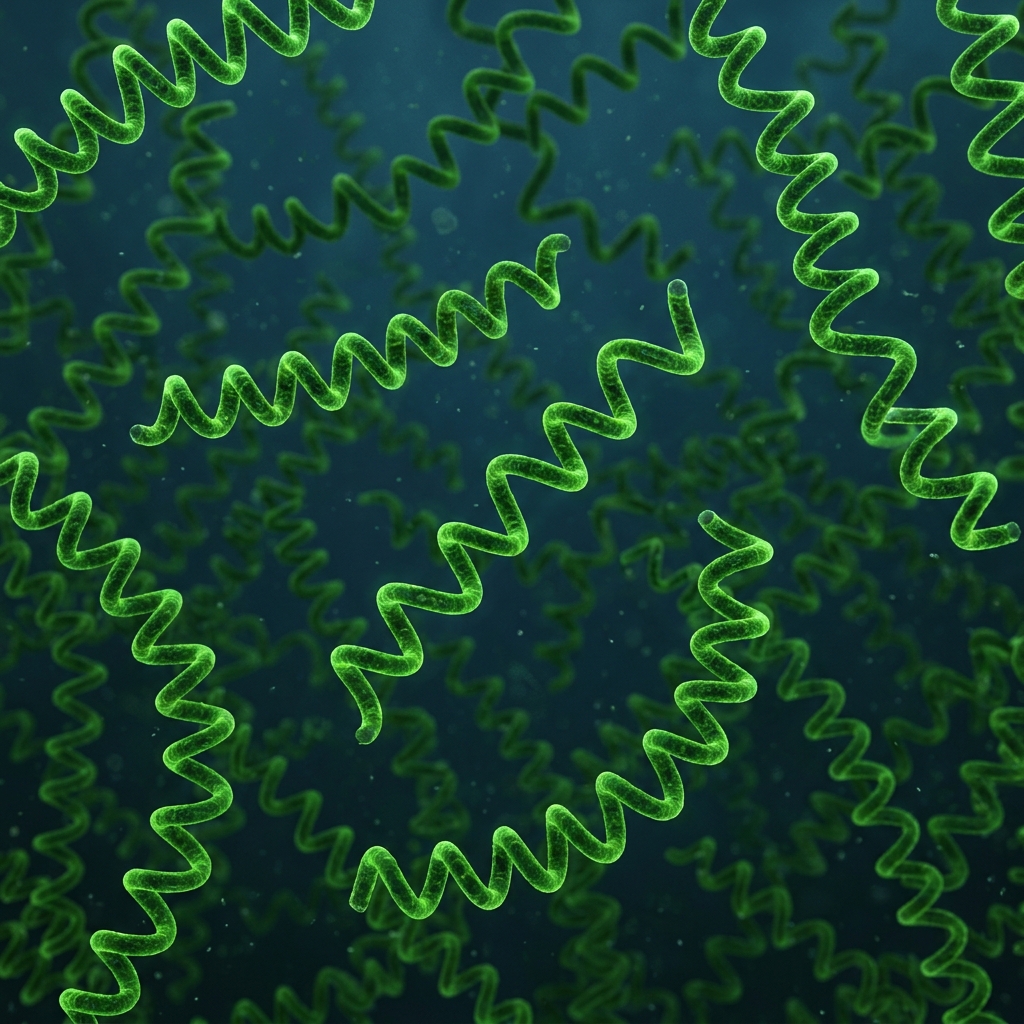
 Figure 1: Spring-like (spiral) cell filaments of Spirulina shining beautifully under transmitted light through a microscope (*Image is for illustrative purposes only)
[!NOTE] *All microorganism images used in this article are 3D CG illustrations.
🎯 Quick Summary & FAQ (Key Takeaways)
Before we dive into the detailed guide, here are quick answers to the most common questions.
Q. What is the most important factor in culturing Spirulina? A. Using a “baking soda-based specialized water” that is highly alkaline (pH 9–11) and contains salinity. Spirulina will not grow in ordinary freshwater or water that is simply diluted with liquid fertilizer. It must be raised in highly alkaline water with plenty of dissolved baking soda (sodium bicarbonate). Thanks to this extreme environment, contamination from miscellaneous bacteria or pond scum—the biggest enemy of home culturing—can be almost completely prevented. This makes it an exceptionally easy-to-manage alga, even for beginners.
Q. What magnification is needed for observation? A. You can observe the beauty of the spirals at 100x–200x, and the details of cell walls at 400x. Spirulina consists of long filaments (trichomes) composed of linked cells twisted into a spiral. The beautiful green spring structure can easily be seen even at low magnification, making it a highly photogenic subject under the microscope.
🔬 1. Recipe for Spirulina-Specific “DIY High-Alkaline Culture Water”
Spirulina (Arthrospira platensis) grows wild in unique saline lakes, such as Lake Chad in Africa, which are extremely rich in sodium carbonate and exhibit high alkalinity. To recreate this environment at home, let’s mix a culture solution using baking soda from the kitchen.
DIY Alkaline Culture Water Formulation (Per 1 Liter of Water)
- Base Water: 1 Liter (dechlorinated tap water left standing)
- Edible Baking Soda (sodium bicarbonate): 8 g to 10 g (to raise the pH to a highly alkaline level of approx. 9–10)
- Natural Salt (or sea salt): 1 g to 2 g (to supply appropriate sodium ions and minerals)
- Horticultural Liquid Fertilizer (HYPONeX concentrate): 1 ml (source of nitrogen, phosphorus, potassium, and trace elements)
Dissolve these ingredients thoroughly in the water. Once completely dissolved, you will have a clear, colorless culture solution with a slight viscosity. Add your starter culture (available from online stores or educational suppliers) to begin culturing.
2. Culture Environment Maintenance & Troubleshooting
Spirulina photosynthesizes actively and requires plenty of light and appropriate temperatures.
Culture Troubleshooting Matrix
| Problem | Possible Cause | Specific Solution & Hack |
|---|---|---|
| The springs (spirals) uncoil and become like straight threads | Stress from low temperature (under 20°C) or nutrient deficiency. | When Spirulina experiences environmental stress, it can mutate from a spiral shape into a straight shape (straight morph). Maintain a water temperature of 25°C–30°C, move the LED light closer to increase light intensity, and add a tiny amount of HYPONeX. |
| The culture water turns brown, cloudy, and precipitates at the bottom | Insufficient light, or chloroplast destruction due to “photoinhibition” from excessive direct sunlight. | Avoid direct window sunlight and use a plant LED light to establish a stable cycle of “14 hours on, 10 hours off.” Also, shake the plastic bottle gently once or twice a day to agitate the water. |
| The water turns completely clear and the culture crashes | The pH dropped too low, or chlorine contaminated the water. | If there is insufficient baking soda and the water shifts towards acidic, the culture will die. For the next attempt, measure the baking soda accurately and make sure to use strictly dechlorinated water. |
3. Microscope Observation Points: Geometric Springs and Morphological Variation
When observing Spirulina under a microscope, pay attention to the pitch (tightness) of its geometric spirals and how its morphology changes with environmental shifts.
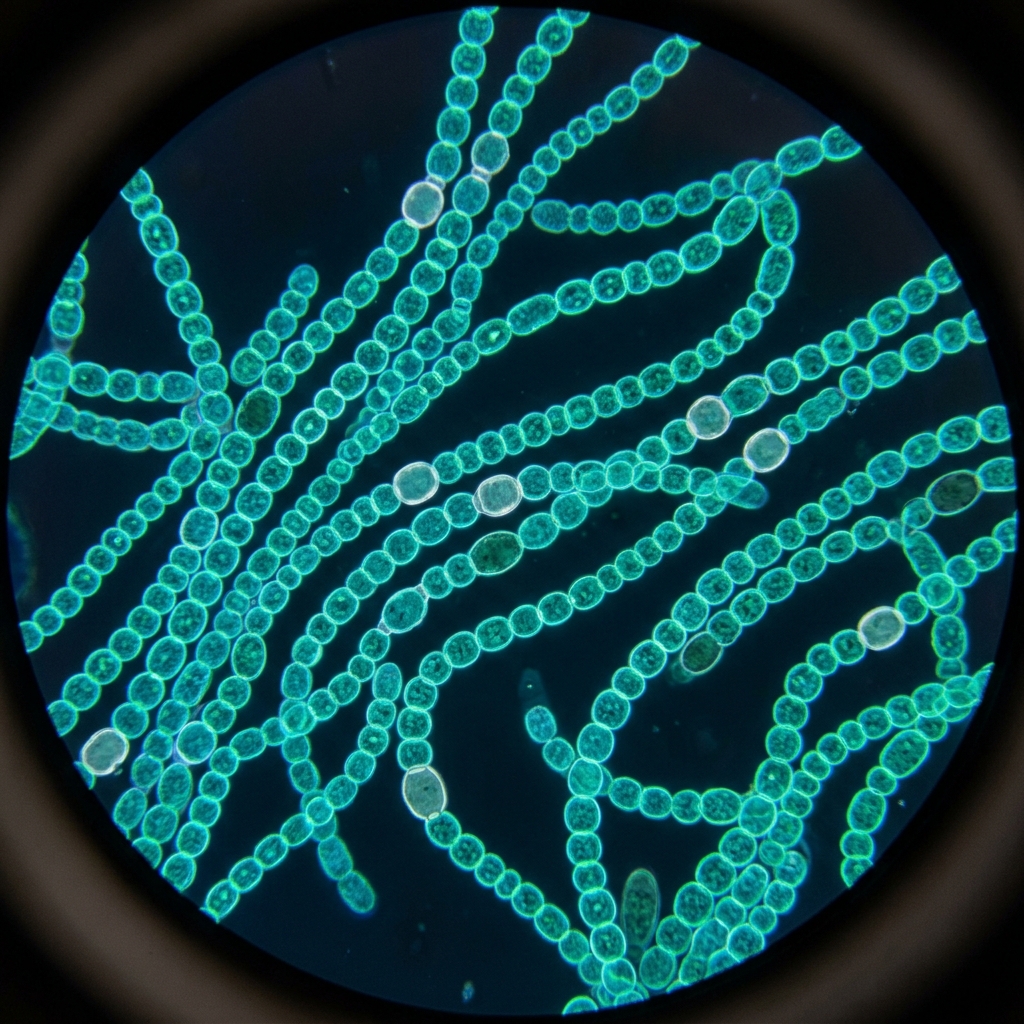 Figure 2: Bead-like arrangement of Nostoc (star jelly), a relative in the cyanobacteria phylum. Comparing this with Spirulina's tight spring structure deepens your understanding of morphological diversity (*Image is for illustrative purposes only)
Photography Hacks to Make Spirulina Observation Dramatically Beautiful
- Apply Darkfield Lighting (Hack 1): Using a “DIY Darkfield Filter” to turn the background pitch black makes the green spiral filaments look as if they are self-luminous bioluminescent organisms in the deep sea, resulting in breathtaking beauty.
- Polarization Observation via Cheap Polarizing Sheets (Hack 2): Inserting polarizing filters and observing in a cross-polarized state causes the storage materials and minute crystal structures inside cells to produce light interference, transforming the green view into a psychedelic art photograph mixed with rainbow shines.
- Smartphone Optical Axis Alignment: Perfectly align the smartphone lens with the optical axis of the eyepiece to prevent vignetting. Optical axis alignment is crucial for photographing Spirulina’s micro-springs as clearly as possible.
Among various microalgae, Spirulina is the perfect starter plankton for home microscopy labs due to its interesting shape and ease of cultivation (thanks to the contamination-preventing effect of high alkalinity). Experience the microscopic sight of beautiful blue-green spirals slowly multiplying towards the light on your own microscope stage.
🔗 Related Articles
- 👉 [Darkfield & Polarization] Dramatic Changes with Cheap DIY Materials! DIY Lighting Hacks to Turn Microscope Photos into Art
- 👉 [The Oldest Life Forms] How to Collect and Observe Cyanobacteria (Nostoc/Star Jelly) from Local Roads and Gardens
- 👉 [The Green Spaceship] Volvox Breeding & Asexual Reproduction Guide | How to Make DIY Culture Water
- 👉 The Textbook of Smartphone Microscopy | Three Optical Axis Alignment Hacks to Prevent Vignetting and Get High-Quality Images
- 👉 [For Beginners] How to Choose a Home Microscope Without Regrets | Recommended Models with Smartphone Compatibility