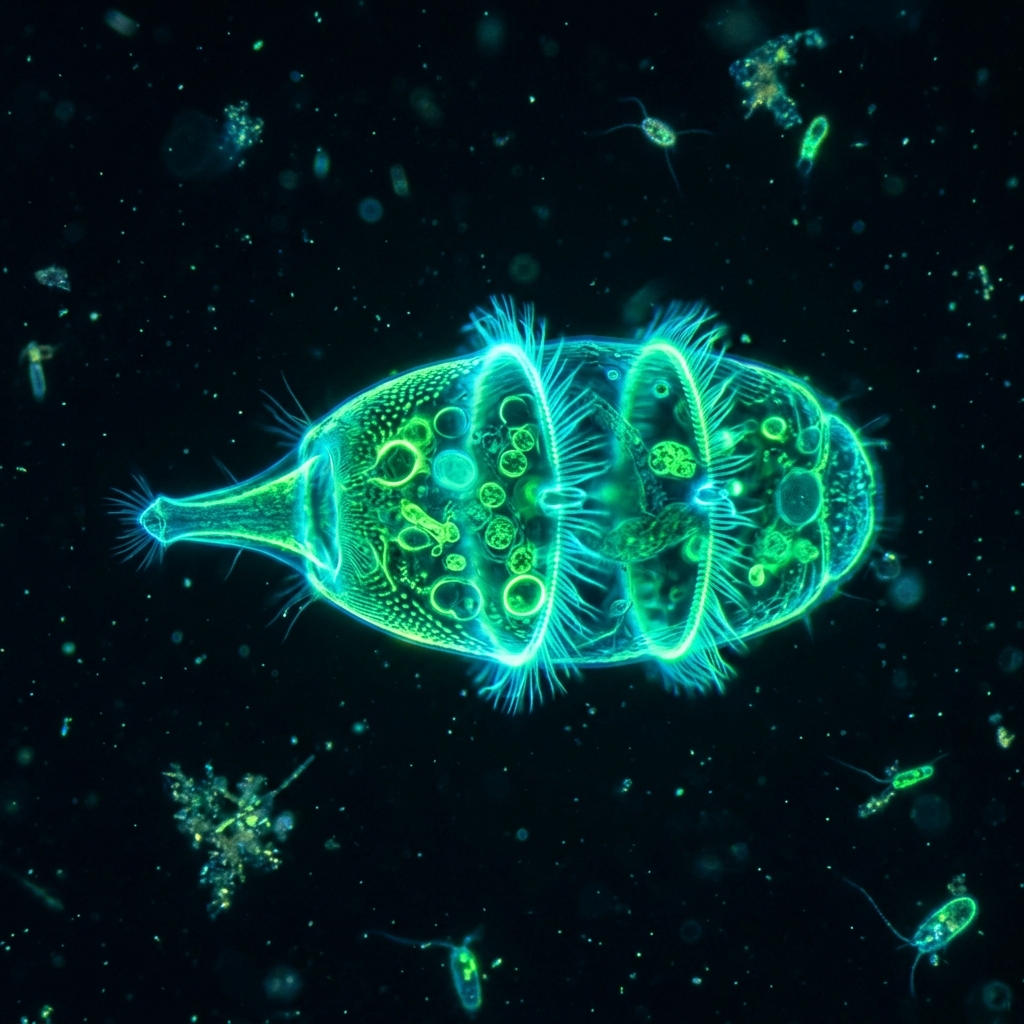
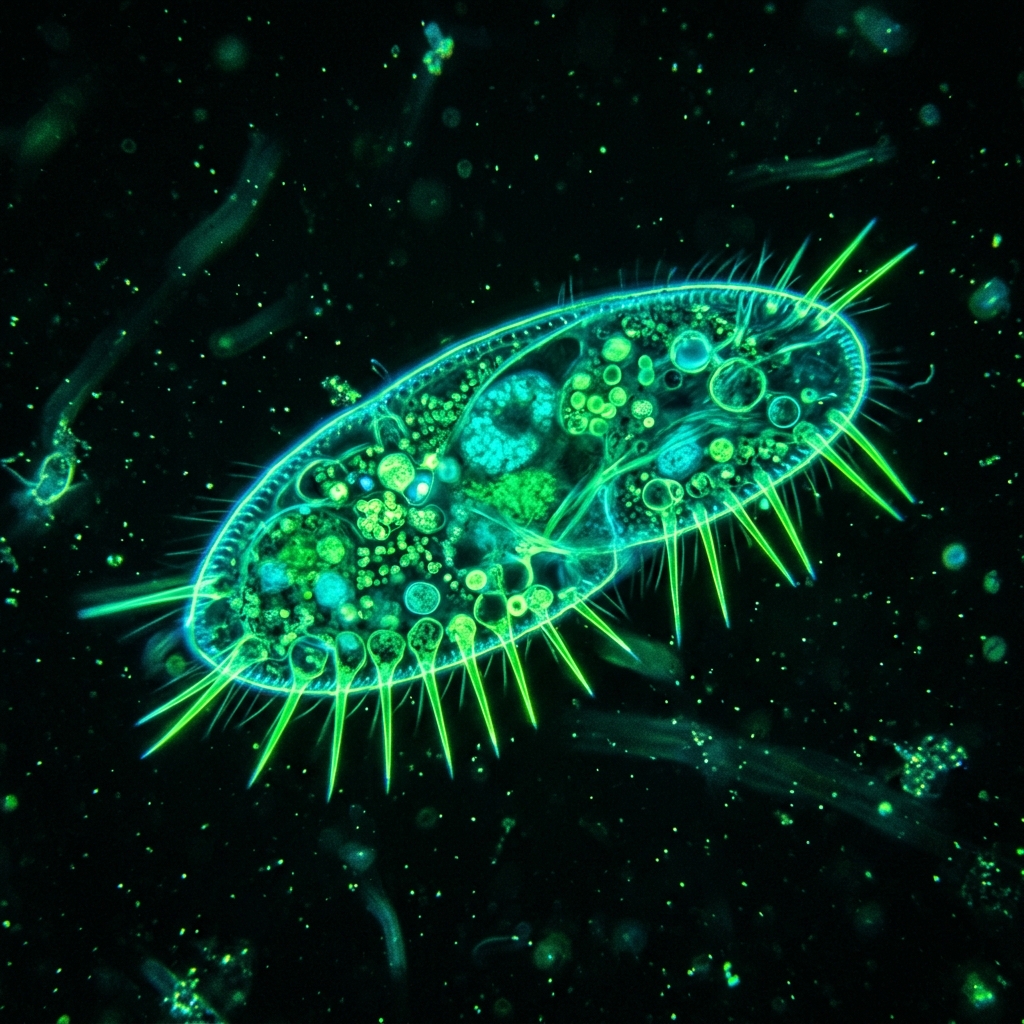
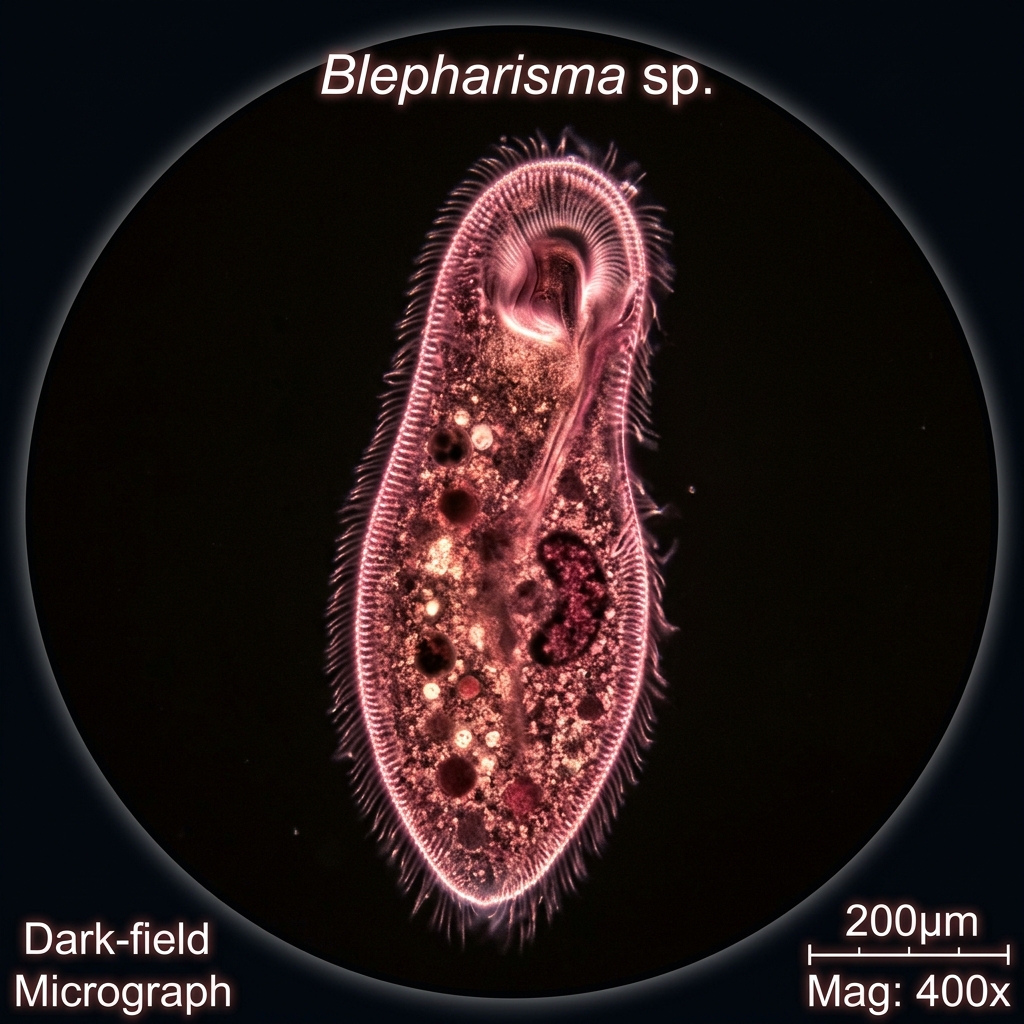
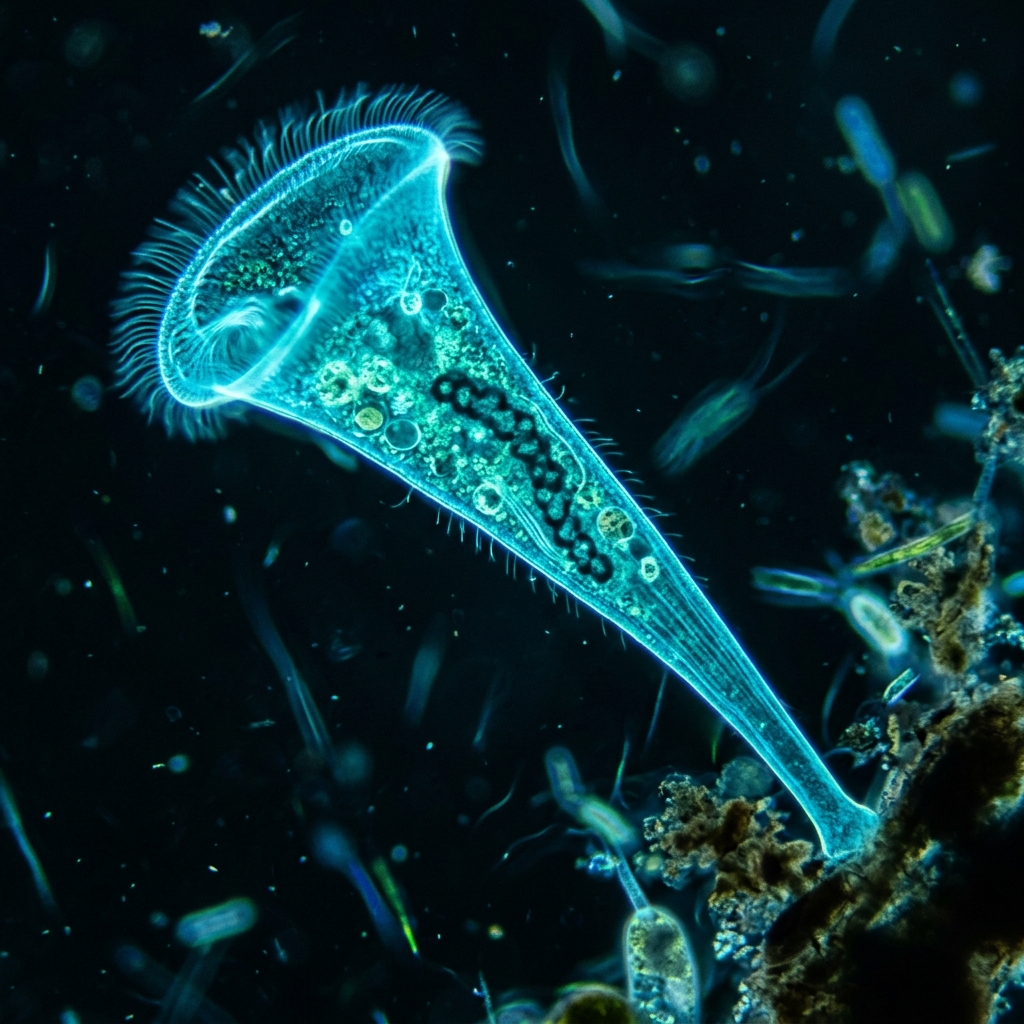
 Figure 1: A beautiful Stentor with a highly contractile trumpet-shaped body, using its cilia to vigorously suck in organic matter (*Image is for illustrative purposes only)
[!NOTE] *All microorganism images used in this article are 3D CG illustrations.
Single-celled organisms like amoebas, Euglena, and Paramecia are usually thought of as creatures only visible under a microscope. However, there is an astonishingly giant single-celled organism that completely shatters this common assumption: the Stentor (specifically, Stentor coeruleus).
Despite consisting of only a single cell, they can reach up to 2 mm in length when fully extended. Anyone with good eyesight can clearly see them with the naked eye as tiny blue-green threads floating in the water. With its beautifully flared trumpet-like shape and a mysterious blue-green pigment called stentorin, Stentor is one of the most popular and photogenic targets under the microscope. In this article, we introduce techniques to hunt this fascinating “micro-giant” from nature and raise it at home while maintaining proper water quality.
1. Hunting Stentor: Target Aquatic Plant Shadows and “Muck”
Stentors spend most of their time “locked” onto decaying leaves, aquatic plant stems, or container walls using the narrow tip of their body (holdfast). Therefore, simply scooping up clean pond water will rarely yield any Stentor.
Key Collection Spots
- Ponds or ditches dense with aquatic plants (such as Hornwort or Elodea)
- The topmost fluffy layer of black humus (sludge/muck) settled at the bottom of a pond
Collection Hack
Tear off a small piece of water plant and place it in a plastic bottle, scooping up plenty of bottom mud and decaying leaves along with the water. Bring it home and leave it in the dark for a day. The Stentors will crawl out of the crevices in the leaves and mud, blooming like “tiny blue-green trumpets” on the walls of the bottle or the tips of the plants. Use a fine-tipped dropper to target and collect them.
2. The Golden Rules of Water Quality and Food for a Delicate Giant
Because Stentors are extremely large for single-celled organisms, they are sensitive to sudden drops in water quality and spikes in water temperature.
Preparing Culture Water
Basically, dechlorinated tap water left standing or commercial soft mineral water works well. Stentors dislike sudden pH fluctuations, so water changes should be done in a “slow-paced style”—replacing only about 1/4 of the container’s water once every 10 days.
Feeding Techniques
Despite their size, Stentors feed by vacuuming up waterborne bacteria, microscopic algae, and even other small protists like Paramecium through their large mouth-like structure (peristome).
- Ultra-dilute Dry Yeast Solution: Similar to water fleas and rotifers, feed one drop of dry yeast dissolved extremely thinly in lukewarm water once every 3 to 4 days using a dropper.
- Adding Live Food (Paramecium) (Recommended): Adding a few drops of cultured Paramecia (see our Paramecium Breeding Checklist for instructions on how to multiply them easily) will cause Stentors to swallow them voraciously, growing plump and dividing rapidly.
[!WARNING] Crash Signal: Watch Out for Sudden “Shrinking”! When Stentors experience poor water quality or stress, they instantly shrink their beautiful trumpet-shaped bodies into round balls, detach from walls, and sink to the bottom. If you see many individuals remaining balled up and motionless, transfer them immediately to fresh, clean water.
3. Observing the Stentor’s Amazing Regenerative Ability
Stentors are famous in biological history for their incredible regenerative capacity. Even if you cut a Stentor’s body into two or three pieces using a scalpel or razor blade, as long as each fragment contains a portion of the nucleus (a large beads-on-a-string shaped macronucleus), all pieces will regenerate into perfect, miniature Stentors within just 24 hours.
Watching these sliced cells move their cilia and begin to regenerate within the microscope’s field of view is a true testament to the fundamental power of life. A mysterious blue-green trumpet blooming in a tiny petri dish on your desk—why not start rearing Stentor and witness this overwhelming dynamism of life for yourself?