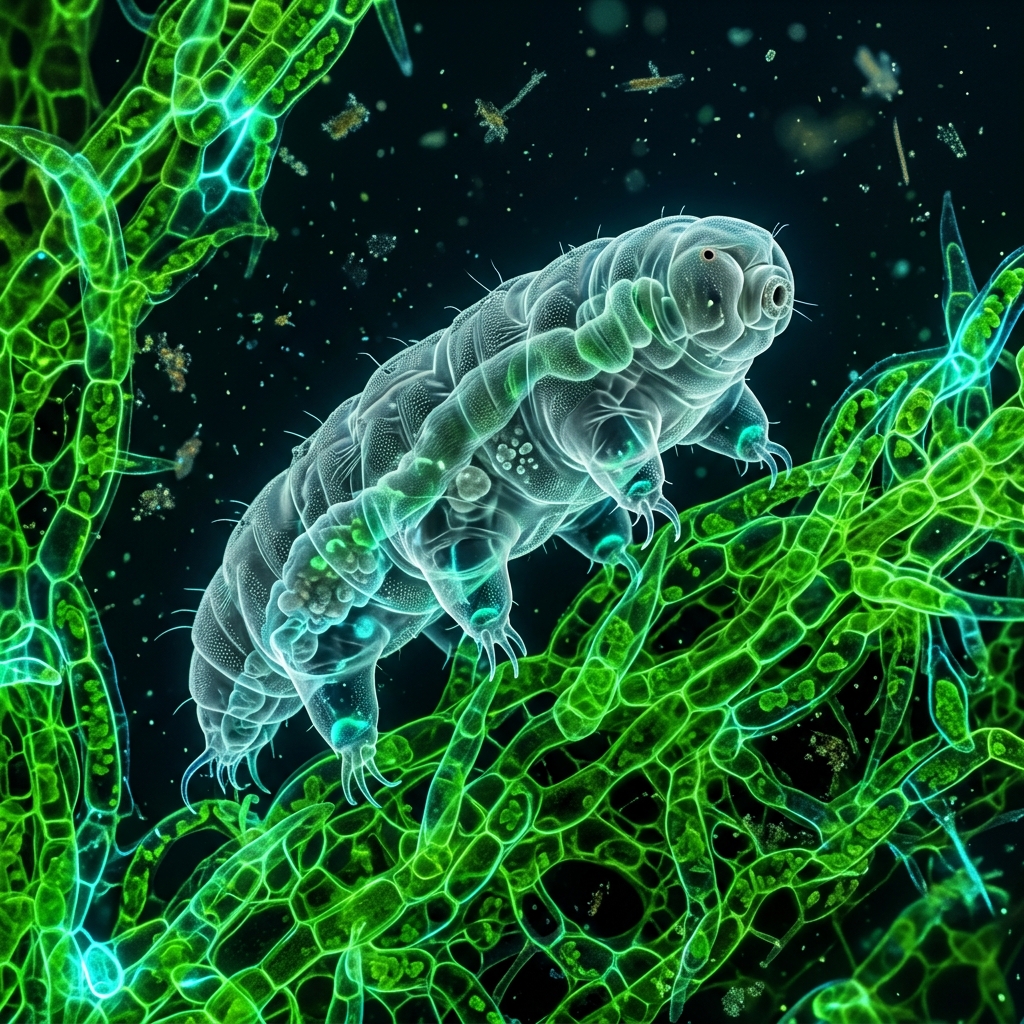
 Figure 1: Microscope perspective photo of a tardigrade walking with its eight legs through gaps in moss cells (background) (*Image is for illustrative purposes only)
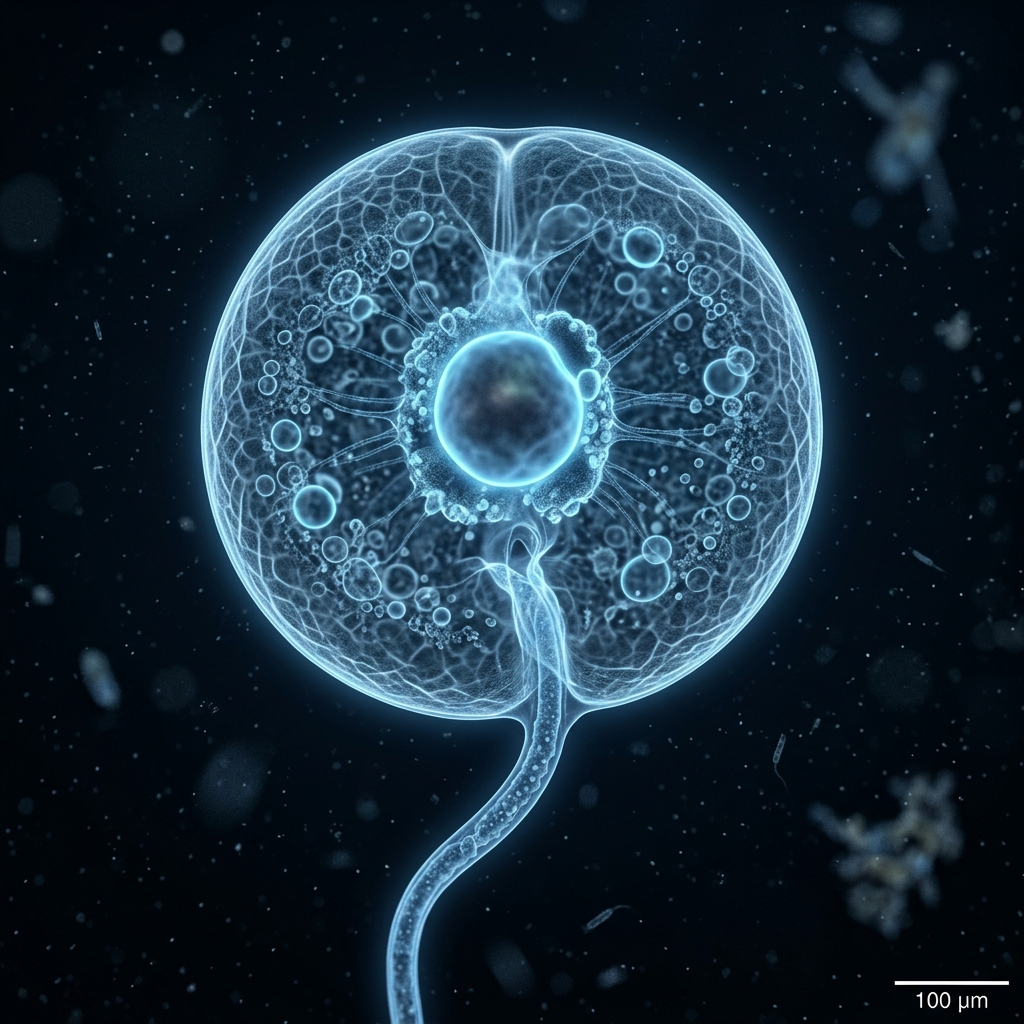
[!NOTE] *All microorganism images used in this article are 3D CG illustrations.
🎯 Quick Summary & FAQ (Key Takeaways)
Before we dive into the detailed guide, here are quick answers to the most common questions.
Q. Can you find tardigrades in balcony moss? A. Yes, with a very high probability! Specifically, target “bone-dry moss growing in sunny concrete cracks or asphalt crevices.” Rather than damp, shaded moss, moss from harsh environments that experience repeated wet-and-dry cycles contains many more tardigrades (especially species that easily revive from cryptobiosis).
Q. What is the minimum equipment required for observation? A. A “stereomicroscope” or a “smartphone macro lens” with 20x to 40x magnification. While they can be observed under a standard compound microscope at 100x to 1000x, a stereomicroscope is the most suitable tool for finding these three-dimensionally wiggling tardigrades because of its wide field of view and lack of slide preparation.
🔬 1. Finding the “Golden Moss” Where Tardigrades Hide
Able to survive absolute zero at minus 272°C, high temperatures up to 150°C, the vacuum of outer space, and intense radiation, they are the toughest extremophiles on Earth: Tardigrades (water bears).
Their slow crawl using eight legs looks incredibly cute under the microscope, spawning a quiet boom as the “ultimate indoor pet.” Here are the criteria for selecting moss to collect tardigrades safely.
Comparison of Moss Where Tardigrades Live
| Item | ”Golden Moss” Suitable for Collection (Recommended) | “Unsuitable Moss” to Avoid |
|---|---|---|
| Habitat | Sunny concrete walls, asphalt crevices, balcony gutters | Shaded forests, marshes with constant running water, muddy soils |
| Moss Condition | Bone-dry, crumbles easily when touched | Constantly damp and humid, covered with algae or mold |
| Species Traits | Robust species resistant to dry dormancy (cryptobiosis) that wake up quickly when watered | Delicate species that prefer constant moisture and die easily if dried out |
| Observation Advantage | Clear field of view, as sand, soil, and other impurities rarely mix in | Heavy soil/mud mixture obscures the view, making it easy to lose sight of tardigrades |
[!WARNING] Active Tardigrades are Sensitive to Environmental Changes! Tardigrades are only “invincible” when in their dry, dormant state (tun). Active, awakened tardigrades are highly delicate. Never use chlorinated tap water for their culture; always use water left standing or commercial “soft mineral water.”
2. The Awakening Process from Dry Dormancy (Cryptobiosis)
The process of entering “cryptobiosis” to survive extreme conditions and “reviving” once water is reintroduced is a biological miracle.
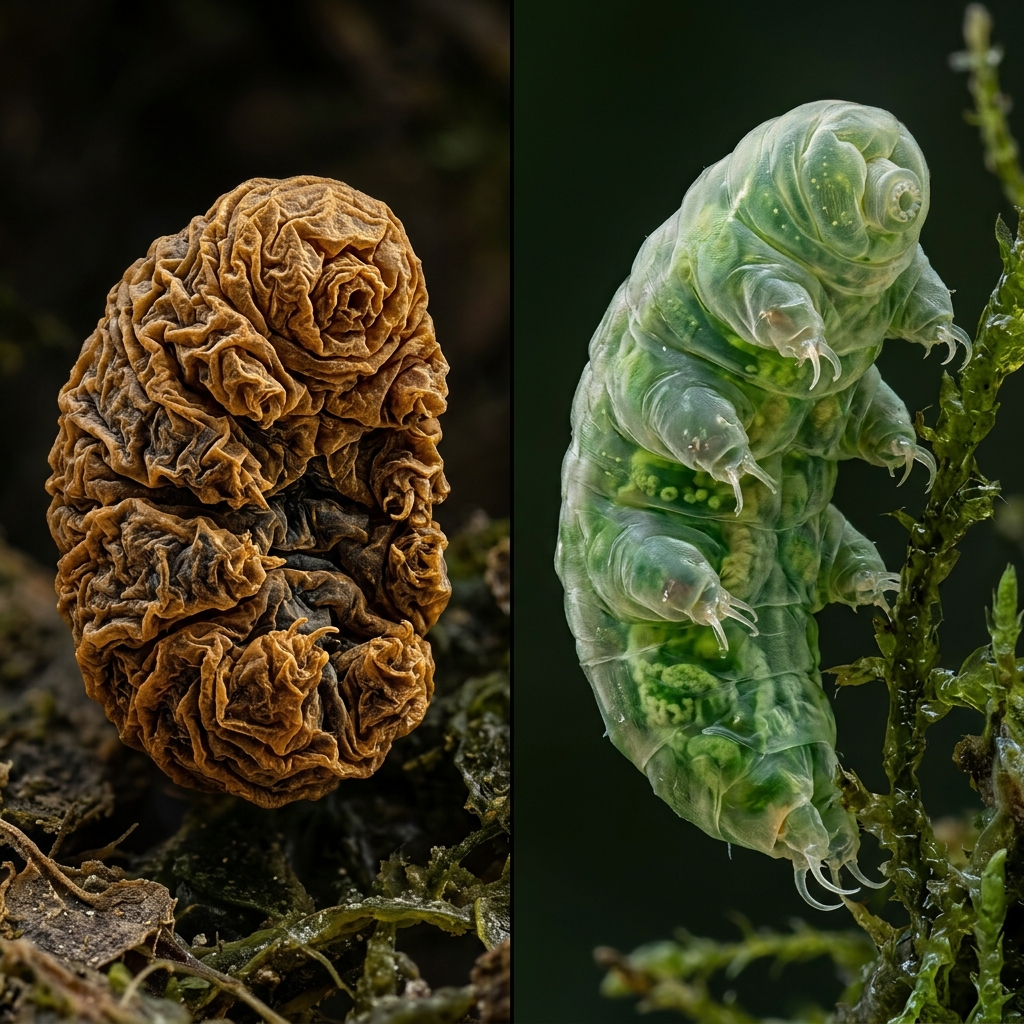 Figure 2: Comparison of the process from the motionless "cryptobiotic (tun) state" lacking moisture to moving legs, breathing, and feeding upon hydration (*Image is for illustrative purposes only)
Cryptobiosis Revival Timeline
- Desiccation Stage (Tun Formation): As environmental moisture is lost, the tardigrade curls up its body, reducing its internal water content from the normal 85% to less than 3%. Metabolism drops to near zero (below detection limits) as it enters complete stasis.
- Hydration Stage (0–30 mins): When water is poured onto the dry moss, the tardigrade’s shriveled cuticular body wall rapidly absorbs water and begins to expand.
- Cellular Activation Stage (30 mins–2 hours): As water permeates the body, dormant enzymes and metabolic systems reboot. Internal energy synthesis (ATP) increases sharply.
- Resumed Activity Stage (2 hours–Overnight): The eight legs begin to twitch, and the tardigrade starts walking by grasping moss fibers. Once awake, it actively explores to search for algae to feed on.
3. Tools and Equipment Required for Collection
Prepare the following tools and equipment to collect and rear tardigrades long-term:
- Collected Dry Moss: Bone-dry moss collected from sunny balconies or walls.
- Glass Petri Dish: The observation stage. Borosilicate glass is best as it is scratch-resistant and provides clear viewing. For details, see [Plankton Sampling Nets and Easy Glass Petri Dish Culturing Kits].
- Base Water: Dechlorinated tap water left standing, or commercial soft mineral water.
- Fine Silicon Dropper/Pipette: Essential for isolating and transferring tardigrades one by one without harming them.
- Stereomicroscope or Student Microscope: 20x to 40x magnification is the most suitable and easiest to search with. For beginners, see [Selection Points for Student Microscopes Recommended for Beginners].
- Smartphone Microscope Adapter: A mount to project the microscope field onto a smartphone, letting you capture beautiful photos and videos without hand jitter. Tips for choosing and aligning the attachment are discussed in [Essential Microscope Photography Items! Tips for Choosing and Aligning Smartphone Adapters].
4. Step-by-Step: Tardigrade Collection and Rearing Steps
1. Hydrating the Moss (Soaking Process)
Place the collected dry moss at the bottom of the glass petri dish. Pour soft mineral water until the moss is submerged. Cover the dish and let it sit in a cool place away from direct sunlight for 3 hours to overnight.
2. Shaking and Washing the Moss
Using tweezers, gently shake or massage the water-softened moss clumps in the water. This releases the tardigrades clinging to the crevices in the moss into the water. Remove large moss clumps after washing.
3. Searching and Isolating under the Microscope (The Transfer Step)
Place the petri dish on the microscope stage (20x–40x) and inspect the bottom.
- Finding Tips: The key to distinguishing them from sand grains and debris is their “slow, caterpillar-like movement, crawling about by moving eight short legs.”
- Transferring: Gently draw up the found tardigrades using a micro-dropper and move them into a new petri dish prepared with clean mineral water. This careful transfer completely prevents decaying moss organic matter from ruining the water quality.
5. Feeding and Tips for Long-Term Maintenance
Tardigrades feed by piercing the cell walls of aquatic algae with sharp stylets in their mouths and sucking out the contents.
- Food Type: Commercial “live Chlorella” or “Chlorella powder” is best.
- Feeding Frequency & Amount: Once a week, drop just a single tiny droplet of Chlorella water (powder dissolved in mineral water) from a dropper. Overfeeding to the point where the water turns visibly cloudy will crash the water quality by the next day, wiping out the culture. The safe golden ratio is “just enough to make the water look slightly hazy green under the microscope.”
- Water Change Procedure: Once or twice a week, use a dropper to siphon out about half of the old water and accumulated waste at the bottom, and gently replenish it with the same amount of fresh mineral water.
A tiny glass dish on your desk hosting the private space of the toughest creature. Why not hack balcony moss this weekend and try your hand at rearing these mysterious and adorable water bears?
🔗 Related Articles
- 👉 [For Beginners] How to Choose a Home Microscope Without Regrets | Recommended Models with Smartphone Compatibility
- 👉 The Textbook of Smartphone Microscopy | Three Optical Axis Alignment Hacks to Prevent Vignetting and Get High-Quality Images
- 👉 [Gear Guide] Starting Microscope Observation at Home! Selection Points for Student Microscopes Recommended for Beginners
- 👉 [Gear Guide] Micro Hunting! Plankton Sampling Nets and Easy Glass Petri Dish Culturing Kits
- 👉 [Gear Guide] Essential Microscope Photography Items! Tips for Choosing and Aligning Smartphone Adapters