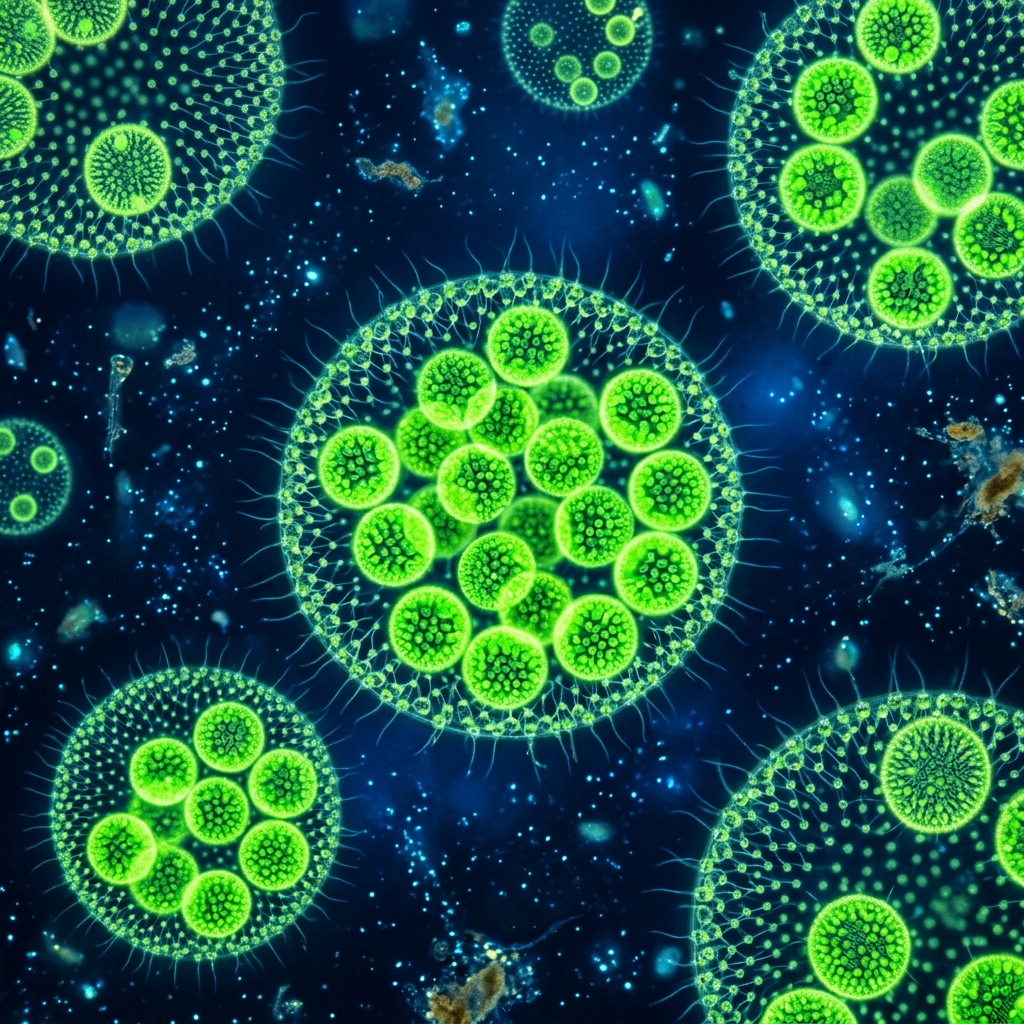
 Figure 1: Cell microstructure photograph of Volvox hosting several green "daughter colonies (clones)" inside the parent coenobium (*Image is for illustrative purposes only)
[!NOTE] *All microorganism images used in this article are 3D CG illustrations.
🎯 Quick Summary & FAQ (Key Takeaways)
Before we dive into the detailed guide, here are quick answers to the most common questions.
Q. What is the most important factor in culturing Volvox? A. Appropriate “light levels,” “water temperature (under 28°C),” and “ultra-low concentration DIY culture water.” Although they can grow in a solution of HYPONeX liquid plant fertilizer diluted in water, you must maintain the concentration strictly at “10,000x dilution.” If the nutrient levels are too high, bacteria will bloom overnight, turning the water cloudy and causing the Volvox to perish.
Q. What kind of microscope is best for observing them? A. A standard compound light microscope with 100x to 200x magnification is ideal. Because Volvox is highly transparent, using a compound microscope that transmits light from below and closing the condenser aperture slightly will allow you to observe the beautiful spherical cells and internal daughter colonies with stunning sharpness.
🔬 1. DIY Volvox Culture Medium and Culturing Procedure
When looking through a microscope, you will see countless beautiful “green spheres” in the field of view. Watching them swim while spinning like rotating planets captivates everyone.
Here is a detailed guide on how to healthily culture Volvox—a multicellular microalga that “swims” by actively beating its two flagella—at home.
Foolproof “10,000x Dilution” Culture Medium Prep and Measuring Hack
Instead of buying expensive, specialized Volvox culture media, you can make a perfect mineral culture solution (DIY water) by diluting HYPONeX liquid fertilizer concentrate.
- Measuring Hack: The volume of one drop of liquid falling from a standard dropper is approximately 0.05 ml (0.04 to 0.05 ml). This means adding just 2 drops of HYPONeX to 1 liter (1,000 ml) of water allows anyone to precisely mix a “10,000x dilution.” Do not exceed this concentration; strictly follow this measurement.
- Base Water: Never use chlorinated tap water. Use water that has been left standing to fully remove chlorine, or commercial neutral soft mineral water.
2. LED Light and Water Temperature Troubleshooting
Volvox generates energy through photosynthesis, so proper lighting and a day/night cycle are essential. However, because they are extremely sensitive to heat, strict water temperature control is required.
Culture Troubleshooting Matrix
| Problem | Possible Cause | Specific Solution & Hack |
|---|---|---|
| The water turns cloudy white and Volvox decreases | Nutrient concentration is too high, leading to bacterial overgrowth (eutrophication). | Immediately discard more than half of the water and dilute with pure, dechlorinated water. Stop adding fertilizer. |
| The Volvox spheres disintegrate and break apart | The water temperature exceeded 28°C due to direct sunlight by the window or heat from the light source. | Move the bottle to a cool, air-conditioned room (optimal temperature 20°C–24°C) and keep the LED light at least 15 cm away. |
| They aggregate at the top searching for light, but do not multiply | Light duration is too long, or light intensity is insufficient. | Stop 24-hour illumination and introduce a cycle of “12 hours on, 12 hours off.” Using a digital timer is highly recommended. |
| Moss or green algae attach to the inside of the bottle | Bacteria or other algae contaminated the culture vessel. | When starting a new culture, always sterilize the glass container with boiling water and maintain sterile control. Boil and sanitize droppers as well. |
3. Microscope Observation Points: The Mystery of “Asexual Reproduction”
Volvox has a highly unique reproductive mechanism where “daughter colonies”—complete miniature copies of the self—form inside the rotating sphere of the large parent.
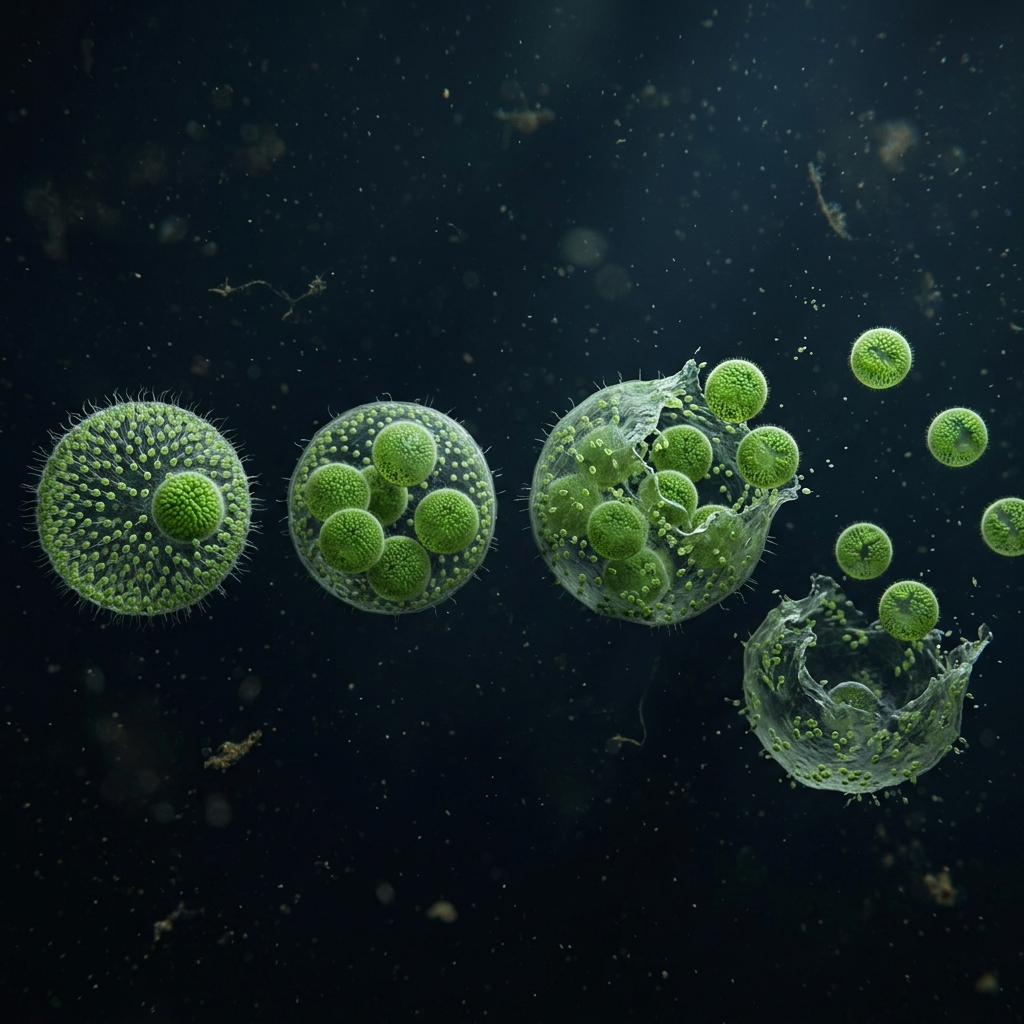 Figure 2: The lifecycle where gonidia form inside the parent sphere, grow while rotating, and finally rupture the parent's wall to be released as new life (*Image is for illustrative purposes only)
Capturing the “Moment of Birth” as Daughter Colonies Rupture the Parent’s Shell
When observing at 100x to 200x under a compound microscope, you may encounter the dynamic moment when daughter colonies grown inside the parent sphere physically rupture the parent’s somatic wall, escape, and swim away while spinning.
To capture this miracle moment on your smartphone, a mount that firmly secures the phone to the eyepiece is indispensable. Refer to the following articles for photography attachments and adjustments:
- Smartphone Mounting Basics: [Essential Microscope Photography Items! Tips for Choosing and Aligning Smartphone Adapters]
- Preventing Black Borders (Vignetting): [The Textbook of Smartphone Microscopy | Three Optical Axis Alignment Hacks to Prevent Vignetting and Get High-Quality Images]
- Achieving Shadow-Free, Clear Lighting: [High-Brightness LED Ring Lights and DIY Lighting Tips]
- Setting Up Culture and Observation Tools: [Plankton Sampling Nets and Easy Glass Petri Dish Culturing Kits]
Culturing spinning Volvox in a faint green glass bottle illuminated by an LED light on your desk—it is a luxurious, intellectual experience that feels like managing your own tiny planetary system. Why not find comfort in these microscopic green spaceships amidst your daily life?
🔗 Related Articles
- 👉 [For Beginners] How to Choose a Home Microscope Without Regrets | Recommended Models with Smartphone Compatibility
- 👉 The Textbook of Smartphone Microscopy | Three Optical Axis Alignment Hacks to Prevent Vignetting and Get High-Quality Images
- 👉 [Gear Guide] Micro Hunting! Plankton Sampling Nets and Easy Glass Petri Dish Culturing Kits
- 👉 [Gear Guide] Projecting Sharp Micro-Images! High-Brightness LED Ring Lights and DIY Lighting Tips
- 👉 [Gear Guide] Essential Microscope Photography Items! Tips for Choosing and Aligning Smartphone Adapters