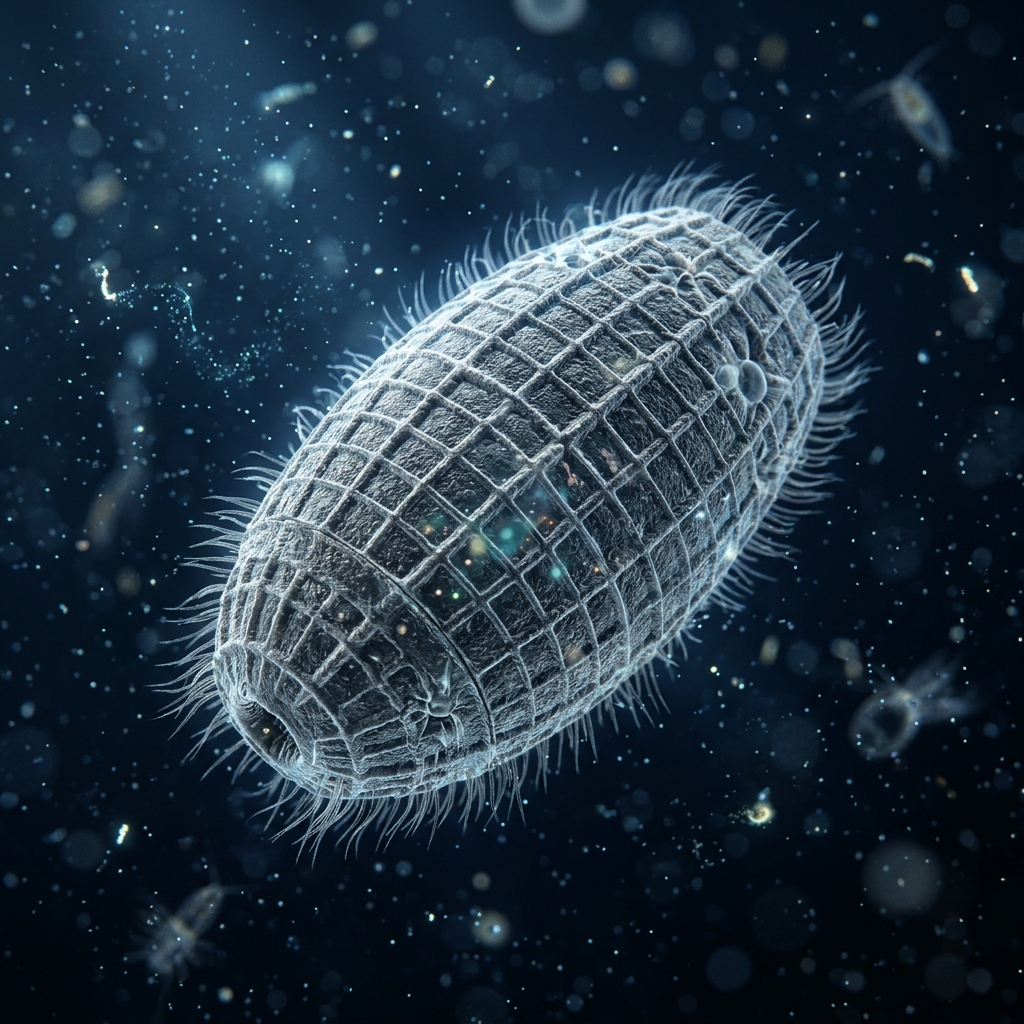
 Fig 1: A barrel-shaped Coleps enclosed in a lattice-like plate armor (*Conceptual image).
[!NOTE] *All microorganism images used in this article are conceptual 3D CG renders.
🎯 Quick Summary & FAQ (Key Takeaways)
Before diving into the detailed guide, here are quick answers to the most common questions.
Q. What is the most critical factor when culturing Coleps?
A. Regular organic feeding and water quality maintenance.
While Coleps eats bacteria, it thrives and multiplies fastest when fed small protozoans like Paramecium. They quickly scavenge organic matter from dead or dying prey and divide rapidly. However, overfeeding can cause water spoilage and crash the culture, so partial water changes are essential.
Q. What magnification is best for observing them under a microscope?
A. A range of 100x to 400x is ideal.
Since Coleps is relatively small (40–110 μm in length), use 100x magnification to track their movement, and switch to 400x to resolve the fine details of their signature lattice armor.
🔬 1. Coleps Biology: The Heavy-Armored Sweeper of the Micro-World
A peculiar barrel-shaped organism darting actively across your field of view—this is Coleps. They are ciliates, but they possess a unique physical attribute that sets them apart from other soft-bodied single-celled organisms.
Calcium Carbonate Plate Armor
A Coleps cell is encased in structured, lattice-like plates (an exoskeleton) with regular slits. This armor, composed primarily of calcium carbonate, acts as a shield against physical damage or predators. It is sturdy enough to withstand the shear forces of being sucked into a pipette.
High-Speed Spiral Swimming
Coleps beats its surface cilia to rotate like a drill while swimming forward and turning. In Japanese, they are poetically called “Yoroi Chochinmushi” (Armored Lantern Ciliate) due to this unique appearance and movement.
2. Culturing Coleps at Home: The Paramecium Feeding Method
Coleps is widely distributed near aquatic vegetation in ponds and marshes. Here is an efficient culturing method to breed them at home.
What You Need
- Coleps starter culture: Coleps isolated from pond samples using a pipette
- Feed Paramecium: Clean cultured Paramecium (see Culturing & Observing Paramecium)
- Culture water: Aged, dechlorinated tap water
- Culture vessels: Glass petri dishes or shallow, wide plastic containers
Culture Setup Steps
- Pour 20–30 mL of dechlorinated water into the culture vessel. Keep the depth at around 1 cm to ensure proper oxygenation.
- Add the isolated Coleps into the vessel.
- Add a few drops (around 10 drops) of concentrated Paramecium culture as feed.
- Store in a cool place (18°C–24°C) away from direct sunlight.
[!TIP] The Collective Scavenging Hack: Creating “Micro-Feeding Balls” While Coleps occasionally attacks healthy prey, they prefer weakened or dead ciliates. After adding Paramecium to the dish, crushing a few cells with a needle tip or applying a mild heat shock creates an immediate feeding frenzy. Dozens of Coleps will swarm the carcass, forming a spherical rugby-ball-shaped cluster (feeding ball).
3. Microscope Observation & Photography Hacks
Here are techniques to optimize your microscope setup for observing and recording Coleps.
Making the Lattice Pattern Stand Out
Since the calcium carbonate plates are translucent, details can be washed out if the field is too bright.
- Close the Aperture: Narrowing the condenser aperture under the stage increases contrast and adds depth to the lattice structure.
- Oblique Illumination: Partially blocking the light source with a finger or card produces a pseudo-darkfield effect. The Coleps armor glows against a dark background, yielding a stunning 3D image.
Slowing Them Down: The Slide Compression Hack
Coleps moves rapidly, making focusing difficult.
- Wick away excess water from under the cover slip using filter paper or a tissue.
- As the water layer thins, the Coleps becomes gently trapped between the slide and cover slip (be careful not to crush it). This restricts its movement, letting you observe the plates and caudal spines in detail.
🔗 Related Articles (Topic Cluster)
- 👉 Culturing & Observing Paramecium: Easy Breeding in Plastic Bottles with Rice Bran
- 👉 Culturing Amoeba: A Step-by-Step Guide to Safe, Long-Term Breeding Using Rice Grains
- 👉 The Smartphone Microscopy Guide: Three Optical Alignment Hacks to Prevent Vignetting
- 👉 How to Choose a Home Microscope: A Foolproof Selection Guide with Smartphone Photography Comparison