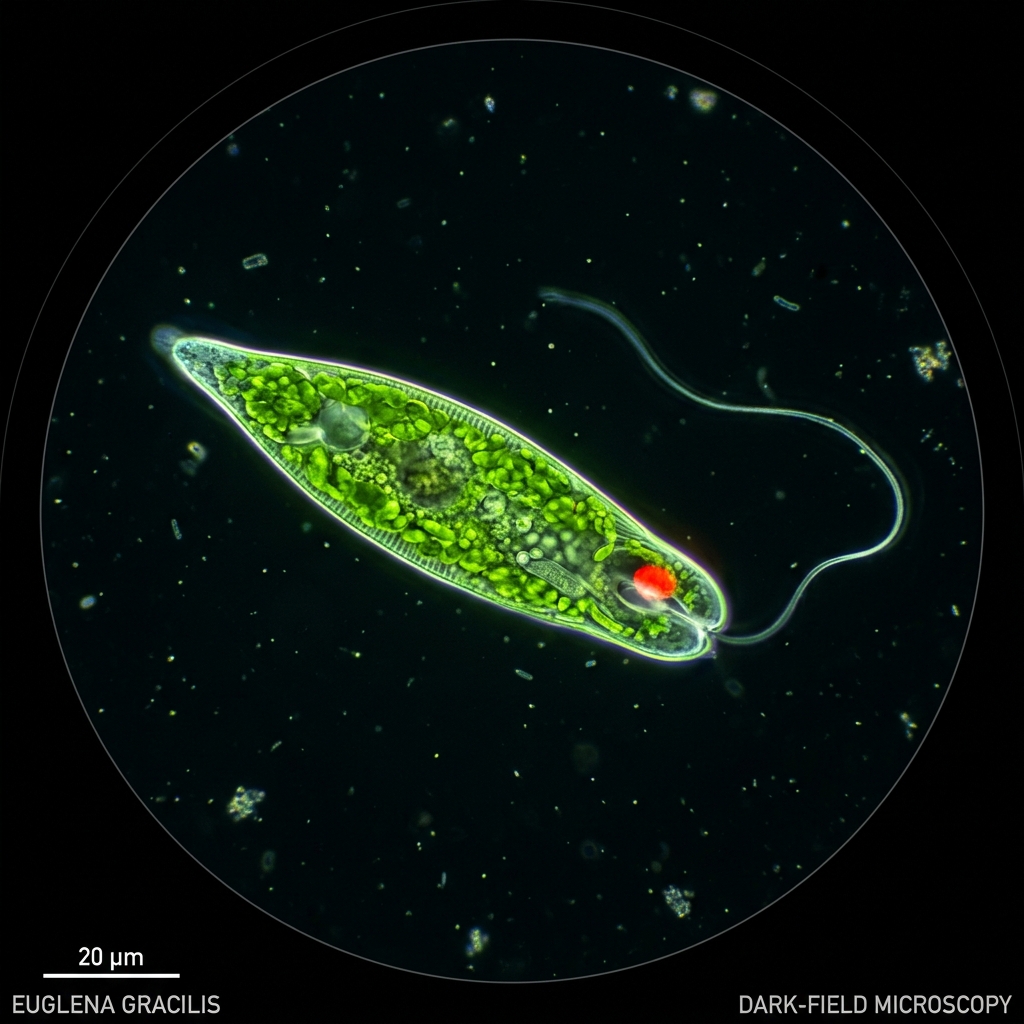
 Figure 1: Close-up conceptual image of Euglena (Euglena gracilis), which possesses countless chloroplasts inside its body and exhibits phototaxis in search of bright light (*Image is for illustrative purposes only).
[!NOTE] *All microorganism images used in this article are 3D CG conceptual images.
A highly unique existence that always appears in biology textbooks—that is Euglena (scientific name: Euglena gracilis). They possess “animal-like characteristics,” using a long flagellum extending from the tip of the cell to swim around actively, while also having “plant-like characteristics,” using chloroplasts inside their body to produce energy from sunlight.
In recent years, Euglena has reigned as a superstar in the business world due to its rich nutrients and potential applications as biofuel. However, it is not widely known that you can culture them in large quantities incredibly easily at home in a simple plastic bottle. In this article, we reveal our secret “Euglena Home Culturing Recipe” using easily accessible materials!
1. What You Need for Euglena Culturing
Since Euglena photosynthesizes on its own, it can survive with just light and without feeding. However, to dramatically accelerate their propagation (division) rate, you need to prepare a dedicated culture medium containing inorganic salts such as nitrogen, phosphorus, and potassium, as well as trace amino acids and vitamins.
- Euglena Starter Culture: Can be obtained from research cultures sold online, or extracted from commercial “living Euglena drinks” sold as health foods.
- Plastic Bottle (500mL to 1.5L): A transparent bottle that has been thoroughly cleaned and sanitized inside.
- Hyponex Liquid Fertilizer: A staple liquid fertilizer for home gardening. This serves as the source of inorganic nitrogen and phosphorus.
- Wakamoto Strong (or Ebios Tablets): A brewer’s yeast preparation sold in pharmacies as a digestive aid. This acts as an explosive booster, providing the amino acids, vitamins, and minerals that Euglena needs.
- Light Source (Natural light from a windowsill or plant growth LED): Essential for photosynthesis.
2. Foolproof Secret Recipe for “Euglena Culture Medium”
Here is the mixing ratio when using a 500mL plastic bottle.
| Ingredient | Amount | Role |
|---|---|---|
| Dechlorinated water | Approx. 450mL | Base culture water |
| Hyponex liquid fertilizer | 3 to 4 drops (using a dropper) | Inorganic salts (N-P-K) for phytoplankton |
| Wakamoto Strong (crushed) | 1/2 tablet | Organic nutrients, vitamins, amino acids (the secret ingredient for explosive growth) |
| Euglena starter culture | Approx. 50mL | Starting population |
Culture Setup Steps
- Pour 450mL of dechlorinated tap water into a clean plastic bottle.
- Add 3 to 4 drops of Hyponex, and add 1/2 tablet of Wakamoto Strong, crushed finely into powder using the back of a spoon.
- Lightly shake the container to disperse the Wakamoto powder in the water (the water will be slightly cloudy at first, which is normal).
- Add the Euglena starter culture to the bottle and mix gently.
- Do not close the bottle cap completely; leave it slightly loose so air can flow, and place it on a sunny windowsill (or directly under an LED light).
[!TIP] Light and Temperature are the Keys to Success! The optimal culturing temperature for Euglena is 22°C to 28°C. In winter, place it in a warm room and illuminate it with a plant growth LED 24 hours a day. The Euglena will divide continuously, and within just one week, the entire bottle will turn a deep emerald green.
3. Microscope Observation Techniques
Once culturing succeeds and the bottom and walls of the plastic bottle turn deep green, use a dropper to extract a drop from the bottom. Prepare a slide (slide glass and cover slip) and place it under the microscope.
- Magnification Setting: Euglena looks most beautiful at 100x to 400x magnification.
- Phototaxis Experiment: If you shine a bright light using a smartphone flashlight onto one side of the slide glass, you can observe the dynamic behavior of “phototaxis,” where Euglena swim in unison toward the light source within the field of view.
A green juice of tiny lives expanding inside a bottle with just sunlight and a little fertilizer. Why not try growing and observing these fascinating organisms that live on the boundary between animal and plant?

![[Microscopic Photography] Master Pseudo-Koehler Illumination Adjustment: The Ultimate Hack to Beautifully Record Microscopic Details](/images/tool_ring_light.png)