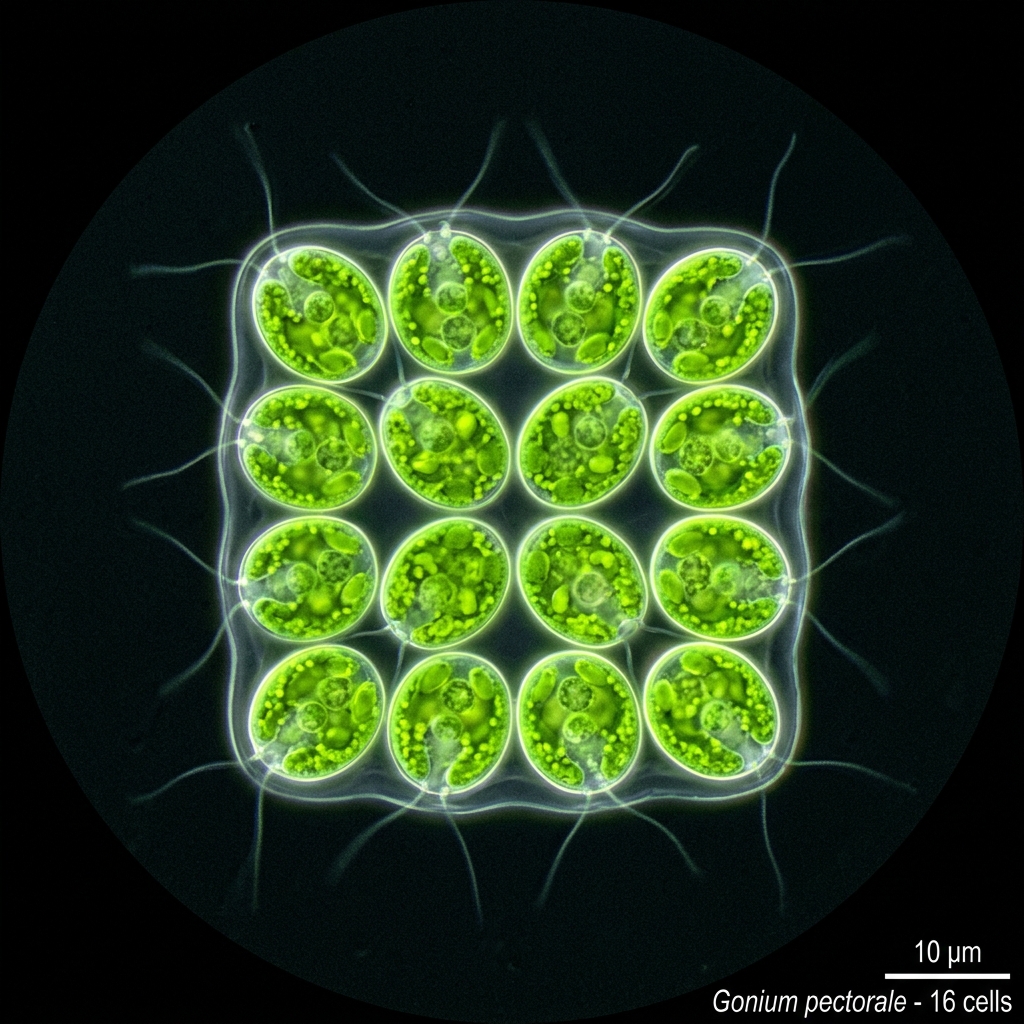
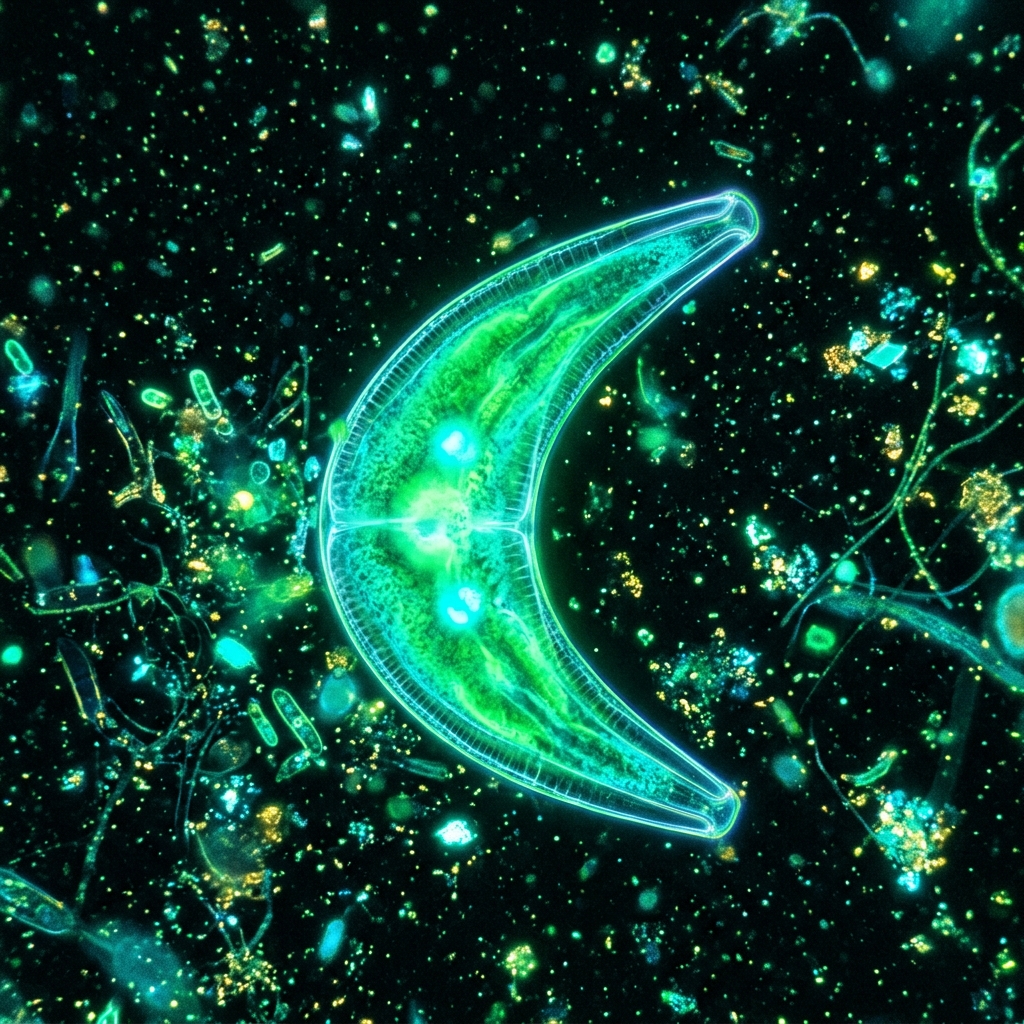
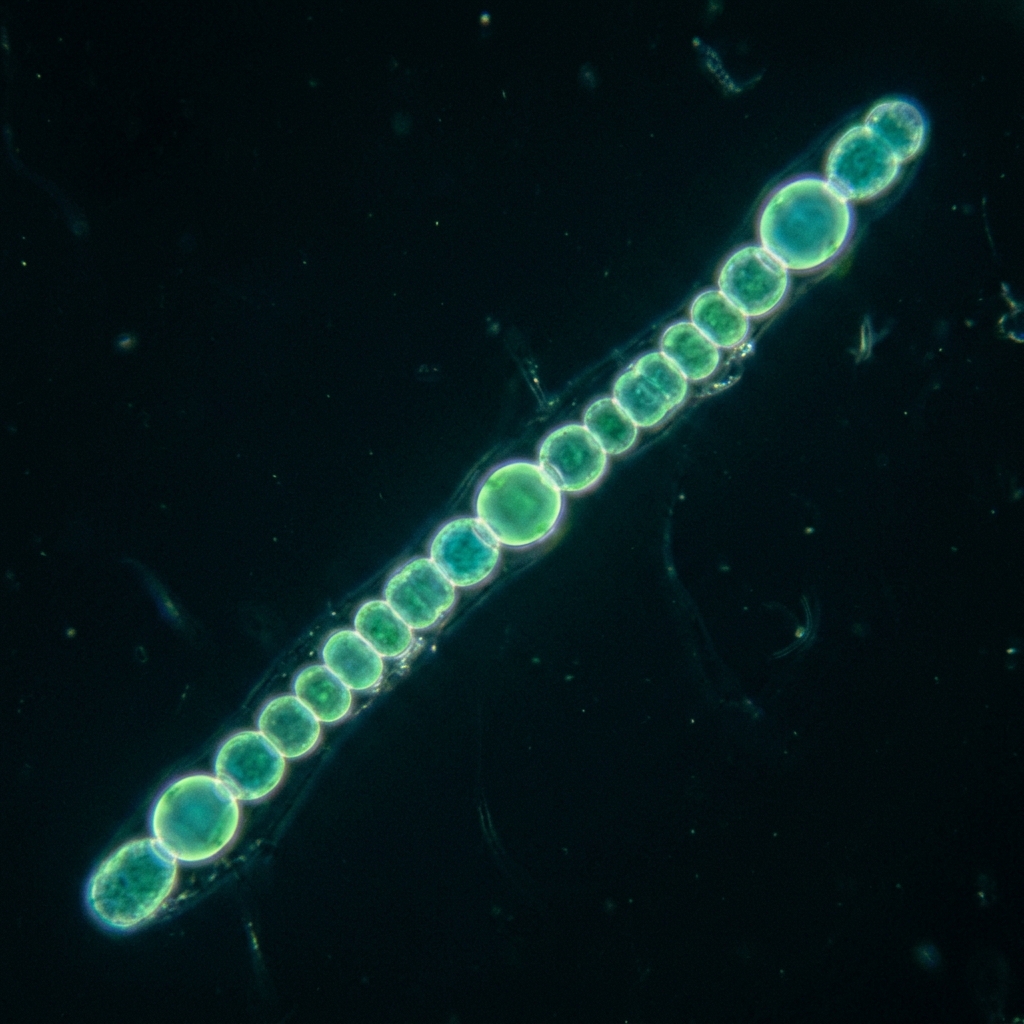
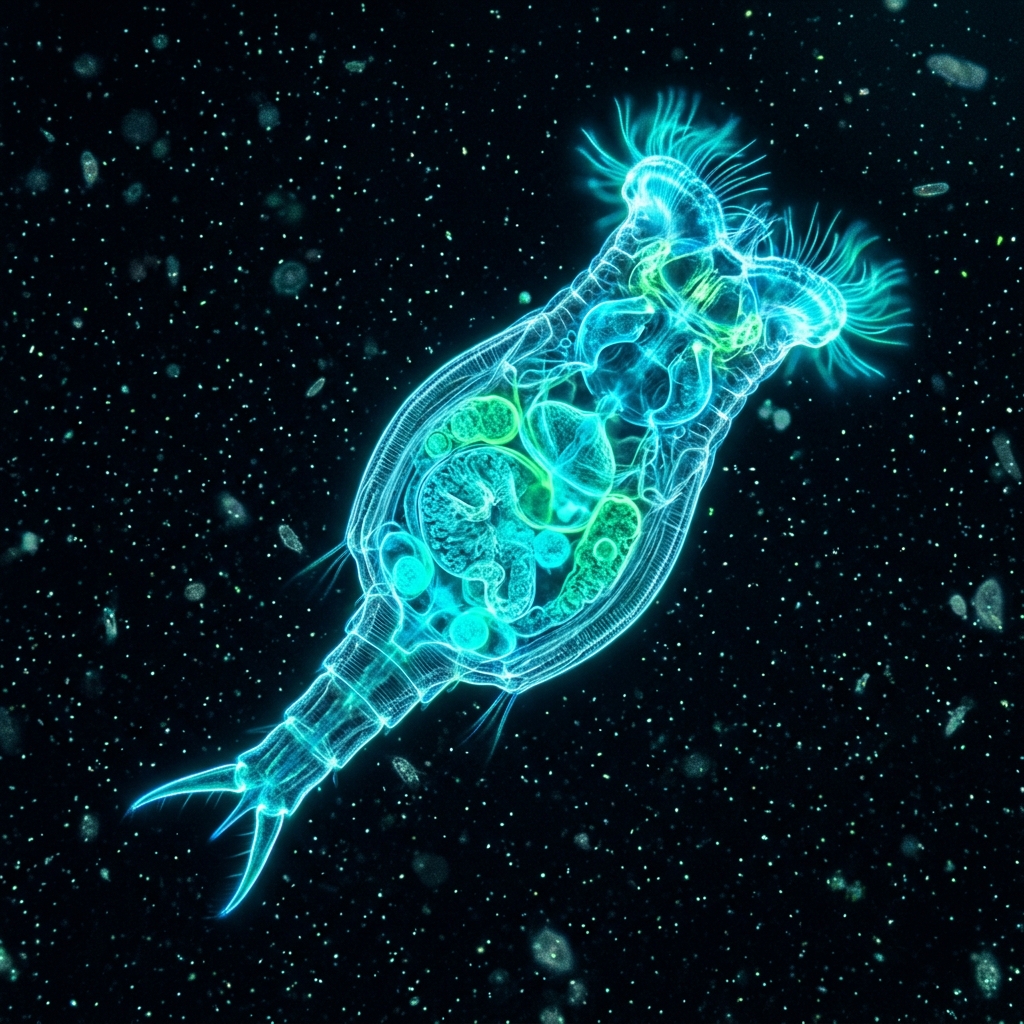
 Figure 1: A rotifer filter-feeding on organic matter by generating currents using its corona (a wheel-like ciliated organ at the head) (*Image is for illustrative purposes only)
[!NOTE] *All microorganism images used in this article are 3D CG illustrations.
When peering through a microscope at pond water or aquarium tank water, you might encounter a strange creature with head parts resembling sci-fi drill mechanisms or rotating gears, sucking in surrounding debris at a ferocious rate. This is the “Rotifer” (Phylum Rotifera).
Meaning “wheel-bearer” in Latin, rotifers move in a highly charming manner. In the aquarium hobby, they are highly valued even in professional hatcheries as the only initial live food small enough for newly hatched killifish and tropical fish fry. In this article, we will teach you how to collect rotifers from familiar environments and the professional techniques to successfully maintain and culture them at home long-term.
1. Where Are Rotifers? Familiar Collection Spots
Rotifers are highly adaptable and inhabit almost all freshwater environments on Earth. In particular, target the following spots to collect active rotifers in large quantities with high probability:
- Exposed planters or flowerpot saucers: Places where water has accumulated for a long time and a small amount of green algae has grown.
- Edges of old park ponds: Muddy water in areas with gentle currents where fallen leaves and silt have accumulated.
- Outdoor tanks or biotopes: Detritus zones at the bottom where waste and mud collect.
Collection Steps
Scoop up the water along with mud and decaying leaves using a cut-off plastic bottle or container. Let the collected muddy water sit for a few hours. Once the debris settles, use a dropper to draw clear water from near the surface, or the layer just above the mud, and transfer it to a petri dish.
2. Low-Cost, Rapid Rotifer Culturing Using Yeast
Similar to water fleas (daphnia), rotifers can be propagated explosively using only dry yeast.
Culture Setup
- Pour dechlorinated water (or commercial soft mineral water) into a shallow plastic container (such as a food container). Keeping the water depth shallow, around 3 cm to 5 cm, is key to allowing oxygen from the air to dissolve efficiently.
- Transfer the water containing the collected rotifers into the container.
- Dissolve a tiny amount of dry yeast in lukewarm water to create a very faint, milky white suspension (like a single drop of milk diluted in water).
- Add a few drops of the yeast solution until the container becomes only slightly cloudy.
[!TIP] The Key to Preventing a Crash is Observing “Clarity”! When rotifers consume all the yeast in the water, the water becomes remarkably clear. Make sure to follow the cycle: “add a few drops of yeast solution only when the water turns clear.” Adding more yeast while the water is still cloudy will deplete the dissolved oxygen, causing the entire culture to crash.
3. Pro-Tips for Long-Term Rotifer Maintenance
The ultimate secret to keeping a rotifer culture going for months without letting it die out is “regular container resets.” Because rotifers reproduce very quickly, waste and shed skins rapidly accumulate at the bottom of the container. If this organic waste decays, the water quality will crash instantly.
Once every two weeks, use a dropper to transfer only the clear upper layer of water (where the rotifers are swimming) into a new, clean container. Discard all the waste and dirty water at the bottom. By performing this simple maintenance, you can enjoy watching the rotifers’ spinning dance under the microscope for generations.